
You're in a rush, the authority wants the letter today, and someone has just told you the NOC draft “looks fine”. That's usually where the trouble starts in the UAE. A letter can look clean on screen and still get pushed back because the issuer details are incomplete, the signatory isn't clearly authorised, or the purpose is too vague for the receiving authority to accept.
In UAE practice, the format of a NOC letter isn't a cosmetic preference, it's the compliance layer that makes the document usable for visa files, employment matters, property approvals, and business-related filings. There's no single UAE-wide NOC format, but the structure is consistent enough to matter, and authorities expect a document that is traceable, specific, and stamped by the right person. A good draft is less about elegant wording and more about whether the recipient can verify who issued it, for whom it was issued, and exactly what was approved. As the compliance environment has moved further towards digitised government services, that standard has only become more important, not less, as described in UAE-focused guidance on NOC usage and structure from Virtuzone's UAE NOC letter guide.
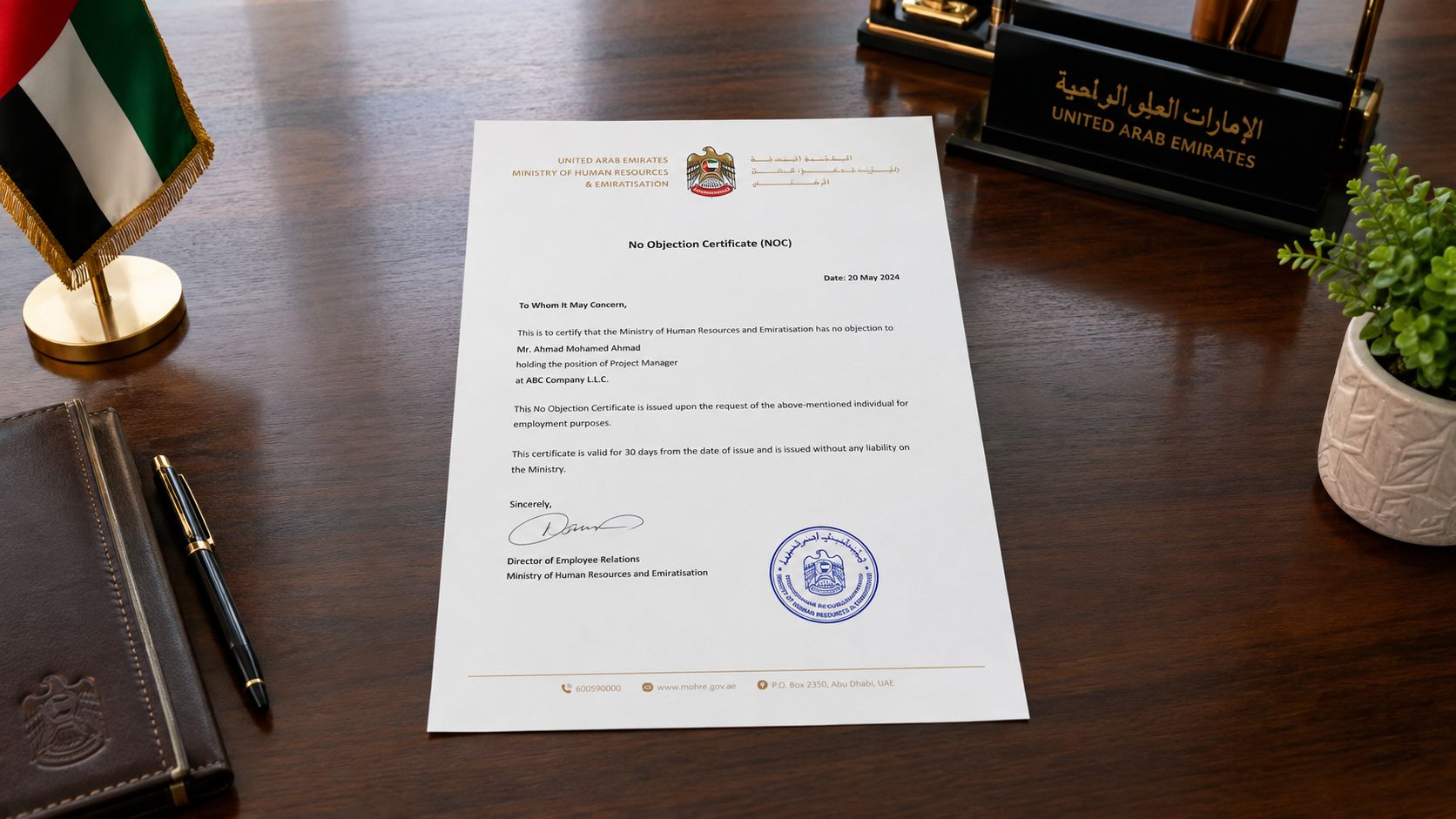
A lot of people first run into the NOC question while dealing with another document, such as a visa file or an employment change. If you also need a related supporting letter, the structure used in a good conduct certificate follows the same UAE logic of identity, purpose, and authority, which is exactly why sloppy formatting gets noticed so quickly.
Understanding the NOC Letter and Its UAE Importance
A Dubai founder once came in with a “simple” request. His sponsor had agreed in principle, his HR team had drafted the letter, and his file was otherwise ready. The problem was the NOC didn't clearly identify the recipient authority, the applicant's Emirates ID wasn't included where relevant, and the approval language was too general for the activity being filed. The result was a delay that had nothing to do with the business case and everything to do with the letter's compliance value.
What a NOC really does in the UAE
A No Objection Certificate is a formal statement that the issuer has no objection to a specific action. In the UAE, that action might be linked to visa applications, job changes, labour matters, residency steps, property transactions, or business approvals. The letter is not just a courtesy note, it functions as proof that the relevant party acknowledges the requested action and consents to it in writing.
That's why the document is treated more like a control document than a friendly request letter. The accepted structure generally includes the issuer's letterhead, date, recipient details, subject line, applicant details, a clear no-objection statement, purpose, and authorised signature with stamp, while practical UAE guidance also expects the issuer, applicant, approved action, and receiving authority to be identifiable, with passport or Emirates ID details where relevant. In the UAE administrative environment, those identifiers are what make the letter usable.
Why the format matters more than the wording
A clean-looking NOC that doesn't identify the right people can still fail. Authorities care about traceability, authority, and purpose-specific clarity, not just polite language. That's why the format of NOC letter matters so much in practice, because it tells the receiving authority who issued the approval, who benefits from it, and what exactly is being approved.
A NOC that cannot be tied to a named issuer, a named applicant, and a named purpose is the kind of document that gets questioned, not accepted.
For entrepreneurs and residents, the takeaway is simple. The NOC is usually handled as a formal compliance document in the UAE, so the safest approach is to draft it as if the authority will verify every line. If the document is going to be used in an official file, the format itself is part of the approval.
Essential Components Every UAE NOC Letter Must Include
A compliant UAE NOC is built from a handful of essential parts. Miss one, and the letter may still look decent to the eye, but it often stops being usable for submission. The practical standard is consistent across most scenarios, even when the exact template changes.
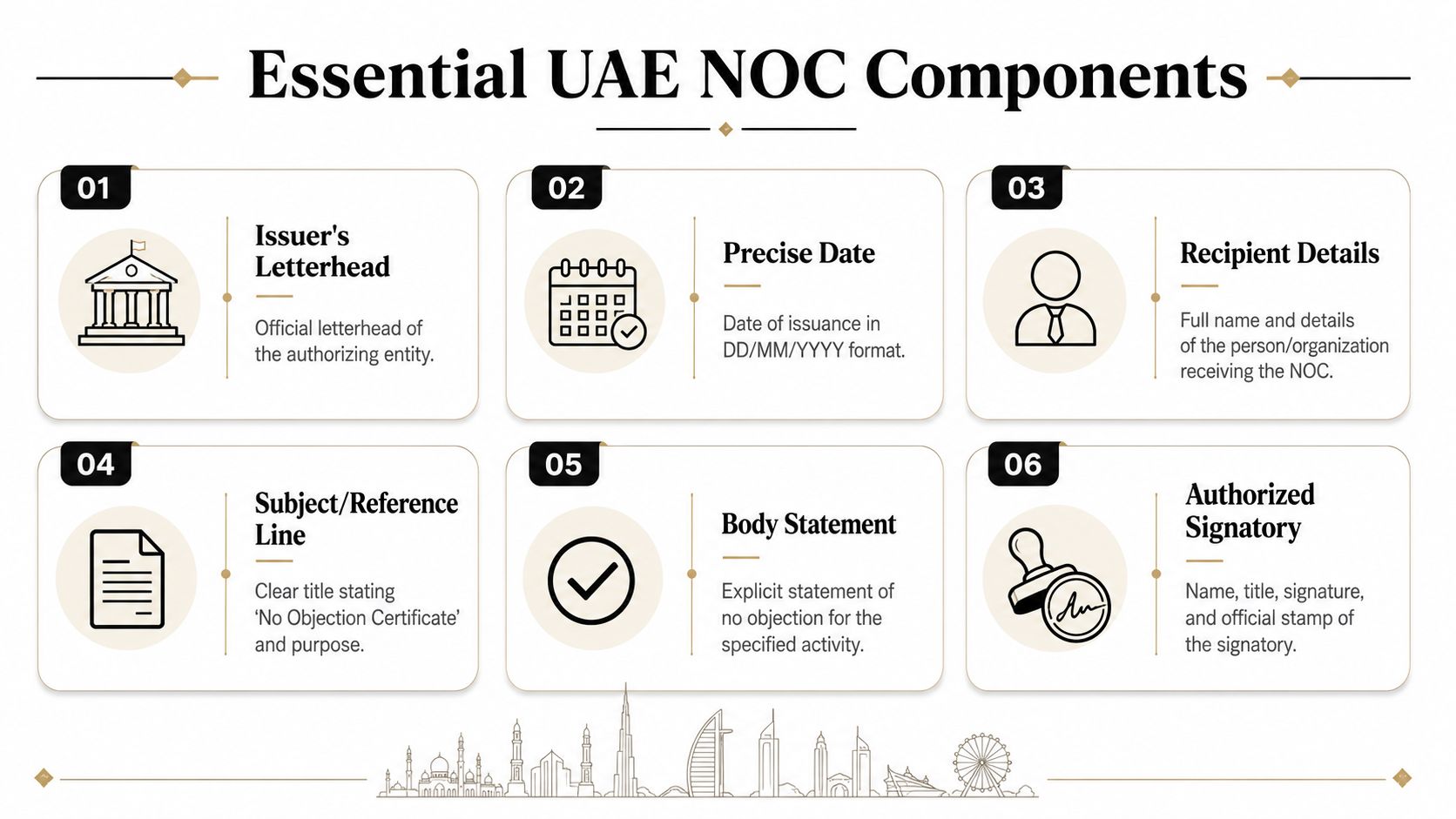
The six things authorities expect to see
Start with the issuer's official letterhead. This is the quickest authenticity signal on the page, and in UAE practice it's not optional when the letter is coming from a company, institution, or sponsor. It tells the receiving authority that the approval came from an identifiable entity, not from an untraceable free-text note.
Next comes the date of issuance, usually written clearly and consistently. The document then needs the correct recipient or authority, a subject line that states “No Objection Certificate” and the purpose, and the applicant details that match the supporting file. In UAE context, those details often include passport number and Emirates ID number where applicable, because identity matching is part of acceptance.
The body of the letter must include an unambiguous no-objection statement. It should say, plainly, that the issuer has no objection to the named activity. If the letter is for a specific purpose, that purpose needs to be written with enough precision that no one can repurpose it for something else.
Finally, the letter needs the authorised signature, the signatory's name and title, and the official stamp. If the NOC has a limited use period, add a validity period as well. In UAE practice, that's often the difference between a document that can be filed immediately and one that has to be reissued before submission.
Practical rule: if a human reviewer has to guess who approved what, the NOC is too weak for submission.
A quick checklist before you print it
- Letterhead first: Use the correct entity letterhead, never plain paper.
- Identity next: Match names, passport details, and Emirates ID details exactly to the application.
- Purpose last: State the exact activity being approved, not a broad category.
- Authorisation final: Confirm the signatory is permitted to issue the letter and that the stamp is current.
For a formatting baseline, it also helps to compare the NOC against other formal letters, such as the structure used in a resignation letter in the UAE, because both documents depend on identity accuracy and clean sign-off rather than decorative wording. The difference is that the NOC's purpose must be narrower and more explicit.
UAE Specific NOC Templates for Different Scenarios
The right NOC format depends on what the authority is approving. An employment NOC, a visa-related NOC, a business activity NOC, and a property transaction NOC all share the same core structure, but the emphasis changes. That's where generic sample letters often fail. They show the shell, but not the compliance logic.
| NOC Type | Key Identifiers Required | Critical Content Elements | Typical Validity Period |
|---|---|---|---|
| Employment NOC | Employee full name, passport number, Emirates ID where applicable, employer name | Current role, approved activity, clear no-objection statement, any employment-related restriction language | If required by the receiving authority, include a specific period |
| Visa NOC | Applicant full name, passport details, Emirates ID where applicable, sponsor or issuer details | Relationship or sponsorship context, purpose of travel or filing, explicit approval wording, receiving authority details | If required by the receiving authority, include a specific period |
| Business Activity NOC | Applicant or company name, licence or entity details, authorised signatory details | Approved business action, scope of consent, any partner or landlord reference if relevant | If required by the receiving authority, include a specific period |
| Property Transaction NOC | Tenant or owner details, passport or Emirates ID details where relevant, landlord or developer details | Address, approved property-related action, consent wording, receiving authority or developer reference | If required by the receiving authority, include a specific period |
Employment and visa formats need tighter identity matching
Employment NOCs usually need the strongest connection to the current workplace or contract context. The authority wants to know who is granting permission, who is receiving it, and what the employee is allowed to do. Visa-related NOCs, by contrast, often focus more on sponsorship, relationship verification, or the exact filing being supported.
The safest wording is short and exact. Don't inflate the language, and don't reuse a business NOC for a visa matter unless the purpose lines up perfectly. If the approval is for a family or travel-related file, the recipient should be able to read the purpose and understand it immediately.
Business and property templates need clear scope
Business activity NOCs need a tighter scope statement. That matters when the approval is tied to trade licensing, partner consent, or a step in a company setup process. A vague “no objection to business use” line is often too broad.
Property-related NOCs are usually about location, occupancy, or transfer consent. The recipient details and the exact premises matter more here than in many employment letters. If the address or approved activity is incomplete, the document becomes vulnerable to rejection.
A useful habit is to draft the NOC from the receiving authority's perspective. If that authority only sees the letter, would it know exactly what has been approved, by whom, and for how long? If not, the template needs work before it leaves the desk.
Drafting, Signing, and Submitting Your NOC Letter
Drafting the letter is only half the job. In UAE practice, what happens after the draft is often what decides whether the file moves or stalls. The receiving authority wants a document that is not only well written but also visibly authorised, traceable, and ready for submission.
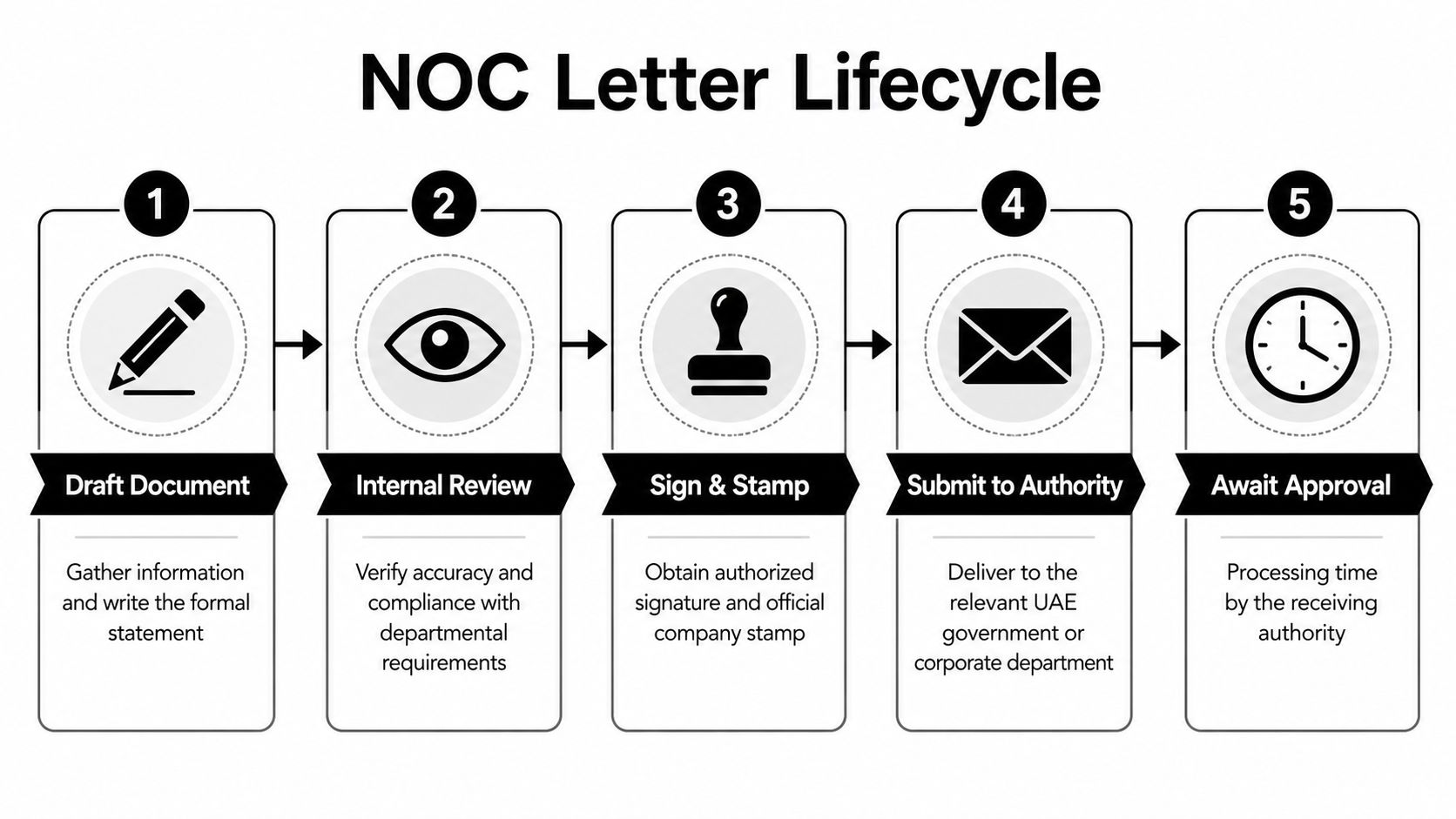
From draft to sign-off
Start by gathering the identity details, the exact purpose, and any supporting references that need to appear in the letter. Then draft it in a formal tone, keeping the body short and direct. If the document is supporting a legal or administrative submission, it helps to structure it with the same discipline used in a legal memo format template, meaning the facts are clean, the issue is precise, and the conclusion is unambiguous.
Internal review matters because small inconsistencies are what authorities notice first. A name that doesn't match the passport, a date that doesn't align with the file, or a title that doesn't belong to the signatory can all create a problem. If the NOC belongs to a company, the issuer should verify that the person signing has authority to do so.
Signing, stamping, and submission
Print the NOC on official letterhead, then secure the physical signature and stamp. In the UAE, many immigration and visa-related processes expect the letter to be issued on letterhead, addressed properly, and signed and stamped by an authorised person, which reflects the compliance-first approach described in UAE visa guidance from Blink Visa's NOC overview.
If the stamp looks generic, outdated, or missing altogether, the file often gets looked at twice for the wrong reasons.
Submission can be digital or in person, depending on the receiving authority and the process involved. Some filings are handled through portals, while others still rely on a scanned or physical document package. If attestation is needed, check that requirement before you print the final version, because reissuing an attested NOC is wasted time.
For anyone coordinating company filings or employee paperwork in Dubai, this is the same logic that applies to other administrative support work, including PRO services in Dubai. The process is smoother when the document is prepared for the authority, not just for the person who wrote it.
Common NOC Mistakes That Lead to Rejection
Most rejected NOCs don't fail because the issuer disagreed with the request. They fail because the letter wasn't built for the receiving authority's review process. That's a very different problem, and it's why generic templates are often a false comfort.
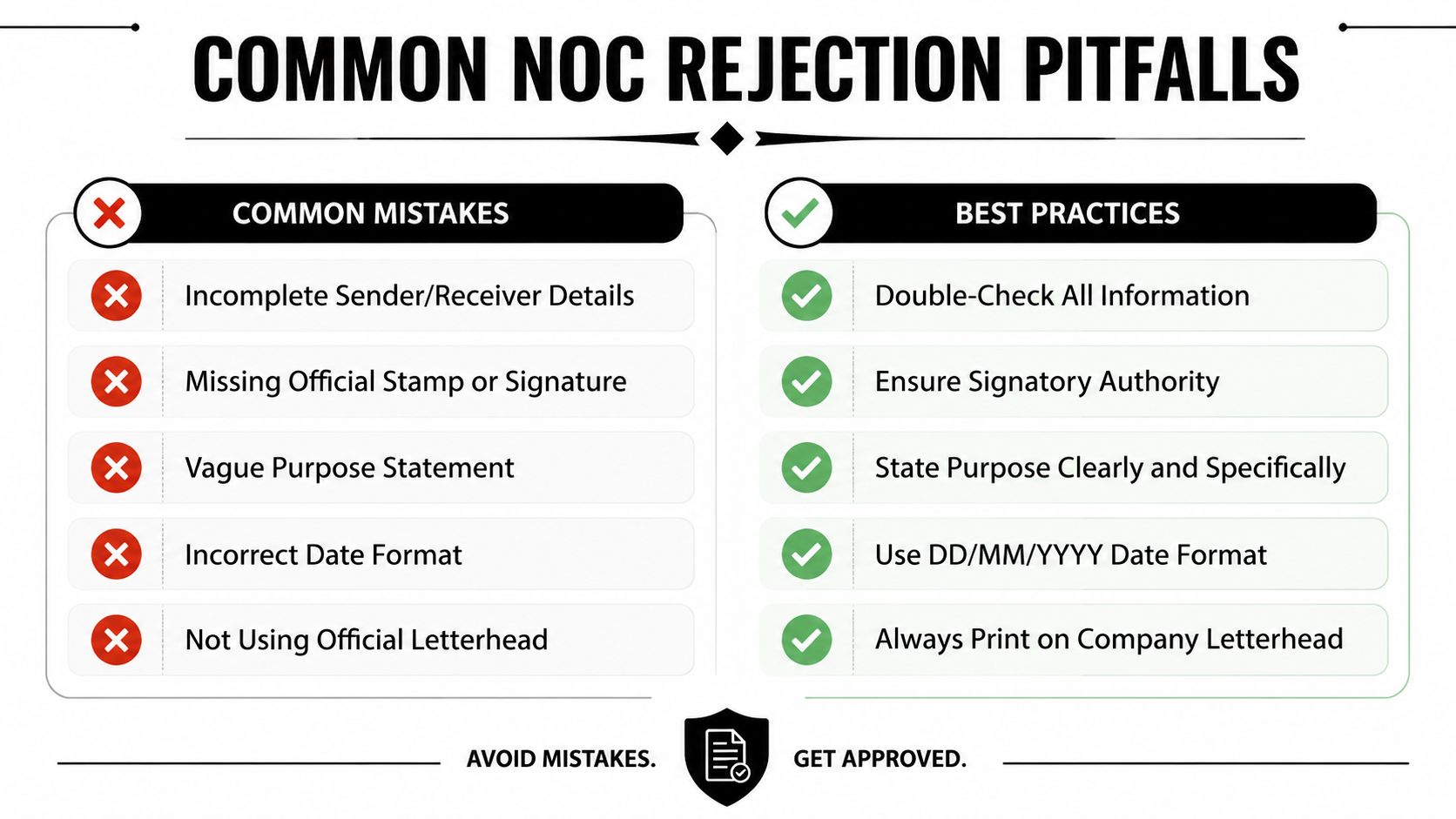
The rejection triggers I see most often
Outdated letterhead is a common issue. The symptom is simple, the authority sees a document that doesn't match the current issuer identity. The fix is just as simple, use the correct, current letterhead before the letter is signed.
Missing passport or Emirates ID details causes trouble when the application has to be matched to the person in front of the authority. If the file includes those identifiers elsewhere but the NOC doesn't, the document can still be questioned. Put the relevant details into the letter itself when the process calls for them.
Vague purpose statements are another frequent reason for revision. “For official use” or “for your kind action” doesn't tell the authority what's being approved. Say the exact purpose, and keep it narrow.
The less obvious problems
Incorrect recipient addressing can be enough to slow a file down, especially when the NOC is meant for a particular authority or department. The letter should be directed to the right receiving body, not to a generic office. If the receiving authority changes, the document may need to be reissued rather than reused.
Missing validity periods create problems when the file depends on a time-sensitive approval. If the receiving body expects the NOC to remain valid for a certain period, the letter should state that period clearly. Otherwise, you risk the document being considered stale before it is reviewed.
Unauthorized signatories are a bigger issue than many realise. If the person signing the letter doesn't have authority to grant the approval, the stamp won't save it. The issuer must be someone the authority can reasonably treat as competent to give that consent.
A final issue is consistency. If the NOC says one thing and the supporting documents say another, the reviewer may pause. In UAE compliance work, that pause often turns into a revision request.
The safest NOC is the one that can survive a review without any verbal explanation from the applicant.
Your NOC Compliance Checklist and Next Steps
Before you submit, check the letter against the receiving authority's expectations, not just your own draft. The most reliable NOCs are the ones that match the purpose, the identity details, and the signatory authority cleanly in one document. If the file is complex, or if it involves multiple parties, different jurisdictions, or a broader business setup package, professional handling usually saves time.
Quick verification list
- Format check: Official letterhead, date, recipient, subject, body, signature, and stamp are all present.
- Identity check: Names, passport details, and Emirates ID details match the supporting file.
- Purpose check: The activity is described clearly and specifically.
- Authority check: The signatory is allowed to issue the approval.
- Submission check: Attestation, translation, or digital filing requirements are confirmed before sending.
Keep a copy of the signed version and any related approval records. If the circumstances change, request a fresh version rather than recycling an old letter. A carefully prepared NOC is a small document with a big administrative effect, and the time to fix it is before submission, not after rejection.
If you want help preparing a compliant NOC for a visa file, employment matter, business approval, or property-related submission in the UAE, Smart Classic Business Hub can handle the document work with the right compliance checks built in. Visit Smart Classic Business Hub to get practical support from a Dubai-based team that understands how UAE authorities review these letters and what gets accepted the first time.