
You can have the lease, the trade name idea, the banking checklist, and the office location sorted, then one missing stamp or mismatched Arabic spelling stops the whole launch. That's the moment most founders realise document clearing services in Dubai aren't a side admin task, they're part of the business setup itself.
In Dubai, paperwork moves through a dense system of approvals, portals, and authority-specific rules. A good PRO agent doesn't just submit forms, they keep the sequence moving, so your visa, licence, and attestation steps don't collide at the wrong time.
Why Document Clearing Is Essential for Your Dubai Venture
A founder can arrive in Dubai with a clear plan and still hit friction on day one. The issue usually isn't the idea, it's the administrative choreography, where one document depends on another, and one authority won't proceed until the previous step is complete.
Dubai's scale explains why this matters. The Dubai Department of Economy and Tourism reported 67,286 new business licences in 2023, and the emirate's active business-licence base passed 402,000 by year-end, which means incorporation, renewals, amendments, and compliance filings are happening constantly across mainland and free zone activity Dubai licensing activity and document clearing demand. In that environment, document clearing is not a rare fix, it's part of the operating rhythm.
The difference between filing and finishing
Many entrepreneurs assume the job ends when a form is submitted. In practice, the harder part is following the file across approvals, portals, and corrections until the final document is issued.
A founder who handles this alone often spends time chasing small errors, wrong attachments, or missing attestations. A clearing agent reduces that drag by managing the sequence properly, which matters more than knowing where to click alone.
Practical rule: if a document touches immigration, licensing, labour, or attestation, treat it like a workflow, not a single task.
For foreign founders, the administrative load can feel heavier because the process often starts before the business is fully operational. If you want a useful founder-level perspective on that first stretch, Founder Connects' insights on Dubai are a sensible read before you commit to a structure.
Why the service became institutional
Document clearing used to feel like something you only needed when a problem appeared. That no longer fits Dubai's business environment. The volume of company formations, renewals, and amendments means the service is now part of the normal setup stack for entrepreneurs and SMEs.
The strategic value is simple. If your paperwork is handled early, correctly, and in the right order, you preserve momentum in the rest of the business setup. If it's handled casually, every other part of the launch slows down with it.
What Document Clearing Services Actually Cover
Think of a document clearing provider as a specialist project manager for your paperwork. The firm is not just typing forms or making photocopies, it's coordinating the right documents, the right authorities, and the right order of action so the file can move.
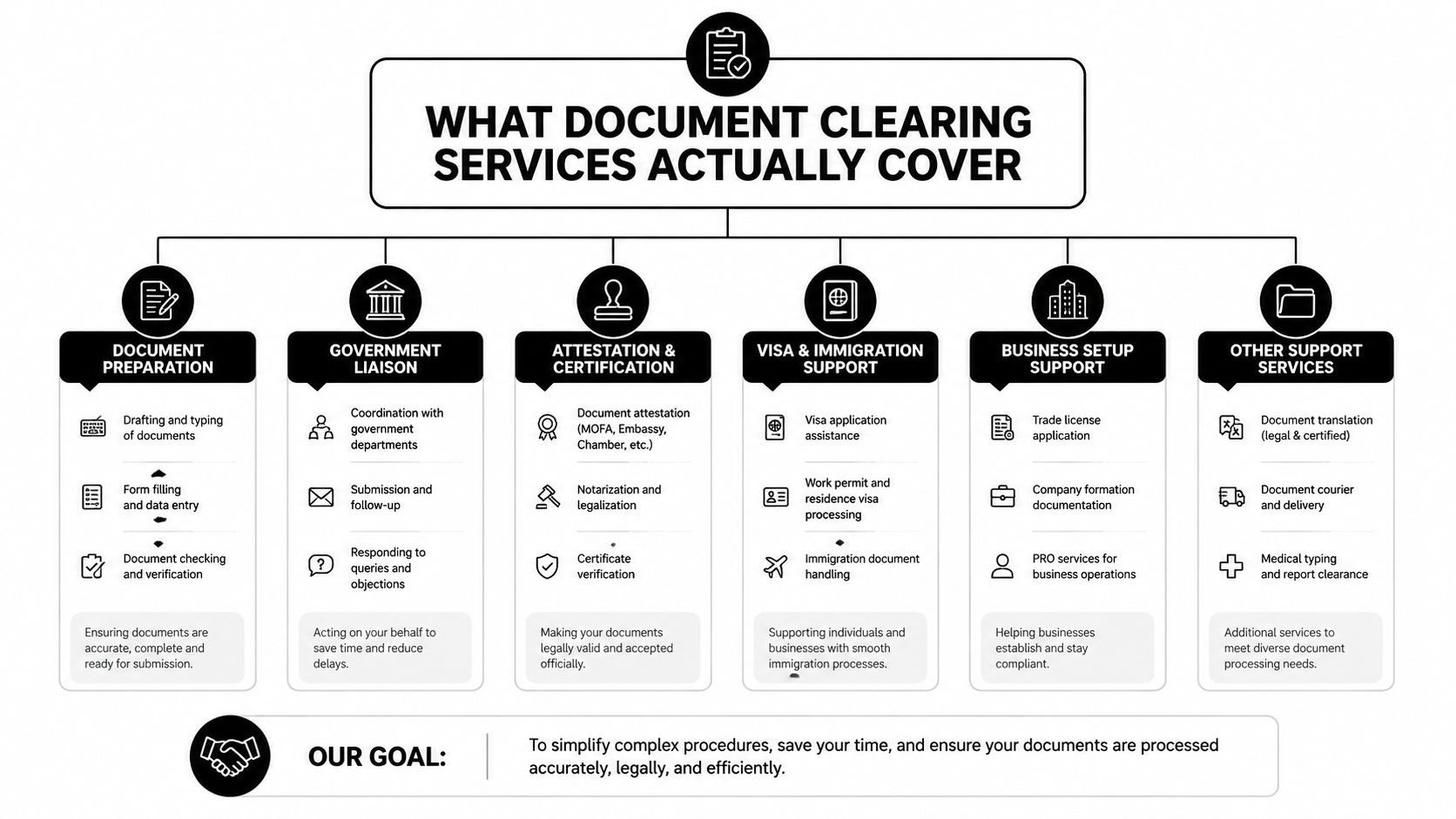
In Dubai, document clearing services are operationally tied to DET activity code 8299.85, which covers the preparation, submission, and follow-up for visas, Emirates IDs, trade licence renewals, and attestation. That means a provider has to work across multiple channels, including ICP, Amer/Tas-heel, MOHRE, and GDRFA Dubai document clearing activity code and authority scope.
The core work inside the service
The work usually falls into four practical buckets. Attestation confirms that a document can be accepted for official use. Translation converts a file into the language required by the authority, often Arabic for government processing. Submission puts the file into the correct portal or counter process. Follow-up keeps it moving when an authority asks for a correction, additional page, or supporting paper.
A new entrepreneur often sees only the final upload. A good clearing provider sees the dependencies underneath it, including whether the passport copy matches the visa form, whether the trade name is already approved, and whether the attestation trail is complete.
What clients usually ask for first
Most files start with a specific outcome rather than a generic service. Someone may need educational certificates attested for a visa file, a trade licence renewal submitted, or Emirates ID paperwork aligned with residency steps. Corporate clients often need labour and immigration touchpoints coordinated together because one department's delay affects the next.
For founders dealing with customs or import-sensitive activity, it also helps to understand how document handling sits alongside classification work. The separate business issue of HS code handling in Dubai matters because paperwork and product classification often affect the same operational timeline.
A strong provider doesn't ask, “What form do you need?”, it asks, “What is the end approval, and what already has to be in place before we submit?”
That mindset is what distinguishes proper document clearing from basic admin support. It's regulated workflow support, not casual office assistance.
The Document Clearing Workflow and Timelines
The workflow usually begins before anyone submits anything. A competent agent checks the document list, compares names and numbers across the file set, and identifies whether translation or attestation is needed before the authority will even accept the package.
The sequence matters because a missed prerequisite wastes days. A file that looks complete at the counter can still get pushed back if one stamp is missing or if the supporting paper is not in the right form.
A typical file journey
The first step is intake. The provider collects passports, licence details, certificates, or corporate papers, then reviews what is already usable and what must be prepared.
Next comes conversion work, if needed. That may involve certified translation, attestation, or formatting the file for the correct portal. After that, the submission goes to the relevant authority, followed by monitoring until the approved document is ready for handover.
If you're scanning papers for digital submission, this guide to scanning documents as PDF is useful because clean files reduce back-and-forth when attachments are being uploaded.
Typical processing windows
| Service | Governing Authority | Estimated Timeline |
|---|---|---|
| Local certificate attestation | Relevant UAE attestation channels | 3 to 4 business days |
| Foreign-embassy attestation | Foreign embassy process | 7 to 14 business days |
| Mainland licence issuance | Mainland licensing authority | 5 to 7 business days |
| Employment visa processing | Immigration and labour channels | 7 to 10 business days |
These timeframes show why coordination matters. A provider is not promising magic, it is trying to prevent the kind of avoidable error that turns a normal file into a delayed one typical Dubai processing timelines.
Why the order matters
A visa file, for example, can't be treated like a standalone upload if an attestation step is still pending. Likewise, a licence file may be ready in principle but blocked because supporting documents weren't matched correctly to the business activity.
A practical operator keeps the whole chain visible. That includes the people involved, the portals used, and the point at which the file becomes authority-ready rather than merely “assembled”.
Key Government Authorities You Will Encounter
Dubai's bureaucracy looks complicated until you group the authorities by function. Once you know who handles business licensing, residency, labour, attestation, and legalisation, the process stops feeling random.
The bodies behind the paperwork
DET, the Department of Economy and Tourism, is central to business setup and trade licence activity. If you are forming or renewing a business, DET-related processes sit close to the front of the queue.
GDRFA handles residency and foreigner-related immigration processing in Dubai. ICP appears in federal identity and residency workflows, while MOHRE is the labour authority that shows up in employment-linked steps. Amer and Tas-heel are the service channels many founders and companies interact with for immigration and labour tasks, depending on the file type.
For legalised documents, embassies and attestation channels become part of the path. The practical point is that one provider may need to touch more than one authority to finish a single outcome.
Why the same file can cross several desks
A company owner applying for visas may need business licence details from DET-linked processes, immigration handling through GDRFA or ICP, and labour-related follow-up through MOHRE or Tas-heel. That is why document clearing is a coordination role, not a single-portal task.
The same logic applies to paperwork outside company formation. Certificates, authorisations, and supporting declarations often need to be recognised by multiple institutions before they are useful. For a related example of how documentation and official checks intersect in another area, see police clearance certificate requirements in Dubai.
If one authority rejects a file, don't treat it as a generic refusal. First check whether the issue belongs to licensing, immigration, attestation, or translation.
That simple distinction saves time and avoids the common mistake of resubmitting the same error to the wrong office. In Dubai, the right authority at the right stage matters more than speed alone.
How to Choose a Reliable Provider in Dubai
A low quote can look attractive at the start, especially if you are trying to control setup costs. The problem shows up later when a provider misses a portal step, sends unclear updates, or promises a timeline it cannot support. In document clearing, those mistakes often cost more than a careful firm with a clear process.
What to inspect before you sign
Start with transparency. A reliable provider explains what is included, what may trigger extra steps, and which authority-specific actions sit inside the scope. If the answer stays vague, the file handling will usually be vague too.
Communication comes next. You want a team that gives status updates in plain language, not a provider that only replies after repeated follow-up. In document clearing, silence usually means the file has not moved.
Experience needs to match the file type. A firm that handles free zone work may still be weak on mainland licensing, and a team that knows visa processing may not handle attestation-heavy files well. Ask what kinds of cases they deal with most often, and whether they manage the exact document type you need. If your work sits alongside company formation and PRO services, a provider should be able to explain that workflow clearly. You can learn more about what PRO services entail here.
Red flags that usually show up early
- Unrealistic timing promises: If the timeline sounds too neat, ask what dependencies it assumes.
- No physical presence or traceable office: A proper operations base matters when documents and originals are being handled.
- Vague authority knowledge: If a provider cannot explain which authority owns the next step, it may be guessing.
- Poor document intake process: Missing passport copies or mismatched names point to sloppy file control.
A provider should also explain how it handles follow-up, correction requests, and resubmission if an authority asks for changes. Those are normal parts of the work, not unusual events.
One option in the market is Smart Classic Business Hub, which offers document clearing as part of its UAE business support work, alongside company formation and PRO services. Compare that kind of service against other providers on process clarity, not branding.
The right choice is the one that reduces uncertainty. If a provider can show you how it will manage the file from intake to final handover, you are likely looking at the right level of support.
Common Delays and How to Avoid Them
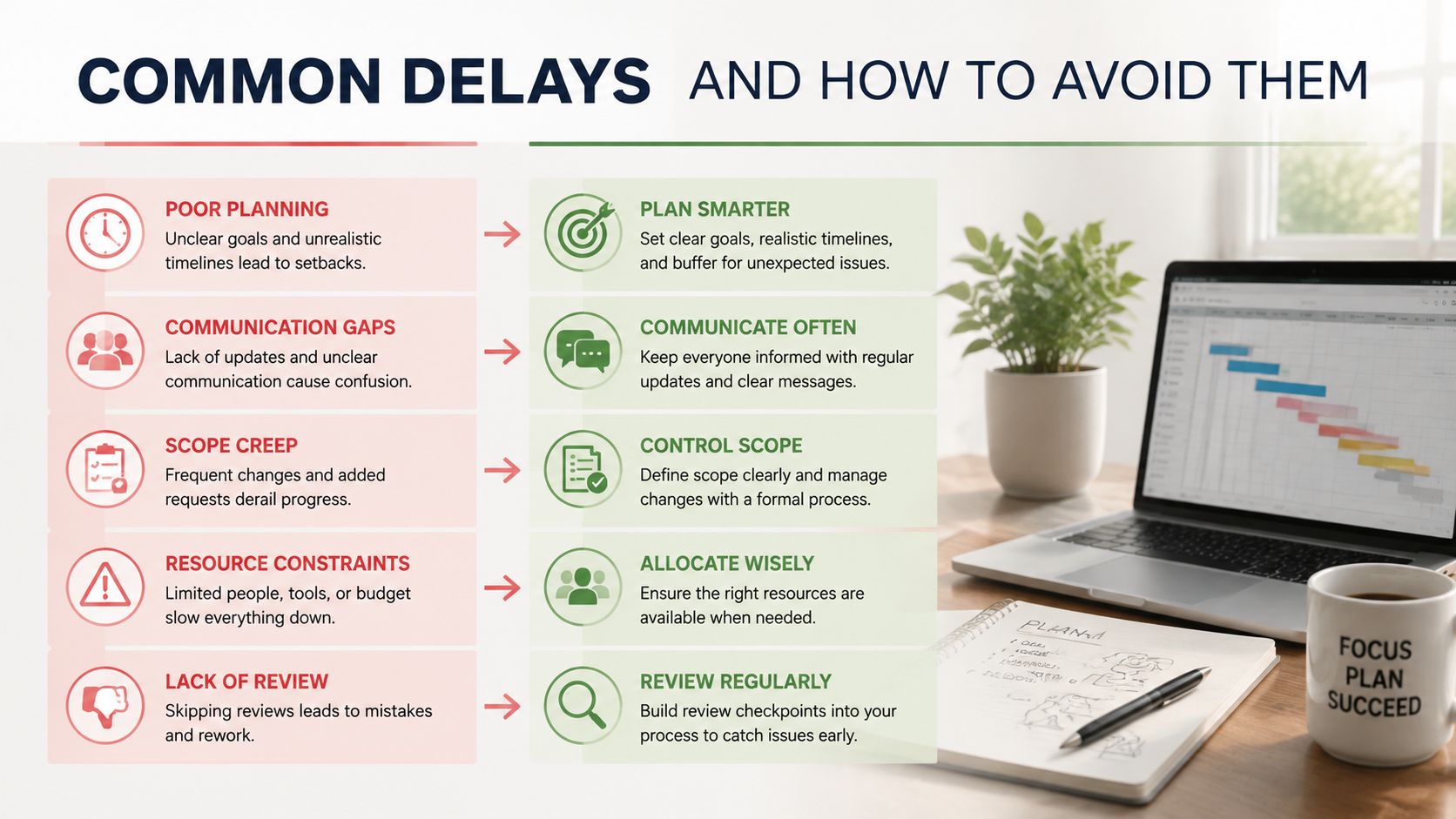
Most delays in Dubai document processing come from preventable errors. The file isn't usually blocked because the system is broken, it's blocked because one detail doesn't match, one supporting paper is missing, or one prerequisite step was skipped.
The errors that cause the most friction
Incomplete paperwork is the first and most obvious problem. If a passport copy is unclear, a signature is missing, or a supporting certificate was never collected, the authority will usually pause the process rather than work around it.
Mismatch is another common issue. Names, passport numbers, company details, and dates need to align across the file. A small inconsistency can trigger a correction request, which means the clock starts moving again only after the fix is made.
Translation quality matters too. If a translated document doesn't reflect the source accurately, or if the formatting doesn't meet the receiving authority's expectations, it can be rejected even when the original file is valid.
How to keep the file moving
The cleanest approach is to prepare the file in one pass. Gather the originals, check spellings across every document, confirm whether attestation is needed, and only then submit. That reduces the chance of a counter refusal or portal return.
A provider should also create a dependency list before submission. If an attestation step has to happen first, don't treat it as optional. If a document needs a certified translation, don't push the file forward with a loose draft.
Simple habit: verify the full document set before the first submission, not after the first rejection.
That habit is especially useful when a business launch depends on multiple parallel tasks. The more closely the file is checked at the start, the less likely you are to lose time later in the cycle.
Frequently Asked Questions About Document Clearing
Can I handle document clearing myself?
Yes, in some cases you can. The issue is not whether the forms are accessible, it's whether you can track every authority requirement, attachment, translation, and follow-up without missing a step. For simple files, a DIY approach may work. For business setup, visas, or anything involving several authorities, professional handling usually reduces avoidable errors.
What should I expect on cost?
The exact fee depends on the document type, the authorities involved, and whether attestation or translation is needed. Because those variables differ from file to file, it's better to ask for a written scope than to compare vague packages.
What happens if a document is rejected?
First, find out which part failed. A rejection can come from a missing attachment, a mismatch, the wrong sequence, or a formatting issue. The fix is usually to correct the file and resubmit through the right channel, not to start from scratch blindly.
Is document clearing only for companies?
No. Individuals need it for visas, attestations, and related official paperwork too. Business owners, employees, investors, and family sponsorship applicants all run into it at different stages.
If you want the process handled by a team that already works with company formation, PRO tasks, and government liaison in Dubai, visit Smart Classic Business Hub and ask for support that fits your file type. The right partner will tell you what's needed, what can wait, and what must be fixed before anything gets submitted.