
You've chosen a UAE free zone, found a package that appears to fit, and started gathering passports and forms. Then the authority asks for a document your package didn't mention, questions your proposed activity, or sends the application back for a sector approval. The problem usually isn't the form. It's choosing the wrong registration route before the form is ever opened.
The practical answer to how to register a company in UAE free zone starts with jurisdiction, not paperwork. The UAE doesn't operate one central free-zone application process. Each zone has its own registrar, activity list, legal structures, office rules, fees, and approval workflow. Choose correctly and the process is controlled. Choose on marketing alone and delays become predictable.
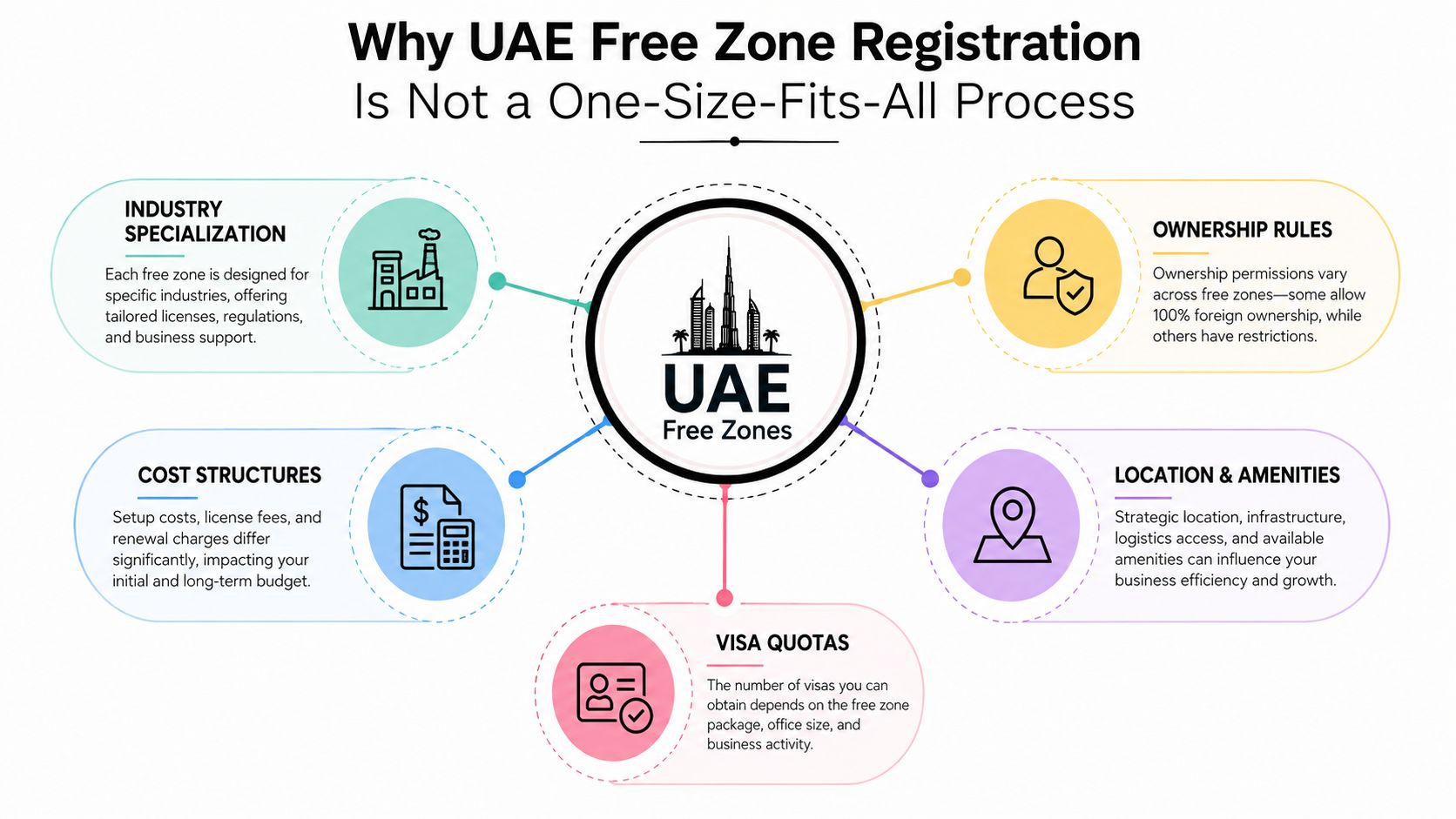
Why UAE Free Zone Registration Is Not a One-Size-Fits-All Process
A founder can submit a complete application and still face delays because the chosen authority interprets the activity differently, requires another approval, or rejects the proposed office arrangement. The UAE does not run one nationwide free-zone registration workflow. Each authority controls its own registrar, activity wording, legal structures, document list, premises rules, and approval stages.
The company-law framework changed materially on 2 January 2022, when Federal Decree-Law No. 32 of 2021 entered into force. Article 5 generally leaves free-zone companies under their own free-zone laws. They may also fall under federal company law when the zone's rules allow activities outside the zone in the UAE.
That legal division creates a practical issue: the registration route depends on the jurisdiction. Before preparing forms, you need to know which authority can license the exact revenue-generating activity, which company structure it accepts, and whether the business needs sector-specific clearance.
The Ministry of Economy and Tourism's free-zone registration guidance lists separate registrars for different zones, including Dubai Development Authority and Dubai Airport Free Zone Authority. That separation is not administrative detail. It determines where you apply and which process governs the application.
Start with the jurisdiction
The UAE has about 40 free zones, with Dubai accounting for more than 20, Abu Dhabi nine, and Sharjah six, according to the UAE free-zone overview. For founders, that means dozens of distinct authority workflows rather than one standard application.
Ask four questions before comparing packages:
- What exact activity will the company conduct? Describe the work that generates revenue, not a broad label such as “consulting” or “trading”.
- Where will the company operate? Serving free-zone clients, selling elsewhere in the UAE, and working with overseas customers can lead to different practical requirements.
- Which ownership and structure fit the business? A solo founder, multiple shareholders, and an existing foreign company may require different forms.
- What premises and approvals are realistic? Office rules can affect licensing and the available visa quota.
Practical rule: Confirm that the authority can license your actual activity and support your operating model before comparing package prices.
Use this sequence: select the jurisdiction, verify the activity, choose the legal structure, prepare the documents, and submit through that authority. Starting with a low advertised price often creates rework when the zone cannot support the business you intend to run.
Choosing the Right Free Zone for Your Business Activity
A technology consultancy, a commodities trader, a media studio, and an industrial operator shouldn't begin with the same shortlist. Free zones specialise, and the most attractive location is the one that accepts your activity cleanly while supporting how you'll work.
Dubai has more than 20 free zones, while Abu Dhabi has nine and Sharjah six, as outlined in the UAE free-zone landscape guide. Treat those locations as separate regulatory environments, not as interchangeable addresses.
Compare activity fit before facilities
Start by writing a one-line description of your business. Then test each candidate zone against the following criteria:
- Activity coverage: Confirm the authority's exact activity wording and whether your services or products require an additional approval.
- Licence category: Check whether the zone offers a commercial, professional, industrial, media, technology, or other relevant licence.
- Premises model: Establish whether a flexi-desk, shared office, warehouse, or dedicated office is acceptable for your activity.
- Visa capacity: Ask how the proposed premises and licence affect your available visa quota.
- Operating geography: Confirm whether the structure suits clients, suppliers, importers, and contractors located outside the free zone.
- Registrar process: Review the authority's application portal, document standards, signing requirements, and payment stages.
A useful shortlist might include a technology-focused zone for software services, a media-oriented zone for production or content work, a commodities-focused zone for trading, and an industrial zone for manufacturing or storage. Don't choose based on the logo, skyline, or introductory package. Choose based on the licence that will appear on the company's commercial record.
| Free Zone | Primary Sectors | Best For |
|---|---|---|
| Dubai technology-focused zones | Technology and digital services | Software, technology consulting, and innovation-led businesses |
| Dubai media-focused zones | Media and creative industries | Production, content, broadcasting, and creative services |
| Dubai commodities-focused zones | Commodities and trading | Traders handling specialised goods and international transactions |
| Abu Dhabi specialised zones | Sector-led commercial and industrial activities | Businesses that need an Abu Dhabi-based regulatory environment |
| Sharjah industrial and commercial zones | Industrial, trading, and service activities | Operators seeking activity-specific facilities and regional access |
This table is a starting filter, not a final recommendation. The guide to designated free zones in the UAE can help you build a more focused shortlist, but you still need written confirmation from the relevant registrar before paying or submitting.
A low entry package is only useful if the licence, office arrangement, and approval route match your business from day one.
Required Documents and Legal Structure Selection
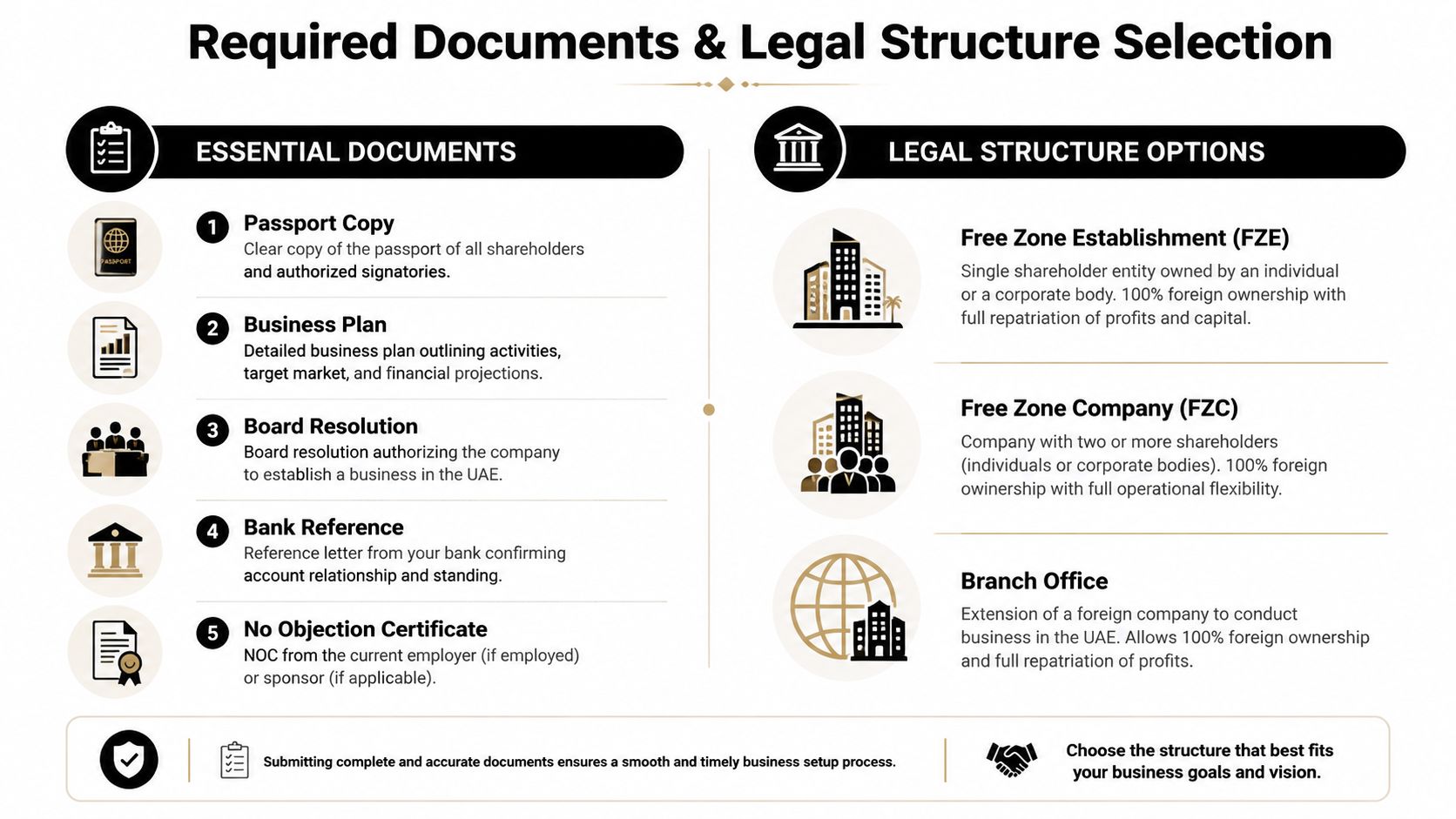
A founder who chooses the wrong legal structure can delay registration before the authority reviews the business activity. Match the structure to the ownership model, the applicant's corporate status, and the company's planned expansion.
A solo founder may consider a Free Zone Establishment, or FZE. A business with multiple shareholders may need a Free Zone Company, or FZ-LLC. An established foreign company seeking a UAE presence without forming a separate subsidiary may use a branch, subject to the selected authority's rules.
The names and requirements differ across free zones. Confirm the available structure with the registrar for the chosen activity and ownership arrangement instead of relying on a generic checklist. This guide to choosing a business structure explains the main decisions before you prepare the application.
Build the document pack around the applicant
An individual founder will commonly provide passport copies, address details, and other personal information. The registrar may also request a business plan, proposed trade name, application forms, and documents related to the intended activity.
Corporate applicants need a more detailed file. Corporate registration generally requires a complete application and a notarised and certified board resolution appointing the manager or director. If the resolution is unsigned, uncertified, or issued by the wrong corporate body, the authority can return the application before assessing the business.
Prepare the documents in this order:
- Ownership documents: Passports and shareholder information for each individual or corporate owner.
- Corporate records: Incorporation documents, certificates, constitutional documents, and the notarised board resolution when a company is applying.
- Business description: A clear explanation of activities, customers, products, and the expected operating model.
- Premises evidence: The office, flexi-desk, warehouse, or other facility document required by the selected zone.
- Authority forms: Applications, declarations, specimen signatures, and any forms requested by the registrar.
- Regulatory clearances: Security clearance for individuals, environmental approval for industrial activities, or other sector-specific permissions where applicable.
Pre-approval checks determine processing timelines
Founders often focus on receiving the licence certificate. Approval requirements deserve attention first. Sector-specific clearances may be required before registration can finish, and issuance can be quick only after the application, documents, fees, and approvals are complete.
Ask the registrar three questions before submission: Which documents need notarisation? Which need certification or legalisation? Which external authority must approve the activity? Get the answers in writing, then prepare the file before opening the application. Requirements vary between authorities, so a complete pack for one free zone may still be incomplete for another.
Application Submission and Trade License Issuance
Once the zone and legal structure are confirmed, submission becomes an authority-specific workflow. The UAE has no single registration process. Each free zone sets its own portal, forms, document checks, approval sequence, and bottlenecks. An online application speeds up document exchange, but it does not remove review risk.
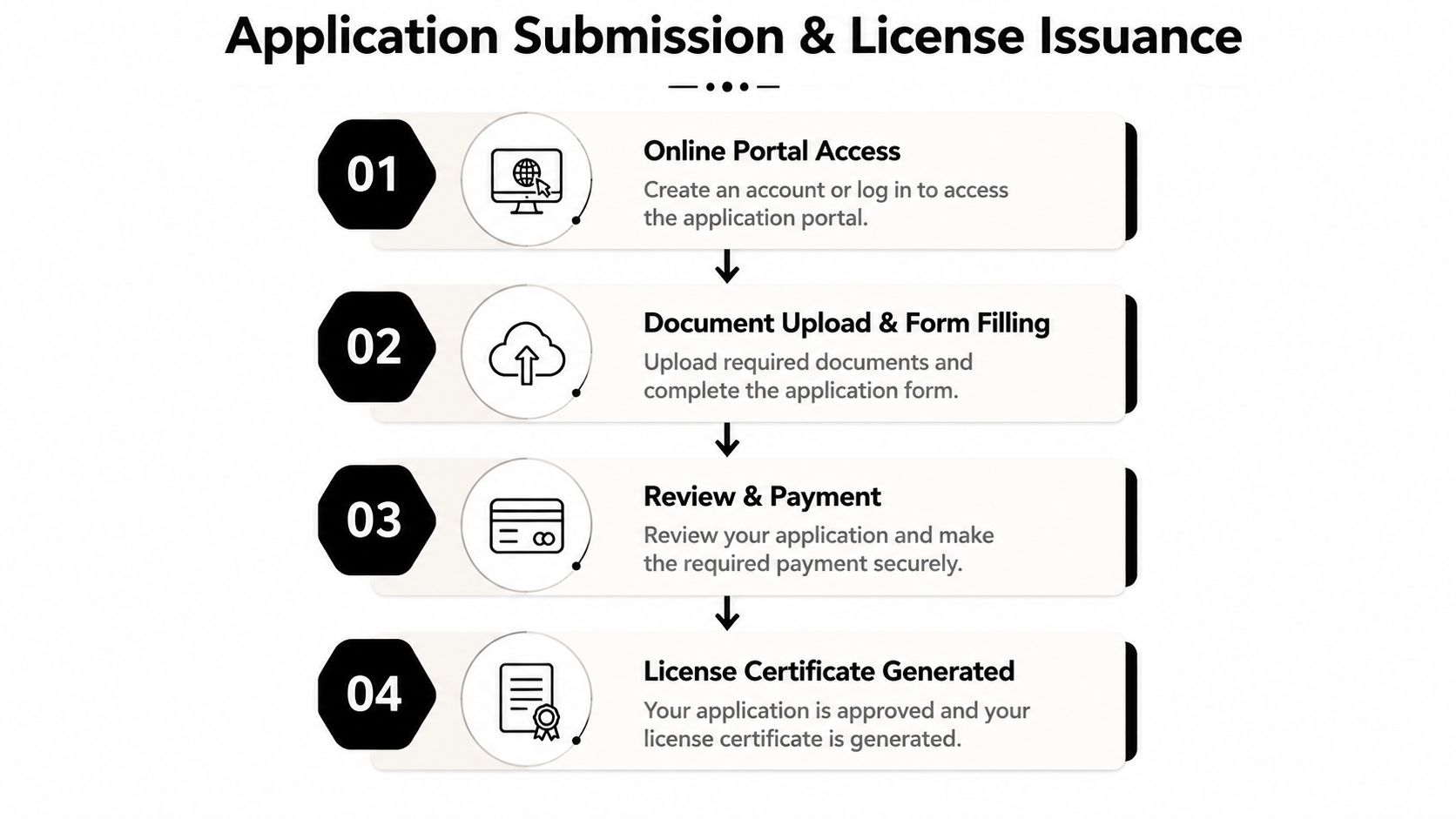
A typical file passes through four stages:
- Application creation: Choose the legal structure, approved activities, proposed trade name, premises option, and shareholder details.
- Document upload: Submit identity records, corporate papers, resolutions, signed forms, and any activity-related approvals requested by the authority.
- Registrar review: The registrar checks completeness, ownership, activity eligibility, legal structure, and regulatory requirements.
- Payment and issuance: After approval, pay the registration and licence charges, sign outstanding legal documents, and receive the trade licence certificate.
Processing time depends on completeness
Published timelines are useful benchmarks, not guarantees. Jafza's published setup guidance estimates 3 to 14 business days after all documents are submitted. That range applies to Jafza's workflow, not every free zone. Treat it as a reference point, then obtain the selected authority's current estimate before paying.
Jafza's process guidance also illustrates why preparation matters: the authority must receive a complete file before review can progress. Requirements differ across the UAE's free zones, so a document pack accepted by one registrar may still trigger queries elsewhere.
The fastest issuance stage begins only after the application, documents, fees, and required approvals are in place. A missing signature, unclear scan, inconsistent activity description, or unresolved clearance can return the file to review and create avoidable delay.
If the registrar returns the application, correct the full file rather than answering one query at a time. Match the activity description to the requested licence, replace poor scans, verify every corporate signature and certification, and resubmit one clean package. That approach keeps the authority's review focused and reduces repeated correspondence.
Registrar reality: Licence printing is rarely the main delay. Authority-specific requirements, document quality, and approval sequencing determine how quickly the application reaches issuance.
Visa Processing and Post-Registration Compliance
A trade licence lets the company exist. It doesn't complete the founder's operating setup. After issuance, you'll usually need to handle immigration-related steps, premises records, banking, accounting, tax administration, and renewal obligations through the relevant authorities.
Visa capacity is tied to the selected office arrangement and the licence structure, so discuss the intended team before committing to premises. A small workspace may suit a solo operator but create restrictions when you later want to sponsor employees. The correct question isn't “How many visas can I get?” It's “What premises and licence combination supports the people I expect to sponsor?”
Handle immigration steps in the right order
The exact sequence varies by authority and applicant, but the practical workflow generally includes:
- Establishment and immigration records: Confirm that the company's immigration file and establishment details are active.
- Entry or status process: File the relevant investor or employment application according to the person's current location and status.
- Medical fitness: Complete the required medical fitness procedure through the approved channel.
- Emirates ID: Submit the identity application and complete biometrics where required.
- Residence completion: Track the final approval and retain the official records for company files.
The UAE free-zone visa guidance can help you organise the application, but the authority's current requirements should control your checklist. Don't book staff travel or onboarding around an assumed timeline until the immigration file has been reviewed.
Treat compliance as part of setup
Open the corporate bank account after the company documents are issued, but prepare for questions about ownership, business activity, customers, suppliers, expected transactions, and source of funds. The bank's assessment is separate from the free-zone registrar's approval, so a licence doesn't guarantee immediate banking approval.
Maintain accounting records from the first transaction. Review whether your activity creates VAT or corporate-tax obligations, confirm whether the free zone requires audited accounts, and diarise licence renewal requirements. Requirements vary by authority, and ignoring them until renewal can create avoidable blocks, penalties, or administrative work.
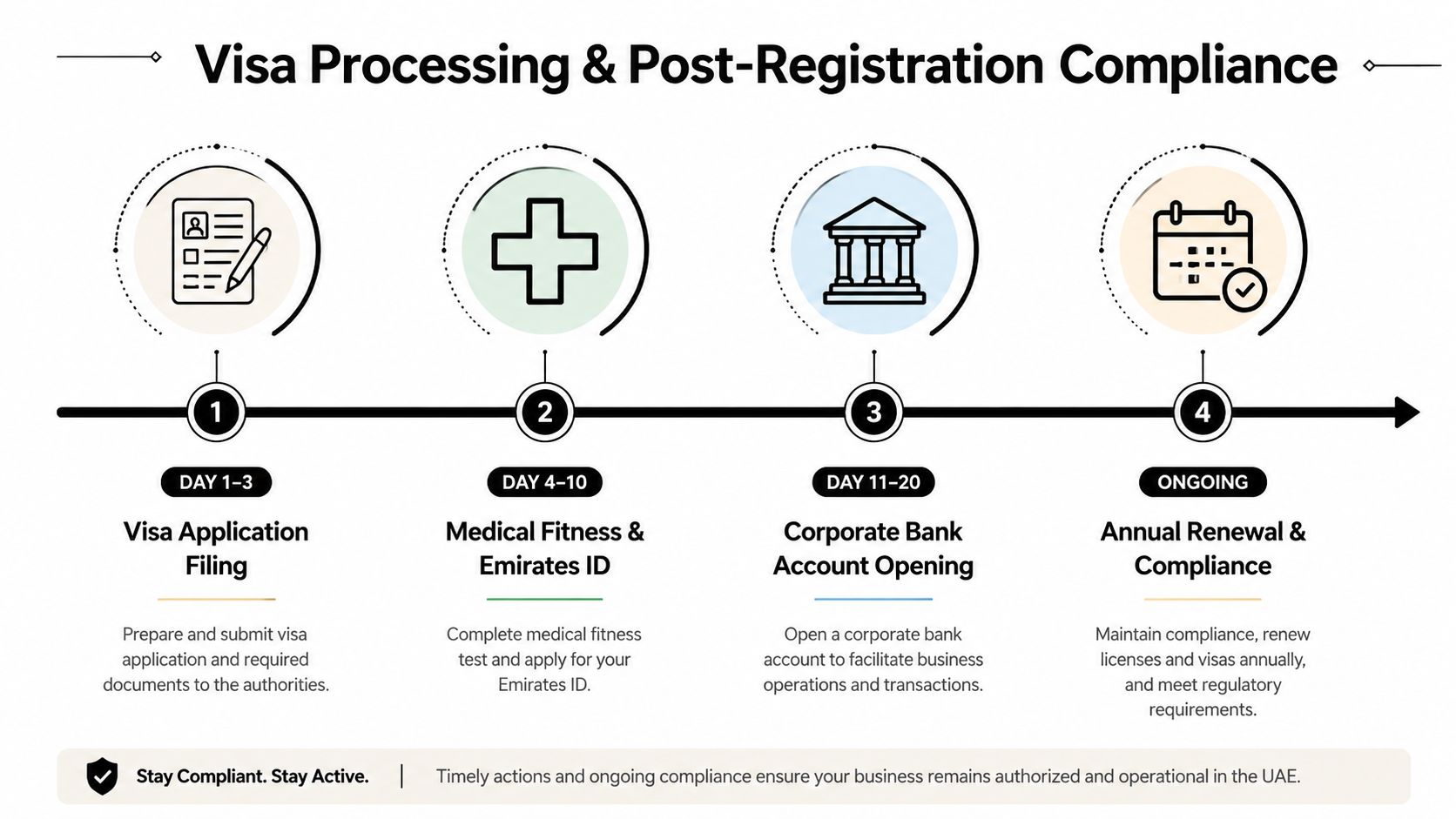
Keep one compliance calendar for the licence, immigration records, tax filings, accounting close, audit requirements, and corporate documents. Assign an owner to every deadline.
Common Registration Mistakes and How to Avoid Them
A founder chooses a low-cost package, submits the file, then discovers that the authority does not cover the intended activity or visa needs. This happens because UAE free zones do not follow one registration workflow. Each authority sets its own documents, approvals, review stages, and bottlenecks.
Choosing the zone from an advert
Treat promotional packages as starting points, not decisions. Confirm the exact activity wording, premises requirement, approval list, visa capacity, and renewal terms with the registrar before paying. Ask for the complete cost and document checklist in writing.
Describing the activity too broadly
“General trading” or “consultancy” can conceal important differences. State what goods you will trade, which service you will deliver, who the clients are, and how revenue will be generated. The authority may require a narrower activity or a separate regulator's approval. An inaccurate description can delay review or restrict later operations.
Treating corporate documents as routine
Corporate applicants often lose time over an incomplete board resolution, missing signatures, or the wrong certification route. Prepare the resolution early, confirm the authorised signatory, and ask the chosen authority whether notarisation, legalisation, or certified copies are required. Do not assume another free zone's document standard will be accepted.
Ignoring sector approvals
Security checks, environmental approvals, and other clearances can stop an application before licence issuance. Review the authority's activity-specific requirements before submitting, and obtain the relevant clearance when the registrar requires it. The free-zone establishment requirements explain why these approvals can apply to particular applicants and activities.
Selecting a structure that blocks the next stage
An FZE, FZ-LLC, and branch suit different ownership and expansion plans. Decide whether you may add shareholders, represent a foreign parent company, or conduct a regulated activity before filing. A later change can require amendments, fresh documents, and another authority review.
Forgetting the first renewal cycle
Licence issuance is only the start of the company's obligations. Record renewal dates, accounting tasks, tax administration, office documentation, and any audit requirement immediately. Assign responsibility for each item, because an overlooked renewal or filing can block normal company operations.
Your Action Plan for a Smooth Free Zone Setup
UAE free-zone registration has no single workflow. More than 40 authorities apply different activity rules, documents, review stages, and approval bottlenecks. Use this sequence to keep your application controlled:
- Define the activity: State your services, products, customers, and operating geography precisely.
- Shortlist jurisdictions: Compare activity coverage, premises, visa capacity, approvals, costs, and portal procedures.
- Confirm the structure: Select an FZE, FZ-LLC, branch, or the structure offered by that authority.
- Prepare the file: Gather identity records, corporate documents, certified resolutions, premises evidence, forms, and sector clearances.
- Submit and monitor: Upload one complete file, track its status in the authority portal, and answer queries in a single organised reply.
- Complete post-licence work: Arrange immigration processing, banking, accounting, tax assessment, and renewal tracking.
Record the submission reference and published processing target. If the application exceeds that target, contact the registrar through the portal, ask which item is holding approval, and keep written confirmation of any requested revision. Do not submit a second application until the authority confirms that the first is closed.
Budget separately for registration, licence, premises, visa, approval, banking, accounting, and compliance costs. A package price rarely covers the full operating requirement. Handle a straightforward individual application yourself when the activity and document rules are clear. Use a consultant for multiple shareholders, a corporate parent, regulated activities, sector approvals, or cross-border documents.
Smart Classic Business Hub can help with activity and structure selection, document preparation, submission, payment coordination, licence issuance, and ongoing compliance. Visit Smart Classic Business Hub before committing to a free zone.