
A Dubai SME owner may start the financial year assuming the annual audit will be a routine sign-off. Then the auditor asks for complete ledgers, tax records, contracts, board approvals, evidence for balances, and explanations for transactions that were posted months ago. At the same time, the free zone requests audited accounts for licence renewal, the tax position depends on the company's status, and the bank wants reliable financial statements before reviewing finance facilities.
That situation is increasingly common because the external audit process in the UAE has become a compliance checkpoint, not just a review of bookkeeping. The delay often happens before fieldwork begins. Records are incomplete, the finance team isn't ready to answer questions, or the preferred auditor has no capacity when the company finally makes contact.
This guide explains the rules that determine whether an audit is required, the four stages auditors follow, the documents they request, how to select an audit firm under tighter oversight expectations, and how to build an audit-ready timetable that works for mainland and free zone companies.
Why the External Audit Process Matters More Than Ever in the UAE
A Dubai trading company can appear ready for its annual audit while still being weeks away from readiness. The ledger may be closed, yet supplier statements remain unmatched, supporting schedules contain unreconciled balances, and no one can explain unusual movements in revenue or related-party accounts. Fieldwork then pauses while the finance team reconstructs evidence and the licence renewal deadline approaches.
The bottleneck has shifted. Recent UAE regulatory changes, including Ministerial Decision No. 84 of 2025, have increased the importance of a complete audit file, while updated professional requirements and auditor rotation expectations are putting pressure on firms' available capacity. In practice, the delay is often caused by readiness and auditor availability rather than the testing itself.
The tax dimension makes preparation more demanding. Ministerial Decision No. 84 of 2025 requires audited financial statements for Qualifying Free Zone Persons regardless of revenue, and for taxable persons whose revenue exceeds AED 50 million in a tax period. Where free zone status is relevant, the audit file also supports the company's corporate tax position. An audit finding does not automatically change tax treatment, but financial reporting, tax records, and eligibility evidence must be prepared as connected workstreams.
A company that waits until year-end to approach an auditor may face limited appointment choices or a start date that conflicts with licensing, banking, or tax deadlines. Auditor rotation rules can also affect continuity, particularly where a company has relied on the same firm for several reporting cycles. The practical trade-off is clear: early appointment requires management attention before the accounts are final, but late appointment can leave the company with fewer suitable firms and less time to resolve issues.
Practical rule: If the audit supports tax, licensing, banking, or shareholder reporting, the effective deadline is the date your team must have complete evidence ready for review, not the date the auditor signs the opinion.
Delayed or poorly supported work can create financing friction. Lenders and shareholders may request explanations for a qualified opinion, unresolved discrepancy, or late report, even when the underlying business remains profitable and operational.
Treat audit readiness as a year-round control. Close accounts properly, retain contracts and approvals, reconcile balances regularly, appoint the auditor early, and give one person ownership of information requests. This approach reduces the final-quarter scramble and gives management time to address gaps before fieldwork begins.
Legal Requirements Driving Mandatory Audits in the UAE
A company can complete its bookkeeping and still misjudge whether an external audit is required. The answer depends on its legal form, jurisdiction, regulatory status, tax position, and the rules imposed by its licensing authority. Confirming those requirements early determines the correct reporting scope and avoids a late change in auditor instructions.
Company law and free zone obligations
Federal Decree-Law No. 32 of 2021, the Commercial Companies Law, sets a clearer audit framework for mainstream corporate structures. Mainland companies generally require annual audits, while public and private joint stock companies fall specifically within the mandatory framework. A smaller operation is not automatically exempt if its legal form or licensing authority requires audited accounts.
Free zone requirements must be checked separately. Authorities may attach audited financial statements to filing or licence renewal conditions, and the detail can differ between jurisdictions. Confirm the current rule with the relevant free zone authority rather than relying on another company's practice, even where the businesses operate in the same sector.
A statutory audit and a stakeholder request can apply at the same time. A bank, investor, or shareholder may require audited accounts even when management is uncertain about the legal position. The engagement scope should reflect all intended uses of the financial statements, including financing, ownership reporting, and regulatory filings.
The 2025 corporate tax expansion
Ministerial Decision No. 84 of 2025 widened the practical reach of audited financial statements. Qualifying Free Zone Persons must prepare audited financial statements regardless of revenue, while taxable persons with revenue exceeding AED 50 million in a tax period must also meet the audited-statement requirement.
The work now extends beyond preparing a trial balance. Financial statements must withstand independent testing, with records supporting revenue, expenses, related-party transactions, tax adjustments, and the basis for any free zone position. Accounting records, the tax return, and transaction evidence should tell the same story. Gaps between those records are a common source of follow-up questions and rework.
The 2025 changes also shift the main bottleneck. Fieldwork may be relatively short when records are ready, but audit readiness takes longer, especially for companies building their first reliable close process. New auditor capacity and rotation requirements make early planning more important because a suitable firm may not be available when the accounts are already due.
Rules for regulated entities
Regulated businesses face further requirements. The UAE Central Bank's Financial Reporting and External Audit Regulation C 5/2023 became effective on 30 April 2024, formalising reporting and audit expectations in regulated sectors. Bank audits supervised by the Central Bank use an ISA-compliant, risk- and materiality-based approach. The framework requires the external audit firm to rotate at least every 6 years, with the lead audit partner rotating every 3 years, as described in the Central Bank external audit regulation.
Most UAE entities also prepare IFRS-based financial statements. That supports comparability, but it requires consistent treatment of estimates, provisions, revenue, leases, assets, and related-party disclosures. Recording a transaction is only part of the requirement. Management must retain the reasoning, approvals, and evidence supporting significant accounting decisions.
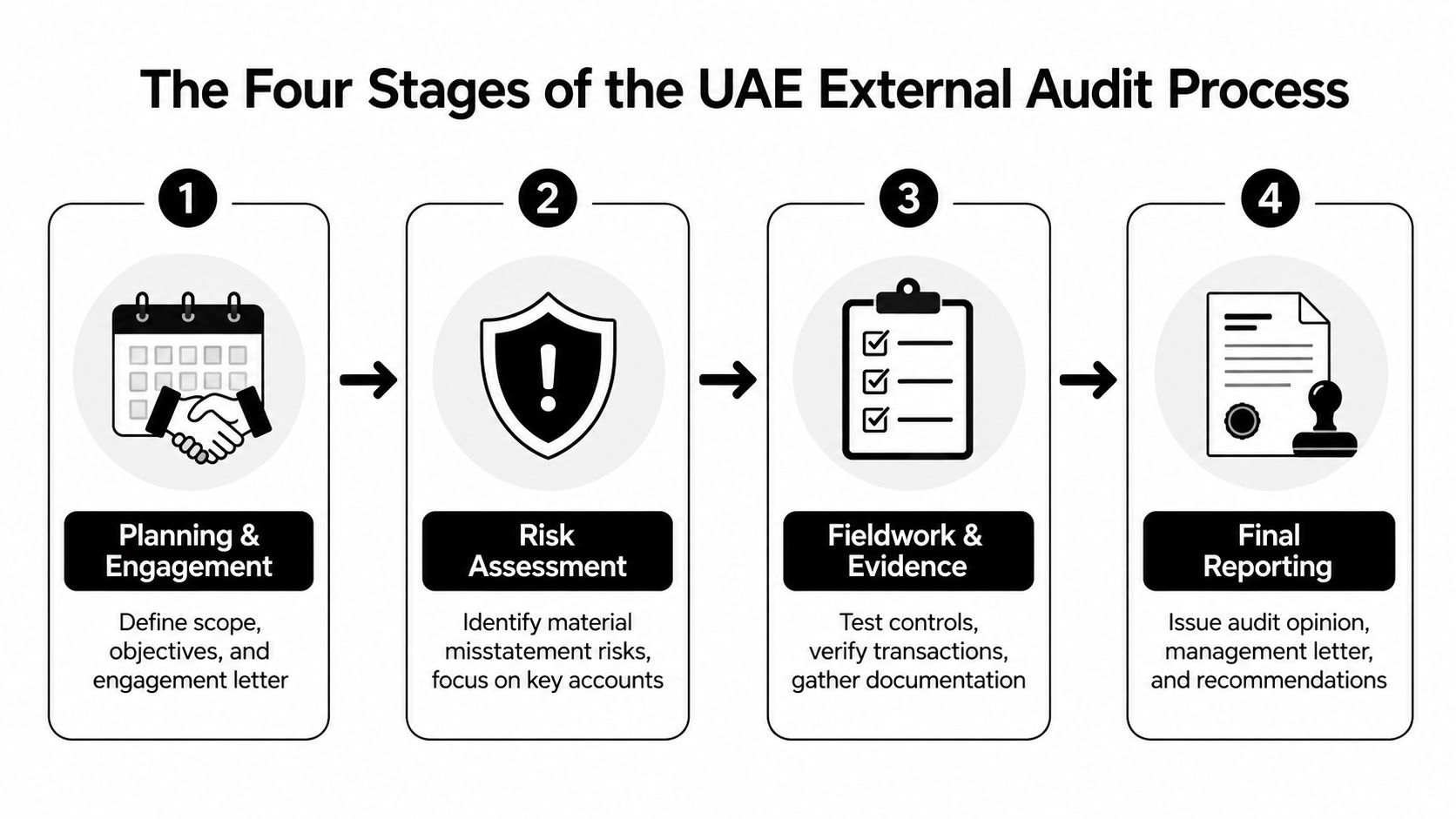
The Four Stages of the External Audit Process
A well-run external audit process follows a clear sequence. Each stage produces information the auditor needs for the next, so a weakness in planning usually appears later as repeated evidence requests, expanded testing, or a delayed report.
Planning and engagement
The auditor starts by understanding the company, its activities, ownership, systems, prior issues, and reporting obligations. The engagement letter should define the scope, responsibilities, deliverables, timing, and information the company must provide. Management should disclose acquisitions, new revenue streams, unusual transactions, disputes, financing arrangements, and changes in accounting systems.
The auditor also establishes materiality. Materiality helps determine which misstatements could influence users of the financial statements and how the audit team allocates attention. It isn't a permission to ignore small errors. A series of individually small errors can become significant when considered together, and qualitative issues can matter even when the amount is limited.
Risk assessment
The auditor identifies accounts and disclosures with a higher risk of material misstatement. Revenue recognition, inventory, receivables, cash, related parties, estimates, tax balances, and unusual journal entries often receive focused attention, but the exact risk profile depends on the company's operations.
This stage influences sampling and testing. The auditor may select transactions, confirm balances with third parties, inspect contracts, recalculate amounts, observe inventory procedures, or test controls. Management can help by explaining how transactions flow from approval to recording and by identifying controls that prevent or detect errors.
Fieldwork and evidence collection
Fieldwork is the part most business owners picture when they think about an audit. The team tests balances and transactions, examines invoices and contracts, reviews reconciliations, checks supporting schedules, and follows up on discrepancies. Auditors don't just compare the ledger with a document. They assess whether the evidence is sufficient, relevant, reliable, and consistent with the financial statement assertion being tested.
A single point of contact makes this stage more efficient. That person should maintain a request tracker, assign owners, check submissions for completeness, and avoid sending scattered files through unrelated email threads. Where information security is a concern, management can also review practical auditor-ready security reports before sharing system and control evidence.
Final reporting
The auditor evaluates unresolved differences, reviews management's explanations, and obtains management representations before issuing the report. Management representations confirm matters such as responsibility for the financial statements, completeness of information, and disclosure of relevant events. They don't replace documentary evidence, but they form part of the final audit file.
For SCA-audited capital-market entities, filings must be submitted within 3 months of financial year-end, according to SCA audit compliance guidance. That filing window makes early engagement and evidence readiness critical. If the auditor finds discrepancies late, management still needs time to post adjustments, approve revised statements, resolve disclosure questions, and complete the reporting process.
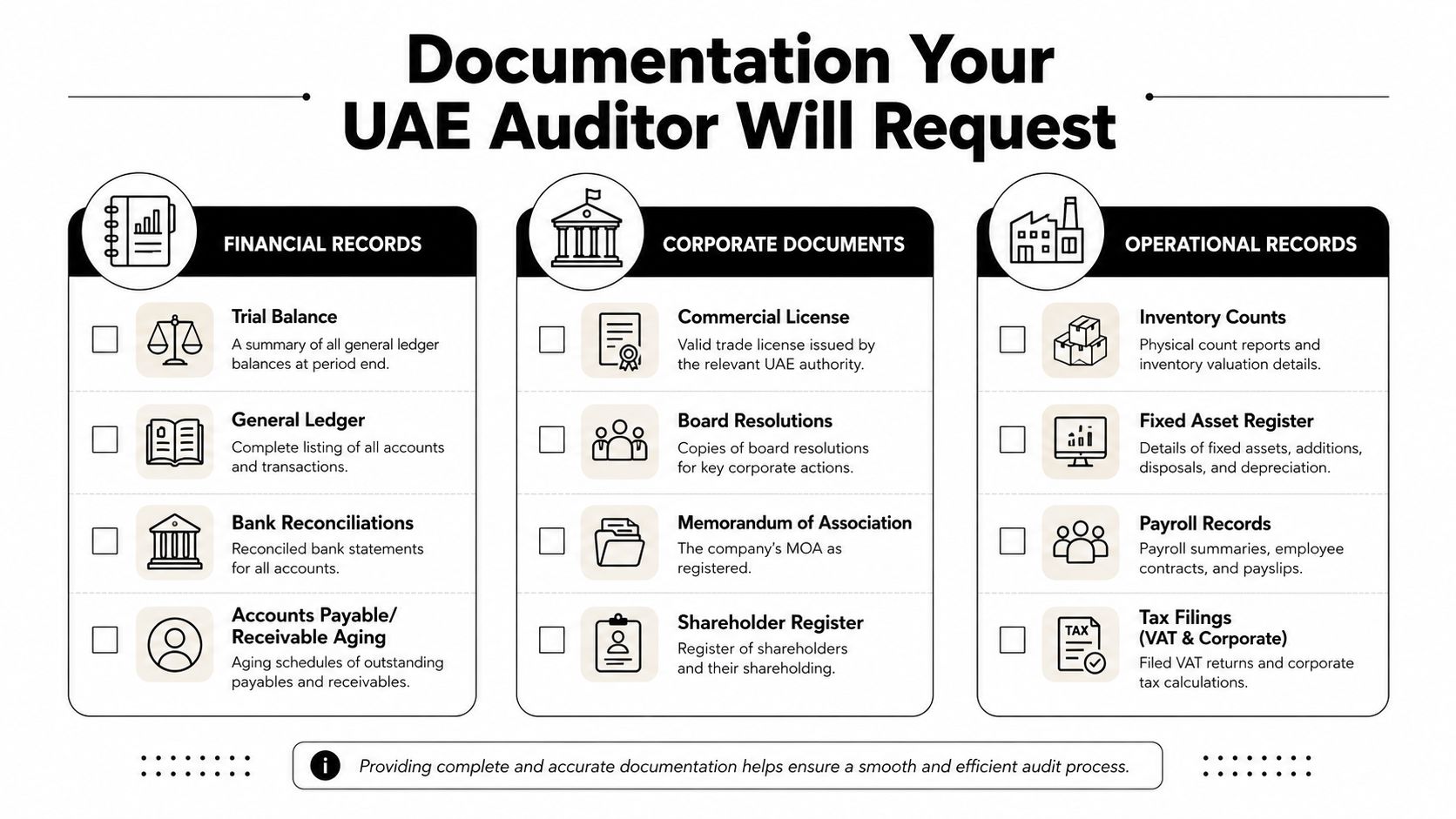
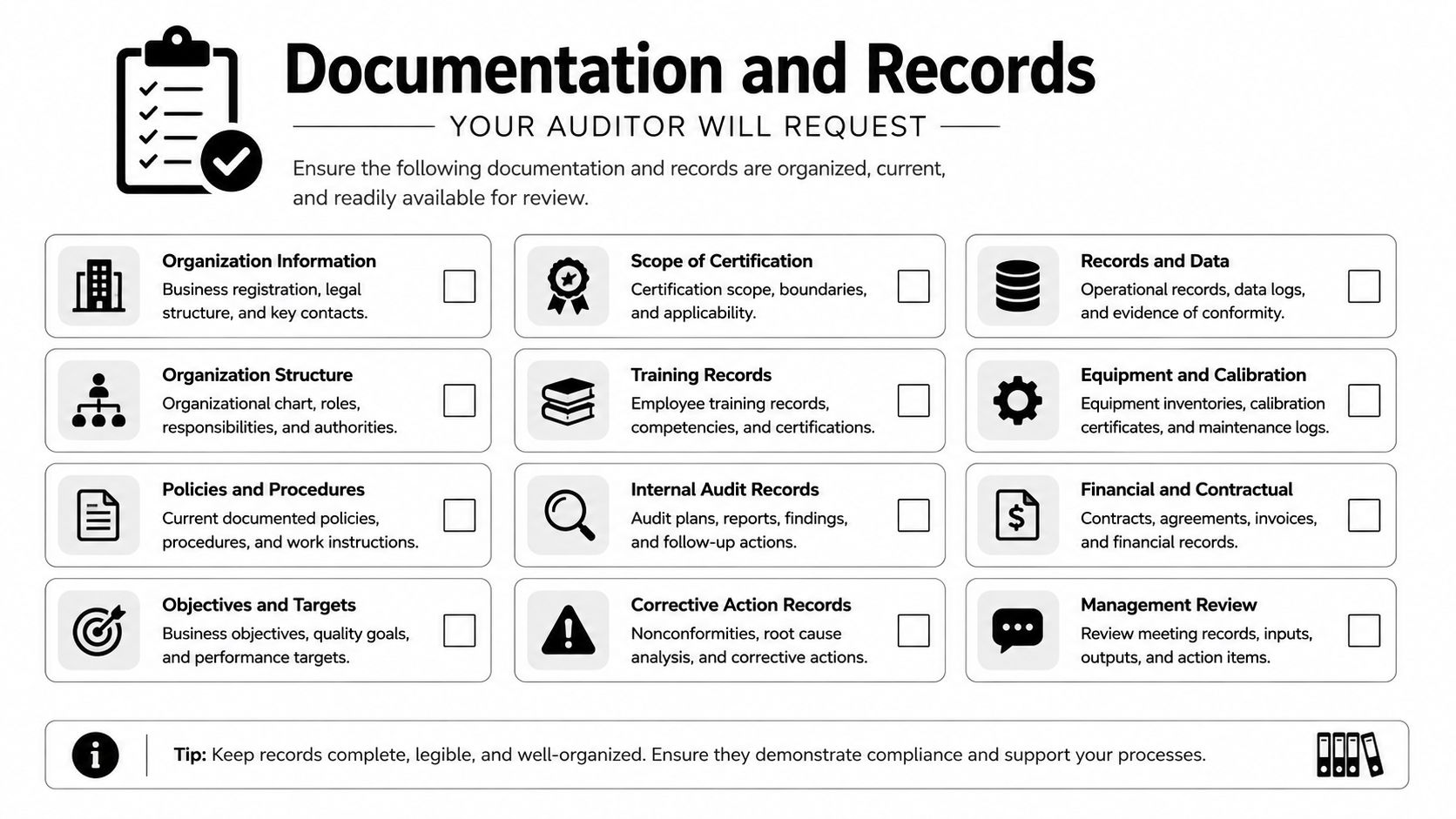
Documentation and Records Your Auditor Will Request
Auditors don't audit the accounting software. They audit the financial statements and use records, confirmations, calculations, contracts, and explanations to support their conclusions. A company can have a clean-looking ledger and still be unprepared if it can't demonstrate why transactions were recorded in a particular way.
Financial records
Start with the core accounting file:
- Trial balance: Provide the final period-end balances and a clear mapping to the financial statements.
- General ledger: Make sure account descriptions, journal narratives, dates, and reference numbers are understandable.
- Bank reconciliations: Reconcile every account and investigate old outstanding items instead of carrying them forward without explanation.
- Receivables and payables ageing: Tie the ageing reports to the ledger and identify disputed, overdue, or potentially irrecoverable balances.
- Supporting schedules: Prepare movement schedules for fixed assets, loans, provisions, prepayments, accruals, and other material balances.
IFRS-based reporting makes the quality of those schedules important. The auditor needs to understand not only the closing amount but also the assumptions, classifications, recognition decisions, and movements that produced it. A spreadsheet with unexplained manual adjustments creates more work than a smaller but properly documented reconciliation.
Corporate and tax records
Keep the commercial licence, memorandum and articles or equivalent constitutional documents, shareholder register, board resolutions, authorised signatory records, and changes in ownership or management together. These records help the auditor understand authority, related parties, capital movements, and governance decisions.
Tax evidence should include VAT returns, VAT workings, payment records, corporate tax filings, tax computations, and transfer pricing documentation where applicable. The VAT compliance checklist can help finance teams organise VAT records before the audit request list arrives.
Operational evidence
Contracts, customer purchase orders, supplier agreements, payroll records, inventory counts, delivery notes, fixed asset registers, insurance documents, and legal correspondence connect accounting entries to real business activity. For example, an auditor testing revenue may need to see the contract, invoice, delivery evidence, and receipt rather than the invoice alone.
The missing document is often more damaging than the missing entry. If the transaction exists but the company can't prove its terms, timing, approval, or business purpose, the auditor may need to expand testing.
Monthly close discipline prevents that problem. A structured month-end reporting process with Zynthoro can help teams standardise reconciliations, review movements, and preserve an audit trail rather than reconstructing the year after the fact.
Choosing the Right Auditor and Understanding New Capacity Constraints
Price matters, but it's a poor first filter. A low fee won't help if the firm lacks experience in your sector, can't meet the reporting deadline, or requests information in a way your team can't manage. The right selection balances licensing, technical competence, availability, independence, communication, and quality controls.
Compare firms on practical criteria
| Selection area | What to verify | Why it affects the audit |
|---|---|---|
| Licence and authority acceptance | Whether the auditor is licensed and accepted by the relevant authority | An otherwise capable firm may not satisfy a jurisdiction-specific requirement |
| Sector experience | Work with your industry, systems, revenue model, and regulatory environment | Familiarity helps the auditor identify relevant risks without wasting time |
| Availability | Named team, planned fieldwork dates, review capacity, and escalation route | A signed engagement without real capacity can still result in delay |
| Quality controls | How the firm reviews working papers, independence, and complex judgements | Quality review affects consistency and report confidence |
| Commercial terms | Scope, deliverables, exclusions, additional work rates, and payment terms | The cheapest proposal may omit work your company actually needs |
The UAE-focused regulatory environment places greater demands on audit firms themselves. Recent coverage identifies 40 hours of annual CPE, quality-control review reporting every 3 years, and minimum professional indemnity insurance of AED 2 million for auditors, alongside more explicit disclosure expectations for larger entities. These requirements are summarised in recent UAE regulatory changes affecting audit firms.
Those figures aren't merely credentials to collect during procurement. CPE, internal review, insurance, and disclosure responsibilities consume professional capacity. Firms may need to reserve experienced staff for regulated or technically complex engagements, which makes late appointment especially risky.
Rotation and late switching
For Central Bank-supervised banks, the external audit firm must rotate at least every 6 years, and the responsible audit partner must rotate every 3 years, as covered earlier. A regulated entity that waits until the end of the cycle to appoint a replacement may face additional transition work, including opening-balance reviews, system familiarisation, independence checks, and transfer of prior-year information.
For other companies, changing auditors late can still create problems. The incoming firm must understand the business, assess opening balances, request prior working papers where appropriate, and build its own risk assessment. Management should ask about transition requirements before ending the existing engagement, not after the reporting deadline becomes urgent.
A practical comparison of firms should therefore include UAE auditing firm selection considerations such as authority fit, industry knowledge, communication standards, and realistic scheduling. Appoint early enough for the auditor to understand the business before year-end, especially if the company relies on audited accounts for licence renewal or tax support.
Common Audit Findings and How to Prevent Them
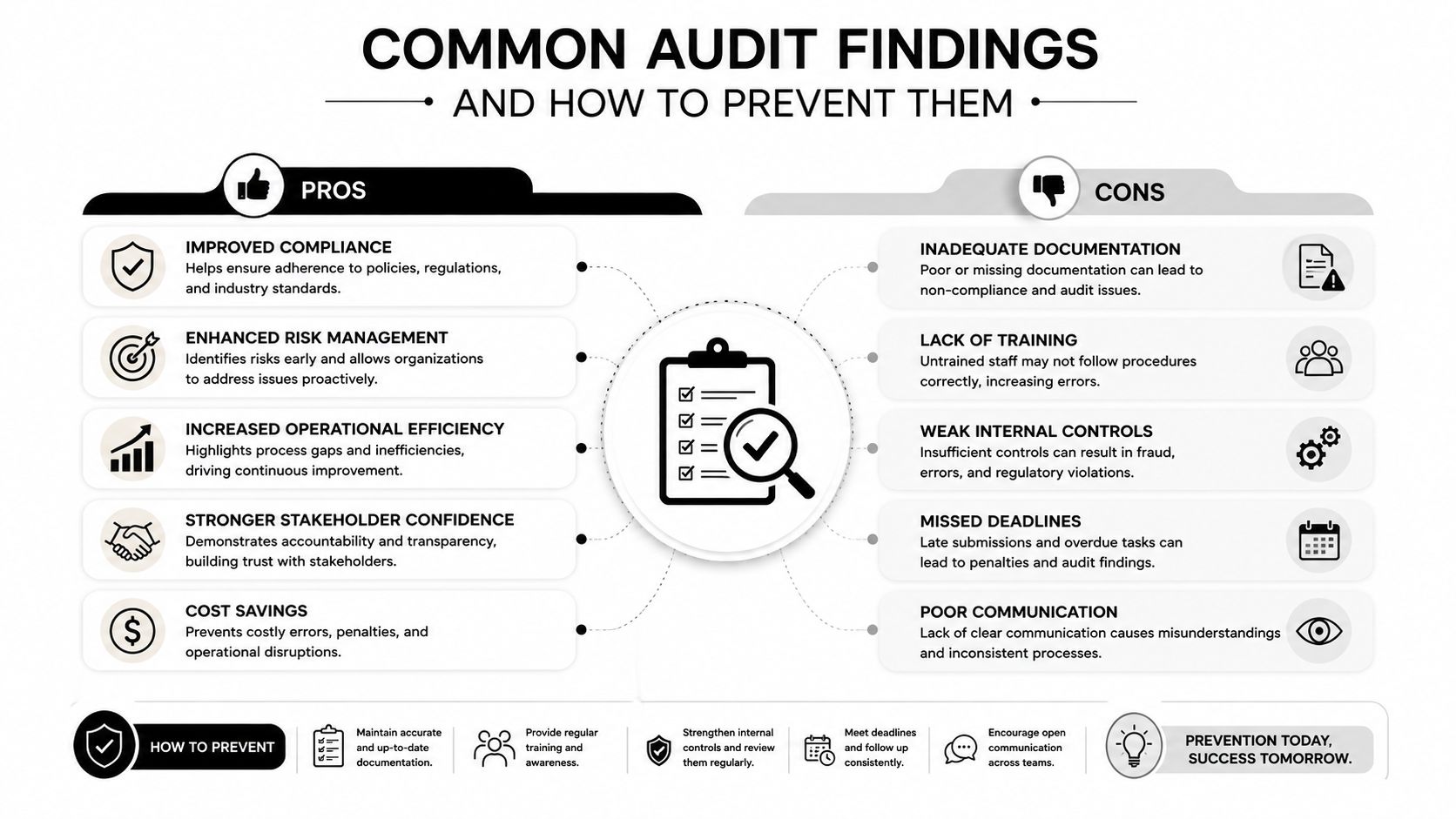
Many audit findings aren't surprises. They're the visible result of weak monthly processes, unclear ownership, or records assembled only when the auditor asks for them.
Revenue and supporting evidence
Revenue errors often arise when teams record invoices without checking the underlying contract, delivery obligation, acceptance condition, or cut-off. The consequence can be a proposed adjustment or a disclosure issue. Maintain a contract-to-cash file for material customers and reconcile invoices to delivery and receipt evidence throughout the year.
VAT and corporate tax records
A company may submit VAT returns but fail to preserve the calculations, tax invoices, exemption analysis, or reconciliation to the general ledger. Missing corporate tax workings or transfer pricing support can create questions about the tax position and may lead to adjustments or regulatory exposure. Assign an owner to maintain the tax file, not just submit the return.
Assets and related parties
Fixed asset registers often omit disposals, locations, commissioning dates, or supporting invoices. Related-party balances may also be recorded without complete disclosure of terms, approvals, or settlement history. Update the register when assets move or leave the business, and maintain a related-party schedule that links transactions to ownership and management records.
Going concern and estimates
Management may prepare financial statements without documenting how it assessed liquidity, debt obligations, losses, or dependence on major customers. Auditors then need to ask for forecasts and evidence late in the engagement. Keep a current cash-flow forecast, document significant assumptions, and escalate indicators of financial stress before the closing process.
The preventive discipline is straightforward but not effortless:
- Close monthly: Reconcile balances while transactions and explanations are still accessible.
- Review unusual entries: Require clear narratives and approval for manual journals.
- Track open matters: Maintain a list of disputes, legal claims, overdue balances, and unresolved tax questions.
- Document judgements: Record why management selected a treatment, estimate, classification, or disclosure.
- Keep transfer pricing support current: Use the transfer pricing documentation guidance to organise the relevant analysis and records.
Your Practical Audit Preparation Timeline
At the start of the financial year, set the accounting calendar, document approval responsibilities, and preserve invoices, contracts, bank evidence, payroll records, and tax workings as transactions occur. Don't wait for the auditor's request list to discover that documents are spread across personal inboxes and shared drives.
At the mid-year checkpoint, reconcile VAT returns to the ledger, review receivables and payables, update the fixed asset register, and test key controls. Management should also identify unusual transactions, related-party activity, new financing, and accounting judgements that will need explanation.
In the final quarter, appoint or confirm the auditor, agree the timetable, and prepare draft financial statements and lead schedules. Compile the corporate file, tax file, bank confirmations, contract population, inventory records, and management's list of events after the reporting date. Free zone companies should check whether audited accounts are needed for licence renewal and work backwards from that authority deadline.
Before fieldwork begins, hold an internal review of every account and open request. Assign one coordinator, prepare management representation topics, and discuss unresolved discrepancies with the auditor early. Teams that want a broader readiness framework can move beyond audit checklists by linking evidence collection to ownership, controls, and recurring reporting routines.
An audit becomes more useful when management treats it as a test of the finance function rather than an annual interruption. Strong records reduce avoidable questions, give directors better information, and leave the company better prepared for tax, licensing, lending, and growth decisions.
Smart Classic Business Hub supports UAE companies with VAT-compliant accounting, bookkeeping, statutory audit coordination, tax compliance, and broader business advisory services. If your company needs a structured plan for audit readiness, licence renewal, or corporate tax documentation, visit Smart Classic Business Hub to discuss the next step with its Dubai-based consultants.