
The date of incorporation is the day the registrar officially enters a company in the UAE register, creating it as a separate legal person. For entities incorporated, established, or recognised on or after 1 March 2024, that date also starts the three-month corporate tax registration deadline, not the trade licence issue date.
You may be looking at a freshly issued certificate of incorporation, a trade licence, and an email from a free zone portal, all showing dates that don't appear to match. This is common for first-time founders. One document records when the company legally came into existence, while another may record when a particular licence was issued or renewed.
That distinction affects more than terminology. It can determine which date you use for corporate tax registration, banking forms, supplier onboarding, visa-related records, contracts, and government filings. It becomes especially important if your business later changes its legal form.
A Founder's First Confusing Moment at the Registration Desk
A founder arrives at a Dubai Department of Economy and Tourism counter with a folder of formation documents. The trade licence shows an issue date. The certificate of incorporation, which arrived in the free zone or authority portal, shows another date. A bank relationship manager asks for the company's incorporation date, while a tax registration form asks when the entity was established.
The founder has a reasonable question: which date does the UAE authority care about?
The answer is the date on which the registrar entered the company into the official register. That entry marks the point at which the entity begins to exist as a separate legal person. The trade licence is important, but its issue date describes the licensing document, not necessarily the company's original legal birth.
Practical rule: Keep the certificate of incorporation and the official registry record together. Treat the incorporation date as the company's primary legal date, then record licence dates separately.
The difference is easy to miss because the setup process can move quickly. The UAE Ministry of Economy's company establishment guidance explains that some digital establishment workflows can be completed in as little as 15 minutes, yet the legal and tax consequences still depend on the incorporation date rather than the speed of the administrative process.
That creates the central UAE compliance issue. Your licence may arrive rapidly, but the corporate tax clock doesn't wait for you to begin trading, open a bank account, or receive a printed document. The rest of this guide explains what the date means, where to find it, how it differs across UAE structures, and what changes after a legal-form conversion.
Defining the Date of Incorporation in Plain English
In plain English, the date of incorporation is the calendar date on which the registrar enters a company in the official register and recognises it as a separate legal person.
A useful working definition is:
The date of incorporation is the company's legal birth date recorded by the relevant UAE registrar.
That date is different from the date on a trade licence. A trade licence authorises the company to conduct specified activities under a stated legal form and authority. Its issue date may change when the licence is renewed or reissued, but renewal doesn't normally create a new company or reset the entity's age.
The UAE Federal Tax Authority makes the distinction particularly important. For newly formed resident companies, including free-zone persons, the corporate tax registration deadline is tied to incorporation, establishment, or recognition. The FTA states that the year of licence issuance is irrelevant to that deadline, and the compliance benchmark is 90 days for the relevant newly formed entities, even where trading hasn't started. You can review the FTA decision on specified corporate tax registration timeframes for the authority's explanation.
For example, if a company was incorporated on 1 April 2024, its general registration deadline would be 1 July 2024. The calculation follows the incorporation date, not the date on which the founder signed the formation documents or downloaded the licence PDF.
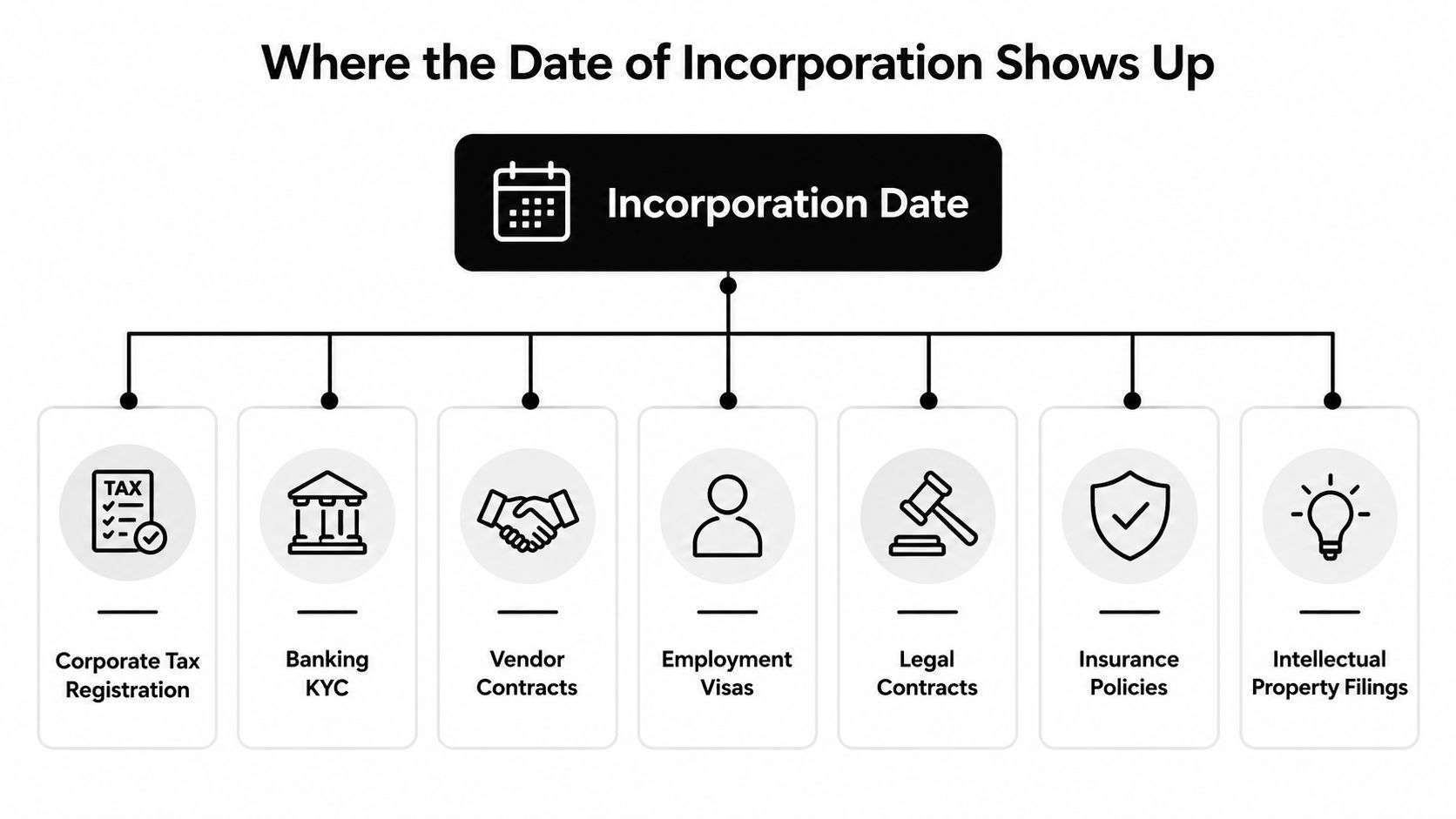
The same date can appear in several administrative contexts, but the label may vary. A form may ask for “date of incorporation”, “date of establishment”, “registration date”, or “date of recognition”. Read the form alongside the company's certificate and registry extract rather than assuming the trade licence issue date is an acceptable substitute.
The distinction also helps with international compliance paperwork. If a bank, customer, or overseas tax team asks about validation terminology, a VIES validation glossary can help clarify related registration and tax identity terms. It doesn't replace the UAE registrar's records, but it can reduce confusion when different jurisdictions use similar words differently.
Where the Date of Incorporation Actually Shows Up
The incorporation date works as a reference point across the business, even when no single document explains its significance. It appears in formal filings and is often requested during checks performed by banks, customers, regulators, and professional advisers.
Corporate tax registration
The most time-sensitive use is corporate tax registration. For entities covered by the UAE FTA's rule for companies incorporated, established, or recognised on or after 1 March 2024, the application must generally be submitted within three months of incorporation. A company can therefore have a tax registration obligation before it has generated revenue or started commercial operations.
That makes the certificate date an immediate compliance item, not a historical detail.
Banking KYC
Banks commonly ask for the certificate of incorporation, trade licence, constitutional documents, ownership information, and proof of address during corporate account opening. The incorporation date helps the bank understand when the legal entity was created and whether the documents presented belong to the same active entity.
If the licence has been renewed, explain the difference instead of replacing the incorporation date with the latest licence issue date.
Visas and establishment records
Visa processing usually involves the company's establishment records, authorised signatories, immigration file, and approved activities. The incorporation date can help connect the entity's legal identity to those records, although visa eligibility and quota decisions also depend on the authority, activity, premises, and application requirements.
Tenders and supplier onboarding
Government bodies, large buyers, and procurement portals may ask for the company's registration or incorporation date as part of vendor due diligence. They may also request the legal form, licence number, status, activities, and expiry date. Use the date shown in the official company record and keep the supporting certificate ready.
Contracts and anniversaries
Commercial agreements sometimes identify a party by its incorporation date, registration number, or place of incorporation. The date can also help lawyers distinguish a company from a similarly named business and track corporate anniversaries or document versions.
Government records and reporting
For mainland entities, commercial registry records can show an issue date alongside the licence number, legal form, status, activities, and expiry date. Those fields help authorities and counterparties verify that the entity is the one named in a contract or application.
Entity age in commercial decisions
A company's age may be considered informally during tender reviews, credit discussions, supplier onboarding, and investor checks. That doesn't guarantee approval or create a legal entitlement, but an accurate incorporation date gives counterparties a consistent record of how long the entity has existed.
The date can also sit alongside the memorandum and articles of association, especially when ownership, management powers, and legal form are being reviewed. Founders working through the steps to register a UAE memorandum of association should preserve the final signed version with the certificate and registry extract, because these documents help establish the company's legal identity.
For a practical explanation of the document itself, keep the UAE certificate of incorporation guide with your internal compliance records.
How to Find and Record the Date of Incorporation in the UAE
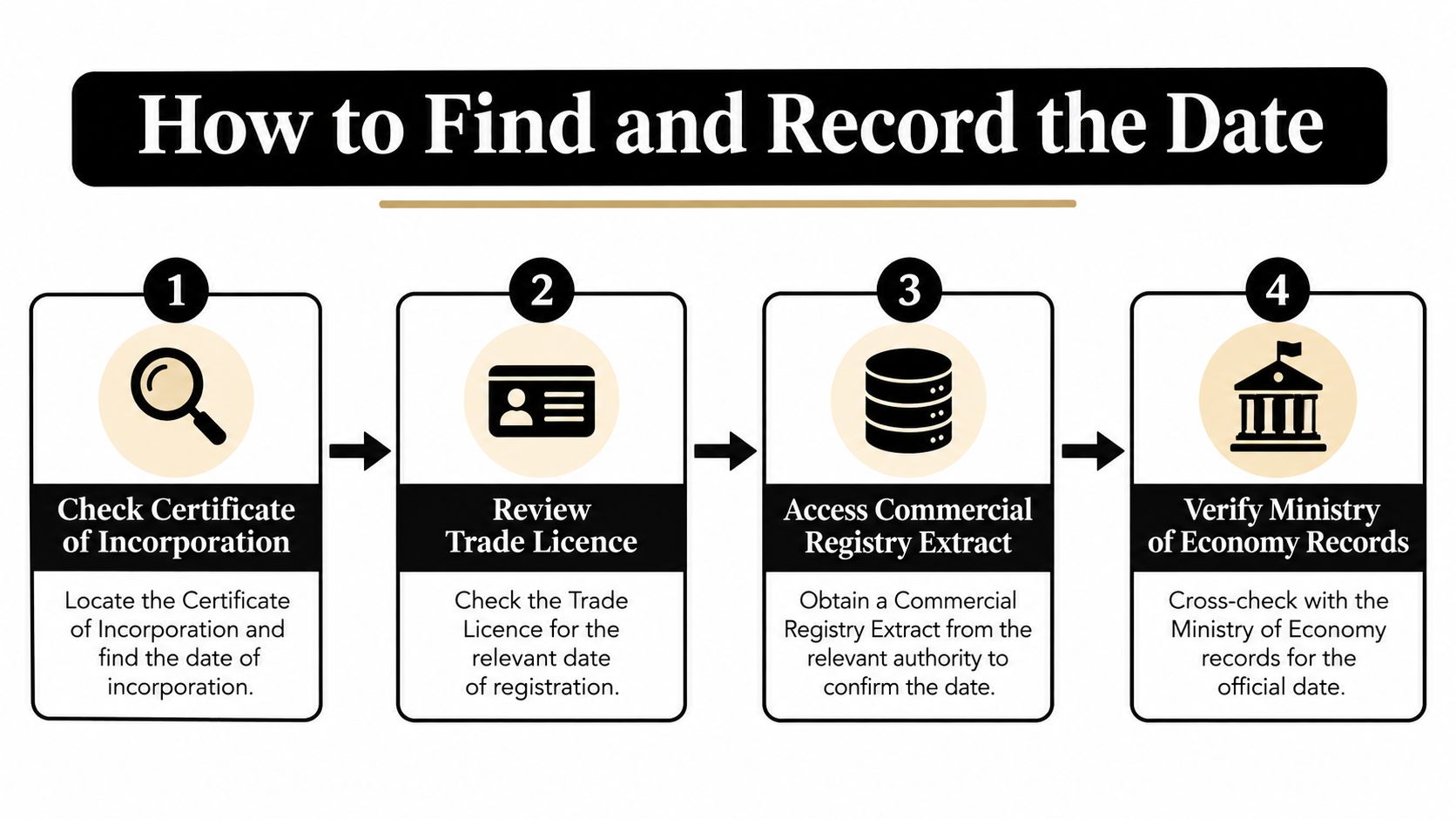
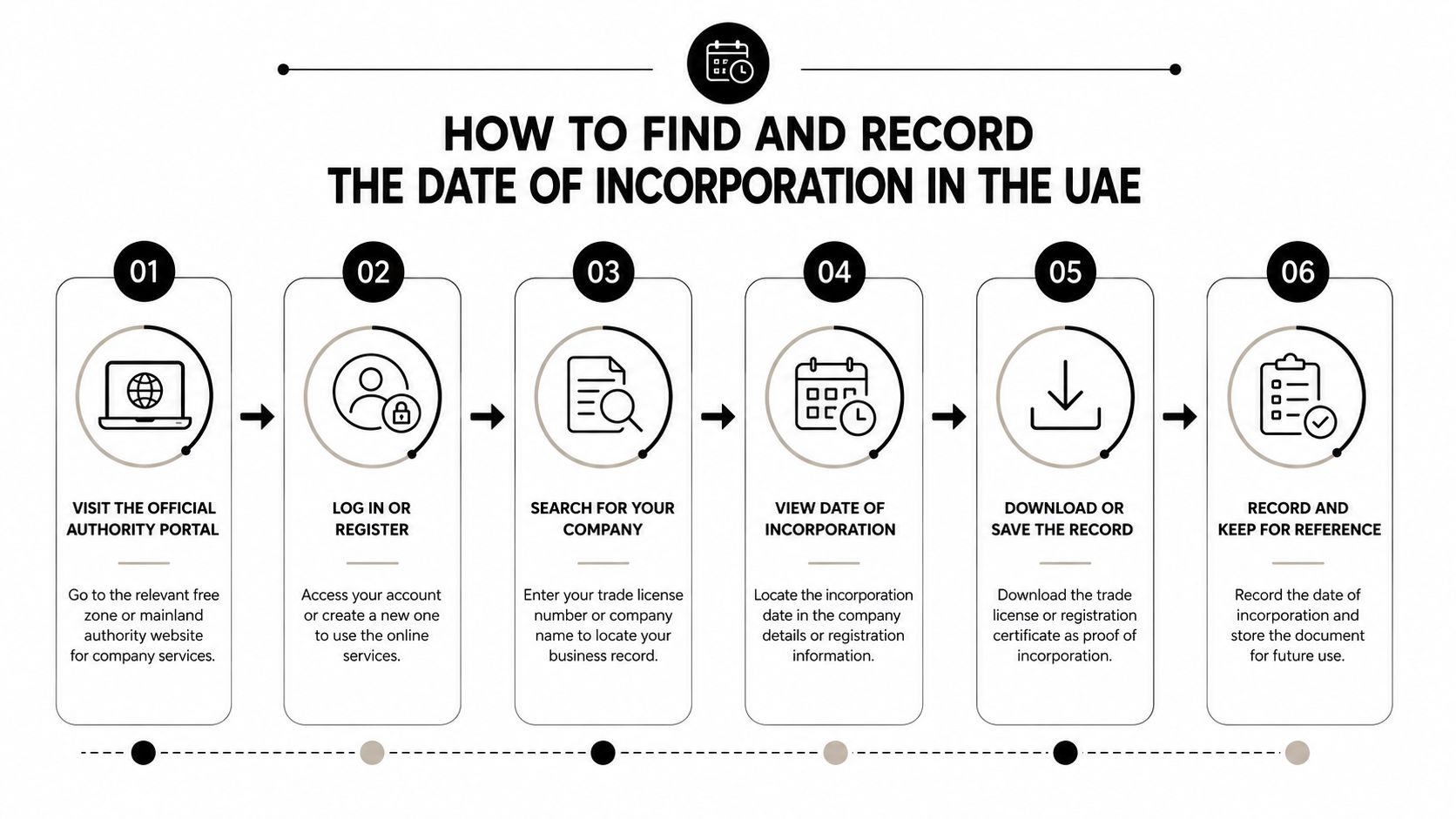
Start with the certificate of incorporation. This is usually the clearest document because it records the registrar's recognition of the company. Look for wording such as “date of incorporation”, “date of establishment”, or “incorporation date”. Save the original PDF, not just a screenshot, and preserve the document reference or certificate number.
Next, review the trade licence. The licence may show an issue date, expiry date, licence number, legal form, status, and business activities. It may not present the original incorporation date in the same prominent position, so don't assume the first visible date is the date you need.
Check the underlying registry
For a mainland company, request or access the relevant commercial registry extract or official company record. The record can place the issue date next to the licence number, legal form, status, activities, and expiry date. Compare those fields with the certificate rather than treating any difference as an error.
For a free zone company, check the issuing authority's portal and corporate documents. Authorities such as DMCC, RAKEZ, and DIFC may use different document layouts and labels, but the principle remains the same: identify the date attached to legal incorporation or establishment, not merely the date a licence was printed or renewed.
The Ministry of Economy's records can provide another verification point where applicable. If two documents conflict, ask the issuing authority or your company secretary to confirm which date is the official incorporation date before submitting a tax or banking application.
Record one controlled version internally
Create a compliance register with separate fields for:
- Legal incorporation date: the date entered by the registrar.
- Licence issue date: the date shown on the current licence.
- Licence expiry date: the renewal reference for the current licence.
- Legal form: for example, an LLC or free zone company.
- Issuing authority: the mainland department or free zone registrar.
- Supporting document: the certificate or registry extract that proves the date.
A mainland LLC might show its incorporation date on the certificate and a later issue date on a renewed licence. A free zone company might show the date as “date of establishment” in its portal and use “registration date” in a registry extract. Log both labels, but identify which one represents legal incorporation.
This record should sit in a restricted but accessible compliance folder, with a copy available to the finance lead, PRO, company secretary, and authorised signatory. If you're organising a broader Dubai setup file, the guidance on how to register a business in Dubai can help you map formation documents to the rest of your administrative records.
Jurisdictional Variations and the Conversion Exception
The core principle is consistent across UAE structures, but the document trail differs. A mainland company is recorded through the relevant emirate's economic department and commercial registry. A free zone company is recorded by its free zone registrar. An offshore or international business company has its own registering authority and document set.
The date therefore belongs to the entity's official record, not to a generic UAE licence format.
| Jurisdiction | Issuing authority | Default incorporation date | Common conversion rule |
|---|---|---|---|
| Mainland | Relevant emirate economic department and commercial registry | Date the registrar records the company as incorporated | A legal-form conversion may require the updated conversion date for tax administration |
| Free zone | Relevant free zone registrar | Date the free zone authority establishes or registers the entity | The authority's updated record should be checked after a legal-form change |
| Offshore | Relevant offshore registrar | Date the offshore authority registers the vehicle | Confirm the registrar's treatment when the structure or legal form changes |
The more important variation arises after a conversion or restructuring. A company may begin under one legal form and later change to another. In that situation, recent FTA-related commentary indicates that the “date of conversion” shown on the updated trade licence can become the date entered as the date of incorporation for tax administration purposes.
That doesn't mean every renewal creates a new incorporation date. A routine licence renewal is different from a legal-form conversion. The issue is whether the company's legal structure has changed and whether the authority has issued an updated record showing a conversion date.
Conversion requires a fresh document review. Don't copy the original incorporation date into a tax application without checking the updated licence and the authority's instructions.
Generic explanations often fail founders in this regard. They correctly describe the first registration date, then overlook the treatment of a converted entity. If your business is moving between legal forms, compare the mainland and free zone implications using this UAE mainland versus free zone guide and obtain confirmation from the registrar or a UAE tax adviser before filing.
The practical response is simple. Keep the original certificate, the conversion resolution, the updated licence, and any registry extract together. Record both the original incorporation date and the conversion date, then document which date was used for the specific tax or regulatory filing and why.
Three Real-World UAE Founder Scenarios
A Dubai Internet City software company
A software founder receives a certificate from a Dubai free zone authority and assumes the tax work can wait until the first customer signs. The relevant date is the date the authority established and recorded the entity, not the date the founder begins invoicing.
The founder should place that date in the compliance calendar immediately and work towards the corporate tax registration application within the applicable three-month period. The outcome is a clear distinction between “not trading yet” and “not yet subject to an administrative deadline”.
A Sharjah business changing legal form
A Sharjah business originally operates as a sole establishment and later converts into a civil company. The updated trade licence records the conversion date. The finance team keeps the original business paperwork but enters the conversion date as the incorporation date for the relevant tax administration record, subject to confirmation from the authority or adviser.
The outcome is a defensible file containing both dates, rather than an unexplained mismatch between the original registration and the updated legal form.
A foreign investor using an offshore vehicle
A foreign investor establishes a RAK ICC vehicle and begins discussions with an overseas bank. The bank asks for incorporation documents, ownership information, and the company's registration date. The investor supplies the certificate and registry evidence, while keeping the licence or registration renewal information separate.
The outcome is a consistent answer for banking and corporate records. For tax residency or cross-border documentation, the investor should also confirm whether the relevant authority requires evidence of management, activity, residence, or other conditions beyond the incorporation date.
These examples show why one date can lead to different actions. The startup faces a tax registration calendar, the converted company faces a date-selection issue, and the offshore vehicle faces documentary verification. In each case, the correct response starts with the official registrar's record.
Your 30-Day Post-Incorporation Action Checklist
The certificate of incorporation should trigger an organised administrative routine. Use the legal date as the starting point, but keep deadlines that arise from the licence, visa file, and regulated activity separate.
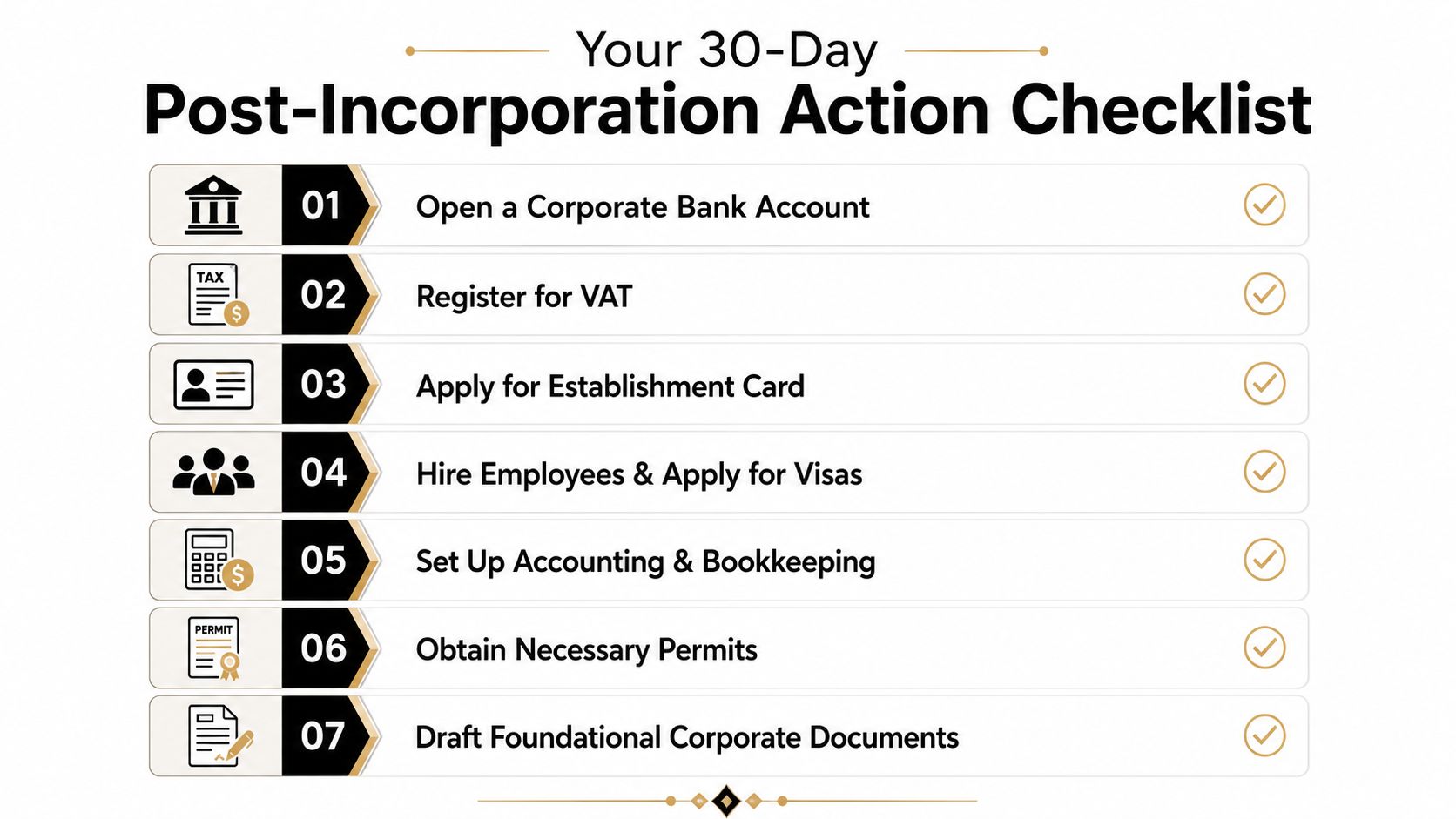
- Open the corporate bank account: Give the bank the certificate, current licence, constitutional documents, ownership records, and authorised signatory information.
- Review corporate tax registration: Calculate the applicable FTA deadline from the incorporation, establishment, or recognition date. Don't use the licence renewal date.
- Assess VAT requirements: Ask your tax adviser to assess whether VAT registration applies to the business based on its activities and circumstances.
- Apply for the establishment card: Coordinate the immigration and labour records needed for the company's planned staffing and visa applications.
- Set up accounting records: Create the company ledger, document retention system, invoice process, and approval controls from the first transaction.
- Check permits and regulated approvals: Confirm whether the selected activity needs approval from a sector regulator or another government authority.
- Store the key dates: Add the incorporation date, current licence issue date, licence expiry date, conversion date if relevant, and tax deadlines to a shared compliance register.
The checklist works best when one person owns the register and another person reviews it. A founder may retain the original documents, but the finance team, PRO, and company secretary should know where the controlled copies are stored.
Putting It All Together and Knowing When to Ask for Help
The date of incorporation is the company's legal anchor, not a clerical detail. Record it separately from the licence issue date, check the conversion exception, and ask a UAE consultant for help when tax timing, legal-form changes, or mainland, free zone, and offshore records don't align.
Smart Classic Business Hub supports UAE company formation, trade licence and registration procedures, corporate tax timing, PRO coordination, accounting, tax residency documentation, and post-incorporation compliance. Visit Smart Classic Business Hub to discuss your incorporation records and the next actions for your UAE entity.