
You’ve probably reached the same point many Dubai-based founders and professionals do. The business is settled, your residence visa is active, and now the family side needs to catch up. On paper, a spouse visa uae application looks straightforward. In practice, most delays happen because people start collecting documents before they’ve confirmed the basics, or they submit a file that looks complete but doesn’t match what immigration officers verify.
For business owners and investors, the risk isn’t just inconvenience. A returned application can mean extra visits to Amer centres, rescheduling medicals, chasing attestations from abroad, and losing time you should be using to run the company. The process works well when it’s treated as a compliance exercise, not a casual admin task.
A strong application comes down to three things. Eligibility must be clear. Documents must be consistent. Timing must be controlled from the day your spouse enters the UAE.
Confirming Your Eligibility to Sponsor a Spouse in the UAE
A lot of spouse visa files go off track before the first form is typed. A founder assumes the company trade licence is enough proof of income. An investor books attestations for the marriage certificate, then finds out the salary evidence does not support sponsorship. The result is wasted time, extra typing fees, and avoidable back-and-forth with the authorities.
Start with eligibility. If that part is weak, the rest of the file will not save it.
The core rule is straightforward. You need a valid UAE residence visa, and you need to meet the income level that applies to your case. As noted in RAKEZ’s spouse visa guidance, the standard benchmark used for sponsoring a spouse is AED 4,000 per month, or AED 3,000 with employer-provided accommodation.
That is only the first screen.
Immigration officers do not assess income as an isolated number. They check whether your documents tell one consistent story. If your labour contract shows one salary, your salary certificate shows another, and your bank activity does not support either, the application can stall even if you appear to meet the threshold.
For salaried employees, this is usually manageable. For business owners, partners, and investors, mistakes often become expensive. Many self-sponsored residents or shareholders assume company ownership automatically proves capacity to sponsor a spouse. It does not. The file still has to show personal eligibility in a format the reviewing authority accepts. In practice, that often means cleaning up salary records, aligning licence and visa details, and choosing the right supporting documents before submission. Our team deals with this issue often because DIY applicants tend to discover it only after the application is queried.
Female sponsorship needs extra care. The applicable conditions can be more specific depending on profession, salary, and current visa status. If a wife is sponsoring her husband, the safest approach is to confirm the current category before spending money on attestations, translations, or application typing. A useful starting point is this guide to UAE family visa sponsorship requirements, then verify the case against the latest filing route you will use.
Clients who have handled immigration in another country sometimes expect the UAE process to work on the same logic. It usually does not. The UAE system is document-led and administrative. If you want a contrast, Canada’s spousal sponsorship requirements show a very different sponsorship model.
There is also a special category that many articles mention too casually. Muslim men may be permitted to sponsor two wives in limited cases, subject to the relevant authority’s conditions. These files draw closer review. Anyone applying in that category should expect stricter document checks and should confirm eligibility before proceeding.
Use this as a practical pre-check before you commit time and money:
- Your UAE residence visa is active.
- Your income meets the threshold for your sponsorship category.
- Your salary proof, employment records, and accommodation records match.
- Your marriage is legally documented and can be accepted for UAE processing.
- Any special case, including female sponsorship or multi-wife sponsorship, has been checked against the current rules before filing.
If one of those points is uncertain, fix it first. For business owners especially, the fastest spouse visa process usually starts with a proper eligibility review, not with document collection.
Your Complete Spouse Visa Document Checklist for 2026
A spouse visa file usually goes off track before it reaches immigration. I see the same pattern with business owners and investors. They prepare the easy papers first, pay for typing, and then find out the marriage certificate still needs attestation, the Ejari is outdated, or the income documents do not line up with the sponsor profile. That is where time and money start leaking.
Start with the papers that are hardest to fix.
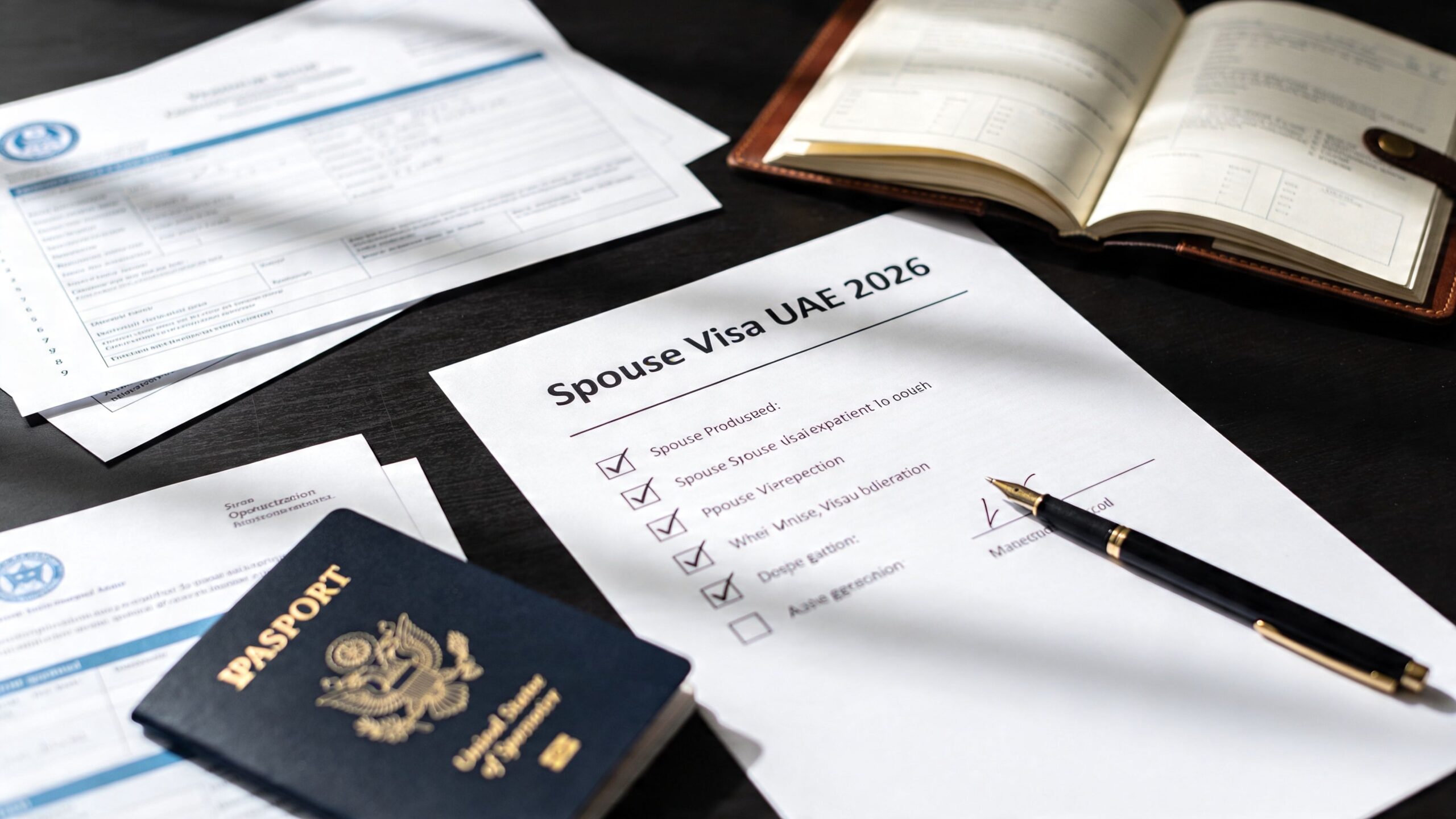
Sponsor documents
The sponsor’s file has to show legal status, financial capacity, and a stable residential record. In practice, that usually means:
- Passport and residence records: Clear copies of the sponsor’s passport, UAE residence visa, and Emirates ID.
- Income proof: Salary certificate, employment contract, and supporting records that show the sponsor meets the applicable threshold.
- Accommodation proof: A current Ejari or tenancy contract in the sponsor’s name.
- Application support records: Depending on the filing route, you may also need supporting forms prepared through an authorised channel.
For company owners, partners, and shareholders, income proof needs extra attention. Authorities do not just look at one document in isolation. They compare the salary certificate, licence details, establishment records, and personal status documents. If those records point in different directions, the file can pause for review even when every paper looks valid on its own.
Spouse documents
The spouse’s side is usually lighter, but mistakes here still slow the file down:
- Passport copy: The passport should be valid and clearly scanned.
- Photographs: Recent passport-style photos are commonly requested through the application workflow.
- Entry-related records: If the spouse enters on an entry permit, keep that permit and arrival details organised for the next stages.
- Medical and ID follow-up documents: These come later in the process, but you should be ready to submit them quickly once requested.
A blurred passport copy or old photo sounds minor. It still causes preventable rework.
Shared documents that often decide the outcome
Shared civil documents are where many DIY applications break down. The key items are:
- Attested marriage certificate: This is the core relationship document in the file.
- Arabic legal translation when required: If the certificate is not already in an accepted language and format, the translation has to be done properly.
- Tenancy alignment: The address and sponsor details should match the rest of the application record.
- Any special-case supporting papers: In second-wife applications, this can include extra approvals or relationship documents.
Attestation is not a box-ticking exercise. It is a legal acceptance issue. If the marriage certificate was issued outside the UAE, it generally has to pass through the attestation chain accepted by UAE authorities. If the certificate is in another language, the Arabic legal translation becomes part of the compliance review.
A file can look complete to the applicant and still fail review because one civil document was legalised in the wrong sequence.
Second-wife applications need tighter control
Second-wife files are reviewed more closely, and the document standard is less forgiving. Verified forum data cited by Vital Certificates at https://vitalcertificates.ae/relocation/uae-family-visas-all-you-need-to-know indicates that up to 70% of initial rejections for spouse visas involving second wives are due to missing or improperly documented No Objection Certificates from the first wife or mismatched marriage attestations.
That is why these applications should be built around consistency from day one. If the NOC wording, attestation path, and marriage records do not align, the file can stall quickly.
A practical order for collecting documents
The fastest way to prepare the file is to deal with risk first, not volume first.
- Validate the marriage certificate first. If attestation or translation is missing, fix that before spending time on the rest.
- Review salary evidence as one set. Check that the salary certificate, labour records, company paperwork, and sponsor profile support each other.
- Confirm the Ejari is current and correctly linked to the sponsor. Small tenancy mismatches create unnecessary objections.
- Prepare passport and ID copies after the core compliance items are cleared. These are easy to gather and should not distract from the harder checks.
Business owners often try to save time by doing this themselves. Sometimes that works. More often, the actual cost shows up later in repeat typing, extra clarification requests, or delays that affect family travel plans and company scheduling. A consultant’s job here is simple. Catch the mismatch before the authority does.
If you want a reliable cross-check before filing, review these family visa UAE requirements against your actual sponsor profile and document set.
Document checklist summary
| Document group | What to verify before filing |
|---|---|
| Sponsor records | Residence status is valid, identity documents are clear, salary proof aligns |
| Spouse records | Passport is valid, photos are current, entry paperwork is retained |
| Civil documents | Marriage certificate is properly attested and translated if needed |
| Accommodation records | Ejari is current and linked to the sponsor correctly |
| Special-case papers | Additional approvals are ready for non-standard family situations |
A spouse visa uae file rarely fails because nothing was submitted. It usually fails because one document was accepted by the applicant, but not accepted by the authority.
Navigating the UAE Spouse Visa Application Workflow
A common mistake I see with founders and investors is assuming the hard part ends once the documents are collected. In practice, the risk shifts. A file that looks complete on paper can still lose time if the steps are filed in the wrong order, the wrong channel is used, or appointments are booked too late for the entry window.
The workflow itself is straightforward. The pressure comes from timing and coordination.
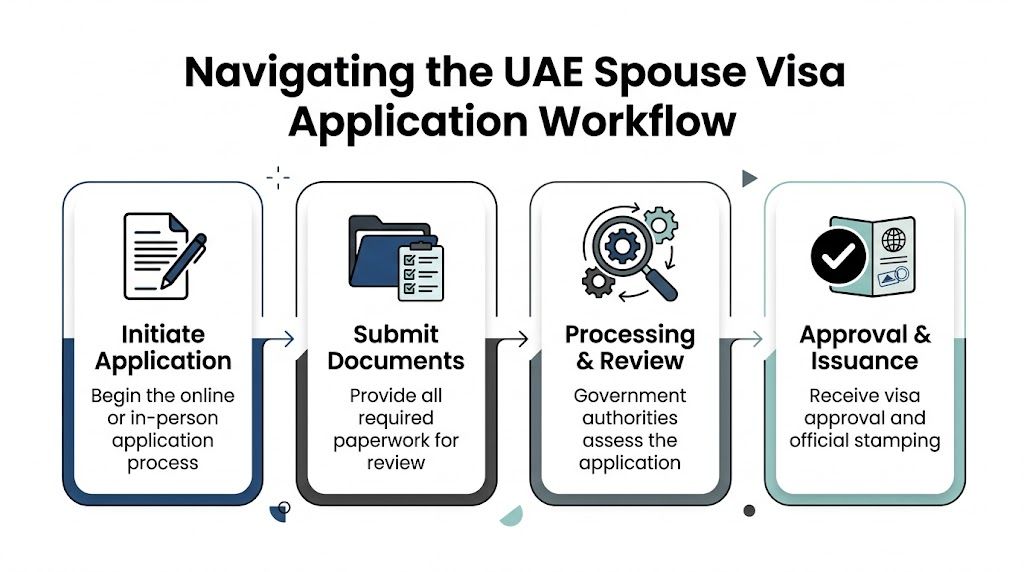
How the process usually unfolds
For spouses outside the UAE, the file usually starts with an entry permit. Earlier verified guidance in this article notes the typical cost range, approval timing, the 60-day completion window after entry, and the daily overstay exposure if the residence process is not finished in time.
For spouses already inside the UAE, the route often includes a status adjustment before the residence file proceeds. That sounds minor, but it affects planning. If the sponsor is a business owner with travel booked, payroll to sign off, or company formation work happening at the same time, even a small delay can push the file into avoidable fines or repeat visits.
The practical rule is simple. Treat the spouse visa uae process as one connected case from day one, not as separate admin tasks handled whenever time is available.
Where to apply
Dubai applications are generally handled through GDRFA channels. Applications in other emirates typically run through ICP systems. Some sponsors submit directly through official portals. Others use Amer centres for typing and submission support.
The right route depends on the case, not just convenience.
A salaried employee with a standard profile and clean paperwork may be comfortable filing directly. A shareholder, free zone owner, or investor usually has more moving parts. Trade licence records, establishment details, signature authority, travel schedules, and document consistency all matter. In these cases, consultant support often saves money because it prevents the expensive type of mistake. Rejected submissions, status gaps, rushed corrections, and missed family travel dates.
Estimated costs and timelines for UAE Spouse Visa 2026
| Stage | Estimated Cost (AED) | Estimated Timeline |
|---|---|---|
| Entry permit | AED 500 to AED 1,100 | 1 to 3 days |
| Medical fitness test | AED 300 to AED 500 | 2 to 4 days |
| Emirates ID issuance | AED 370 to AED 500 | within the application flow |
| Visa stamping | AED 500 to AED 1,000 | 2 to 4 days |
| Total overall process | AED 1,800 to AED 5,000 | 7 to 15 working days |
These ranges are useful for budgeting, but they should not be treated as a guaranteed schedule. Public holidays, document queries, typing corrections, and appointment availability can all change the actual timeline. If you want to keep control of the file, book each step as early as the system allows and make sure your spouse is ready for the Emirates ID biometrics requirements and appointment process before that stage opens.
What a well-managed file looks like
A strong application usually follows a disciplined sequence:
- The sponsor and spouse documents are checked before any submission is typed.
- The application is filed through the correct authority for the emirate and case type.
- The spouse moves quickly into the next approved step without waiting for “free time.”
- Queries are answered with corrected documents, not explanations that do not fix the mismatch.
Business owners often underestimate the cost of delay because the government fee is only one part of the picture. The bigger cost is interruption. Staff time gets pulled into follow-up. Flights get moved. A spouse’s travel plan changes. In some cases, a founder ends up dealing with a preventable immigration issue in the middle of a financing round, licence renewal, or office move.
The files that slow down usually have the same pattern:
- Attestation was assumed to be “close enough”
- The sponsor filed before confirming the correct authority and process route
- Medical or ID appointments were left too late
- Salary, tenancy, or identity records were consistent individually, but inconsistent as one file
A spouse visa uae case moves well when someone owns the sequence, checks the details early, and keeps the process active until residence is issued. That is the difference between a routine approval and a week of avoidable corrections.
The Medical Test Biometrics and Visa Stamping Process
A lot of sponsors lose time at this stage because they assume approval is basically done. It is not. For business owners and investors, this is often where a simple family visa starts interfering with meetings, travel, and company admin because one booking was missed or one document version did not match the live file.
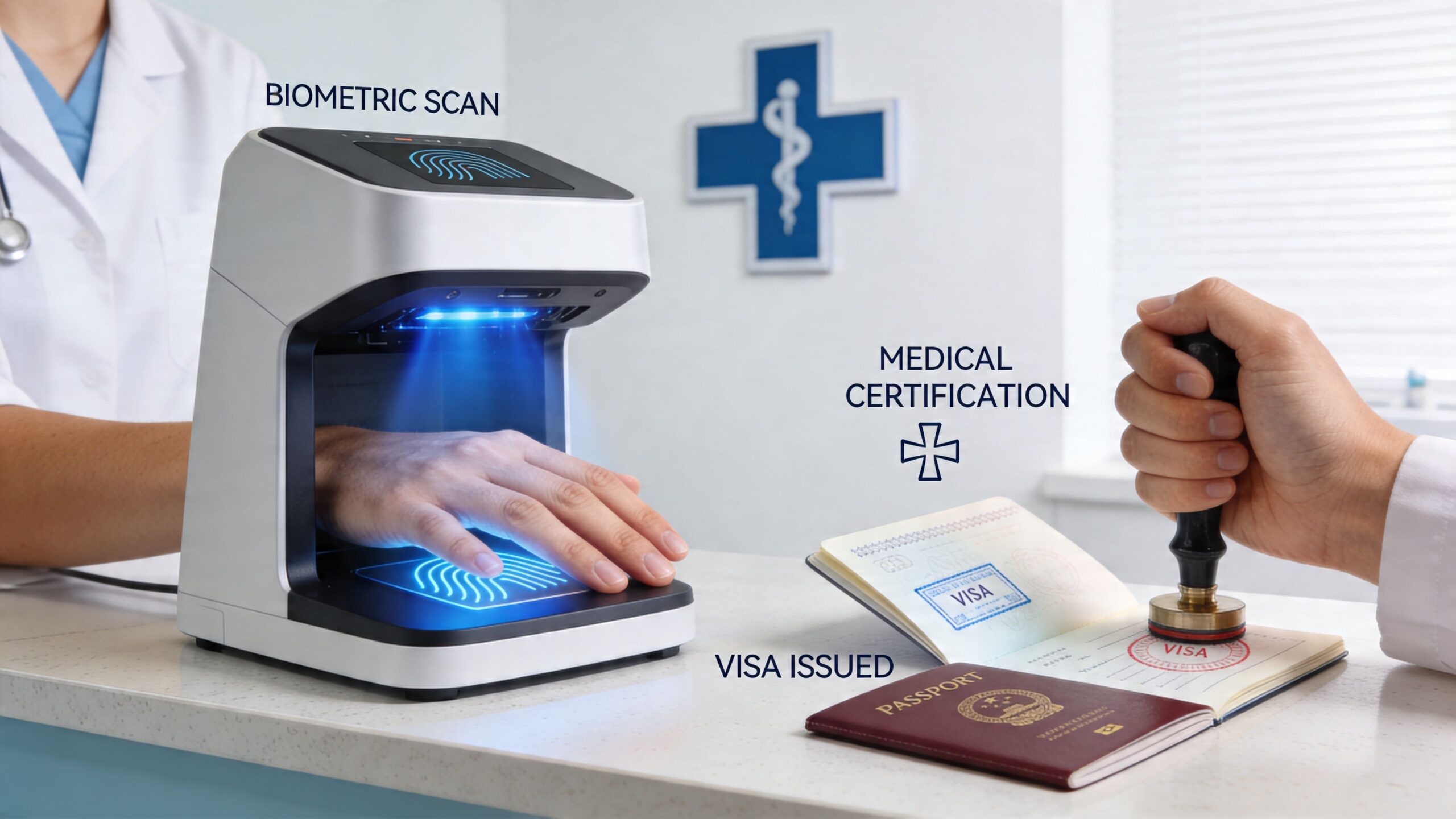
Medical fitness test
The spouse must complete the medical fitness test before the residence process can be finished. In practice, this step is usually straightforward if the entry permit, passport details, and application record are already aligned. It becomes slow when the spouse arrives at the centre with inconsistent documents or an old application printout.
Medical screening commonly applies to applicants above the required age threshold and usually includes standard communicable disease checks. Fees and timing vary by centre, emirate, and service speed, so it is better to confirm the current slot availability before planning travel or work commitments around it.
Bring the exact passport, application reference, and any required identification tied to the active file. A phone gallery full of screenshots is a poor backup plan.
I usually advise clients to book this early in the permitted timeline, not at the tail end. If a centre requests an additional review, or if a holiday slows processing, the delay affects everything after it.
Emirates ID biometrics
Once the medical step clears, the spouse moves to Emirates ID enrolment. This is the point where a clean file saves time. If the Arabic and English names are inconsistent, the passport number was entered incorrectly, or the system is pulling from an outdated record, the appointment itself may be quick but the correction cycle is not.
Applicants who want to understand the enrolment step in more detail can review this guide on biometrics for Emirates ID.
For founders and partners running active businesses, the main issue is not the appointment length. It is the knock-on effect of a bad sequence. One avoidable reschedule can interfere with travel plans, banking updates, and dependent record setup. That is why consultants usually review the live application data before the spouse goes for biometrics, not after a rejection or counter query appears.
Carry only the current document set linked to the application in progress. Older passport copies, superseded forms, and mixed file versions create confusion at the counter and often lead to unnecessary rework.
Final visa stamping
The residence visa is only finished after the final issuance step is completed and the status is updated properly in the system. Many applicants relax too early and treat biometrics as the end. It is only the final stretch.
Processing time depends on the emirate, submission route, and whether the file triggers any manual review. The practical priority is status tracking. If the authority requests a correction, respond with the corrected document, not a long explanation of why the original should have been accepted.
What helps this stage stay on track
- Book each step close together: Large gaps between medical, biometrics, and final issuance create avoidable risk.
- Use one verified document pack: Names, passport details, and file references must match across every stage.
- Check passport condition and validity: Damaged pages and unclear copies still cause trouble.
- Watch the application actively: Portal alerts and service-centre queries need a fast response.
- Get the sequence checked if your time is expensive: DIY filing often looks cheaper until a founder has to fix preventable errors during a busy workweek.
This stage is procedural, but it is not forgiving. Good file control keeps it routine. Poor timing and inconsistent documents turn it into an expensive distraction.
Why Spouse Visas Get Rejected and How to Troubleshoot
A common scenario looks like this. A business owner assumes the hard part is over because the company documents are in order, then the spouse file gets returned for one weak personal document. That return usually costs more in management time than the original application fee.
Spouse visa refusals usually come from credibility gaps inside the file. An officer does not need ten problems to stop a case. One unresolved mismatch is often enough.
Business Link UAE’s spouse visa analysis states that while a complete application can be approved in 10 working days, up to 40% of rejections are due to improperly attested marriage certificates, 25% are linked to salary proofs that do not meet the AED 4,000 threshold or conflict across documents, and 20% fail because of tenancy contract or Ejari errors.
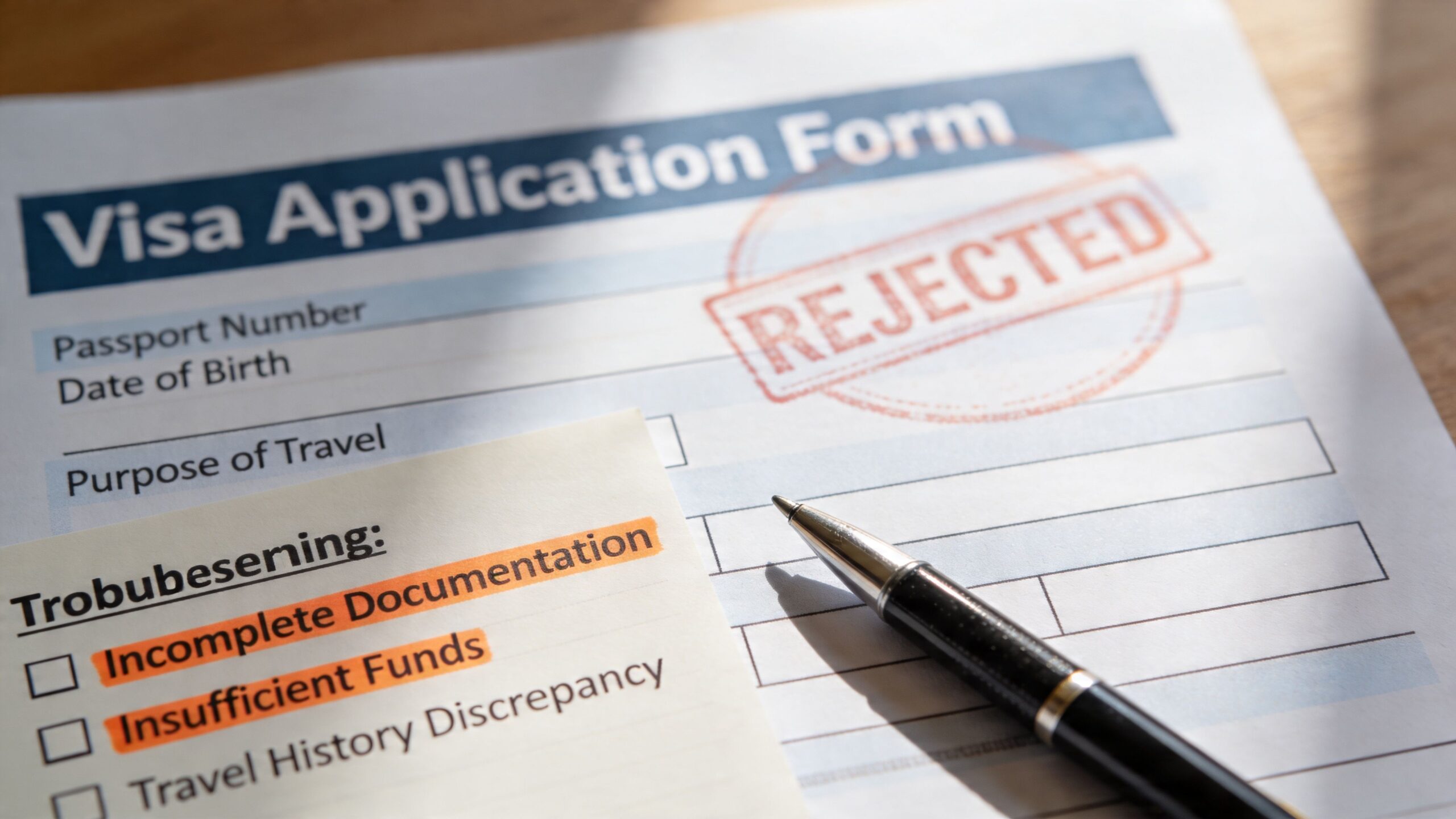
The rejection patterns that matter most
Marriage certificate defects
This is still the issue that wastes the most time.
Applicants often submit a certificate that is genuine but not accepted in its current form. The attestation chain may be incomplete. The Arabic translation may not match the English version. A name may appear one way on the certificate and another way on the passport. For investors and founders, this often happens after a rushed relocation, where personal documents were prepared separately from company setup papers.
If the marriage certificate raises doubt, the rest of the file becomes harder to trust.
Income evidence that does not read clearly
Salary problems are not limited to low income. Many rejections happen because the proof is inconsistent or weak for the sponsor category.
A business owner may have a valid trade licence and active company, but the file still fails if the salary certificate, labour record, bank trail, or sponsor status do not support each other properly. In practice, such issues often cause DIY applications to go wrong. The sponsor knows the business is real, but the application has to prove it in the format immigration accepts.
Tenancy and Ejari inconsistencies
Accommodation evidence is checked more closely than many applicants expect. An expired tenancy contract, an Ejari in another name, or address details that do not match the rest of the application can stop the file.
This is one of those avoidable errors that looks minor until it causes a full resubmission.
How to troubleshoot before filing
The right review is not a document count. It is a contradiction check.
- Check the marriage certificate line by line: Names, dates, attestation stamps, and translations must match the passport and application records.
- Test the income file as one story: Salary certificate, labour details, bank evidence, and sponsor status should point to the same conclusion without explanation.
- Confirm the housing proof is current and usable: Ejari status, contract validity, and sponsor details should all support sponsorship clearly.
- Check timing across the file: A document that is technically valid today can still become a problem if it expires during review.
- Use a second review if your schedule is tight: Founders and investors often lose more money fixing preventable mistakes than they would spend having the file checked properly at the start.
For many clients, this is the point where consultancy support pays for itself. The value is not form filling. It is spotting the document that an applicant assumes is acceptable but an officer is likely to question.
The usual cause of delay is not late filing. It is filing a case that looks complete but does not hold together under review.
What to do if the file is returned
Treat a returned file as a diagnosis, not just a setback.
Do not resubmit quickly with cosmetic edits. Fix the actual defect. If the issue is attestation, complete the full attestation and translation path. If the issue is salary proof, rebuild the evidence set so it matches the sponsor category cleanly. If the issue is tenancy, correct the housing record before sending anything back.
Speed still matters, but accuracy matters more. A fast resubmission of the same weak file usually creates a second delay.
A practical approval test
Before submission, ask whether a reviewer can confirm three points without making assumptions. The marriage is valid. The sponsor qualifies. The supporting records match.
If any part of that answer is uncertain, hold the file and correct it first. If you are already planning ahead for later stages, it also helps to review the latest UAE residence visa renewal rules and compliance changes early, because the same weak records that cause first-time refusals often create renewal problems later.
Managing Visa Renewals Cancellations and Long-Term Compliance
A common scenario looks like this. A founder secures a spouse visa, gets back to running the company, and assumes renewal will be a simple admin task later. Then expiry approaches at the same time as a trade licence update, a travel plan, or a change to the sponsor’s own visa status. That is when small gaps turn into delays.
Spouse visa management needs the same discipline as any other UAE compliance item. The first approval does not protect you from renewal problems. Authorities still check whether the supporting records are current, consistent, and suitable for the sponsor’s category.
Renewal timing matters more than many sponsors expect. As noted earlier, spouse residence visas may be issued for different validity periods, so relying on memory is risky. Keep a proper record of expiry dates and start reviewing the file early, especially if you own a business and your own immigration status can change with company restructuring, licence amendments, or investor visa updates.
Renewals fail for practical reasons
In practice, renewal issues usually come from ordinary admin mistakes:
- expired or outdated supporting documents
- tenancy records that no longer match the current address
- salary or income evidence that does not align with the sponsor’s present status
- delays in booking medical or Emirates ID steps
- changes to the sponsor’s visa or company records that were not reflected in the family file
These are avoidable problems. They become expensive when they affect travel dates, school records, payroll planning, or a pending status change for the sponsor.
For a current reference on timing, process changes, and compliance points, review these UAE residence visa renewal rules and updates before the visa enters its final stretch.
Cancellation needs just as much care
Cancellation is not only for families leaving the UAE. It also comes up when a sponsor changes employer, closes a company, shifts from one residence category to another, or needs to regularise family status after a personal change.
The main mistake is delay. A spouse visa left active when the underlying sponsorship no longer fits can create complications in future applications and internal records. For business owners, this often happens during a wider transition, when immigration paperwork is treated as secondary to commercial priorities. That is understandable, but it still causes avoidable friction.
Long-term compliance is easier with a system
The most effective approach is to treat the spouse file as a live record, not a document pack that gets opened every few years. Keep the marriage certificate, tenancy documents, passport copies, Emirates ID records, and sponsor evidence updated in one place. Review them before any major change to your own visa or company structure.
Consultancy support helps most at this stage because the work is less about data entry and more about timing and judgment. A good adviser checks whether a renewal should be filed now or after another status update, whether a cancellation should happen before travel, and whether a sponsor-side change could affect the dependent file. Those decisions save time. They also prevent the kind of mistake that looks minor until it delays the whole household.
| Compliance area | Good practice |
|---|---|
| Renewal timing | Start reviewing the file well before expiry |
| Supporting records | Keep identity, housing, and sponsor documents current |
| Sponsor changes | Check the family impact before changing your own visa status |
| Cancellation | Process it promptly when sponsorship circumstances change |
| Record keeping | Maintain one updated file instead of collecting papers at the last minute |
Handled properly, spouse visa uae compliance stays routine. Handled casually, it tends to clash with the exact moments when a business owner has the least time to fix it.
Frequently Asked Questions about UAE Spouse Visas
Below are some of the narrower questions that come up often in practice, especially from company owners and professionals balancing immigration admin with work obligations.
FAQ Section
| Question | Answer |
|---|---|
| Can I sponsor my spouse if I’m an entrepreneur rather than an employee? | Yes, if you hold a valid UAE residence visa and can document that you meet the applicable sponsorship criteria. The important part isn’t the job label. It’s whether your file proves eligibility clearly. |
| Is a spouse visa uae application easier if my spouse is already in the country? | It can be convenient, but it isn’t automatically easier. Inside-country cases still need careful handling because status transitions and timing become critical. |
| Does every marriage certificate need attestation? | If your certificate was issued outside the UAE, the safe assumption is that it must meet the attestation standard expected by the authorities. If the document language requires it, legal translation also matters. |
| Can my spouse work in the UAE on a spouse visa? | In practice, a spouse on residence sponsorship may work if the employment side is handled properly through the relevant channels. The family visa itself and the employment permission are not the same administrative step. |
| What’s the most common DIY mistake? | Applicants usually focus on collecting documents, not aligning them. A file with inconsistent salary proof, weak attestation, or an Ejari issue is far more likely to be delayed or returned. |
| How early should I prepare for renewal? | Earlier than most people think. Start while you still have time to replace or update documents without pressure. Last-minute renewals create unnecessary risk. |
| If I get a document query, should I respond immediately with whatever I have? | Respond quickly, but don’t respond carelessly. Fix the exact issue raised. A rushed reply with the same defect can turn a solvable query into a harder problem. |
| Are second-wife applications possible? | They can be, for eligible Muslim residents under the relevant authority conditions. These files need tighter document control than standard applications and should never be approached casually. |
If you want practical help with a spouse visa uae application, renewals, or related family sponsorship matters, Smart Classic Business Hub can support the process alongside your wider UAE compliance needs. For founders, investors, and busy professionals, that means less time chasing paperwork and a cleaner path through the visa process.