
You've probably reached the point where the exciting parts are done. The company name is chosen, the activity is set, the paperwork is moving, and you're expecting the visa process to be a straight administrative run.
Then the medical fitness step appears and slows everything down.
For first-time founders in the UAE, expectations often drift away from reality. They assume the medical fitness certificate is just a routine clinic note. It isn't. In practice, it sits on the critical path of residence processing, which means a delay here can hold up your visa, your employee onboarding, your Emirates ID sequence, and even your family's move.
Your Gateway to Residency in the UAE
A common scenario looks like this. A founder lands in Dubai, opens the company file, starts signing lease documents, and lines up their first hire. They expect the remaining steps to be mostly administrative. Instead, the first real bottleneck is often the medical fitness test.
That catches people off guard because the name sounds harmless. It suggests a simple health check. In the UAE, it functions more like a permission checkpoint inside the immigration process.
The distinction matters. The UAE medical fitness certificate is often less a health certificate and more a regulatory gatekeeping tool, especially in a market where 1.58 million residence visas were issued in 2024, as noted in this overview of medical fitness certification use in the UAE. If you treat it as a final errand, you risk building the rest of your timeline on the wrong assumptions.
When I advise new entrants to the UAE market, I usually frame the medical stage as a sequencing issue, not a clinic issue. If the file reaches the medical centre late, every downstream step starts late as well. If the test result is delayed, the residence file remains incomplete. If the person being sponsored is a founder, key decisions and bank-related follow-ups can become harder to coordinate.
Practical rule: Build your visa timeline around the medical fitness appointment, not around the date you entered the country.
That's why many businesses use support systems that are designed around compliance timing rather than one-off form filling. If you're comparing process support options, OnBiz compliance solutions are one example of the kind of resource founders review when they want fewer avoidable delays.
If you're still mapping the wider residence process, this guide on how to get a UAE residence visa is useful context because the medical step only makes sense when you see where it sits in the broader approval chain.
What Is a UAE Medical Fitness Certificate
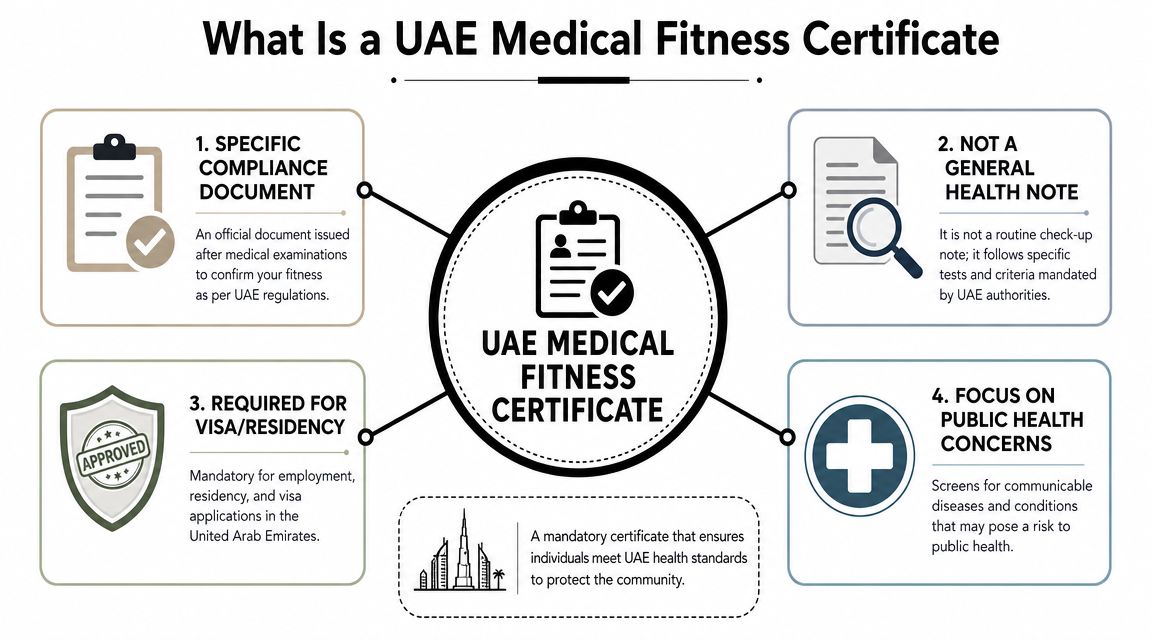
A medical fitness certificate in the UAE is not a general doctor's note saying you're healthy enough to work, travel, or play sport. It is a specific compliance document tied to official immigration and residency procedures.
Think of it as a gate pass. You don't use it to prove broad wellness. You use it to show that you've completed the required screening through the approved channel so your residence process can continue.
What the certificate actually does
For entrepreneurs, investors, employees, and dependants, this certificate sits inside the residency workflow. It is not an optional add-on. It is one of the formal approvals that helps determine whether the file can move forward.
A useful way to read it is this:
- It is regulatory, not casual: the issuer matters, the testing route matters, and the result must come from the authorised system.
- It is process-dependent: if the medical result isn't cleared, later immigration steps can't be treated as confirmed.
- It is purpose-specific: a visa medical certificate doesn't automatically replace another kind of fitness certificate required for a different activity.
The business implication is direct. Medical fitness certificates are a formal requirement tied directly to immigration and residency workflows, and for entrepreneurs and businesses the certificate acts as a foundational compliance milestone because immigration approvals for staff, investors, and family members depend on passing the screening, which can affect project timing and mobilisation, as summarised in this reference on certification and compliance use cases.
What it is not
Many applicants lose time. They arrive with the wrong expectation or the wrong document.
It is not the same as:
| Document type | Main purpose | Usually accepted for UAE residence processing |
|---|---|---|
| General doctor's note | Basic statement of health | No |
| Pre-employment medical | Employer screening for job suitability | Not as a substitute |
| Fitness-to-travel certificate | Travel clearance | No |
| Activity-specific occupational medical | Role-based clearance for regulated work | Only for its own purpose |
If the certificate wasn't issued through the correct authorised pathway for residence processing, it usually won't solve a residence-processing problem.
That's the point many generic articles miss. In the UAE, the question isn't “Are you generally fit?” The question is “Have you completed the exact screening required for this visa file?”
Who Needs a Certificate and What Is Tested
A residence file can look ready on paper and still stall at the medical stage. I see this often with new company owners who have secured the licence, opened the immigration file, and lined up staff start dates, only to realise one applicant still has not completed the required medical screening through the authorised channel.
For UAE residence processing, the medical fitness certificate usually applies to expatriate applicants aged 18 and above. It is part of the visa path, not a general health clearance. The screening is tied to communicable disease control through designated centres, with checks linked to conditions such as tuberculosis, HIV, and hepatitis, as described in this MoHAP-related summary of the requirement.
That affects several categories at once:
- Founders and investors: if the residence visa is linked to your own company, your file usually cannot progress without medical clearance.
- Employees: a hire is not deployment-ready until the visa medical step is completed and the result is accepted in the system.
- Adult dependants: spouses and other sponsored adult family members commonly need the same residence screening.
- Time-sensitive overseas hires: if a senior employee is arriving for a launch, handover, or regulated client work, late medical booking can disrupt the whole mobilisation plan.
Family files need the same level of planning. If the sponsorship route is still unclear, start there first. This guide to family visa UAE requirements is useful for lining up the dependency between sponsorship eligibility and the later clinic appointment.
What is usually tested
The visa medical is narrower than many applicants expect. The purpose is to screen for specified public-health concerns relevant to residence approval, not to produce a broad wellness report.
In standard cases, the process usually includes:
- A blood test linked to the infectious-disease screening required for the residence file.
- A chest X-ray used in connection with tuberculosis screening.
- Extra checks for certain roles where sector rules or public-contact duties require additional medical clearance.
Confusion often wastes time. A standard lab package from a private clinic, even if it is extensive, does not replace the residence medical done through the approved process. If you want a side-by-side sense of how a visa medical differs from broader lab screening, this explainer on understanding comprehensive blood tests helps clarify the difference in purpose.
Sector-specific fitness certificates are different
Some certificates called "medical fitness" serve a different regulatory use. Maritime roles are a good example.
For seafarers and related maritime work, UAE-relevant practice often follows STCW medical standards. Those certificates focus on functional capacity, including vision, hearing, and the ability to perform safety duties. They are also renewed on their own schedule and must be issued by a recognised practitioner under the applicable administration, according to this STCW medical certificate requirements guide.
A seafarer medical certificate does not answer the same question as a residence visa medical certificate. One supports occupational fitness for a specific role. The other supports immigration processing for a residence file.
Use the certificate that matches the legal purpose of the file. If the issuing route and regulatory purpose do not match, the document usually will not help your visa application.
Your Step-by-Step Guide to Getting the Certificate
The process is manageable when the paperwork and sequencing are right. It becomes frustrating when applicants mix up the order, visit the wrong centre, or wait until other parts of the file are already pending.
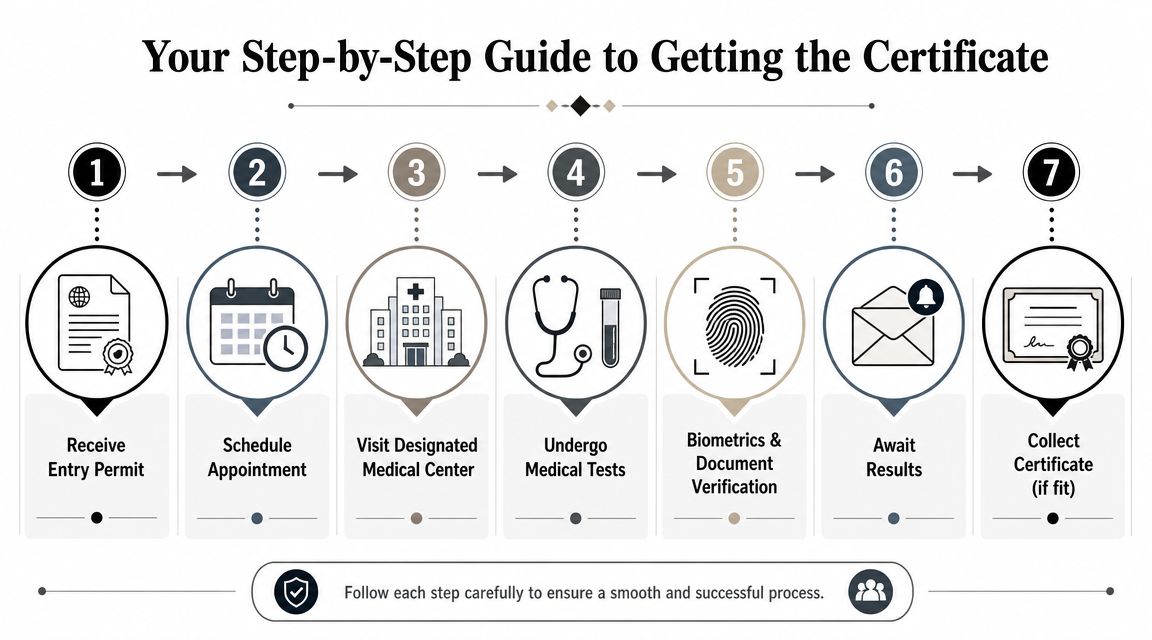
The practical sequence
For most applicants, the flow looks like this:
Entry status is in place
The medical stage usually starts once your entry permit or relevant residence-processing stage allows the file to move inside the UAE system.The application is opened through the correct channel
This is typically done through an approved medical centre or an administrative channel linked to the residence file.Your identity documents are checked
Bring the original passport and the supporting visa-related paperwork requested for your file. If anything is inconsistent, fix that before standing in the clinic queue.You complete the required tests
The standard residence route usually includes the blood test and chest X-ray associated with the official screening purpose.Results move electronically
In many cases, the result is pushed through the connected government system rather than handed over as a casual clinic note.The residence file continues only if the result clears
This is the point many applicants underestimate. A pending or problematic result doesn't stay isolated. It affects the immigration file.
What helps the process move cleanly
Applicants often focus on the test itself. Efficiency gains usually stem from preparation before the appointment.
Use this checklist:
- Check the passport details carefully: even small mismatches create avoidable admin friction.
- Use the authorised medical route: a document from the wrong provider won't rescue the residence file.
- Keep the visa stage aligned: don't try to force the medical before the file is ready for it.
- Plan for accompanying family members separately: each person's status may have slightly different timing needs.
- Allow room for follow-up: even simple files sometimes need an extra review step.
Biometrics often follow close behind
Applicants also confuse medical fitness with biometrics. They're linked in the broader residence journey, but they are not the same task.
Medical screening clears one regulatory checkpoint. Biometrics support the identification side of the residence and Emirates ID process. If you want to see how that second part fits in operationally, this guide to biometrics for Emirates ID gives a useful timeline view.
The fastest visa files are usually not the ones with the quickest clinic visit. They're the ones where documents, appointment timing, and post-medical steps were coordinated before the applicant arrived.
What slows applicants down
The same issues appear again and again:
| Problem | What it causes |
|---|---|
| Wrong understanding of the required certificate | Applicant brings irrelevant medical paperwork |
| Late booking | The entire residence timeline shifts right |
| Incomplete documents | Registration or processing interruptions |
| Treating medical as a minor errand | Downstream visa steps stall unexpectedly |
A well-run file treats the medical fitness certificate as a scheduled dependency. That mindset alone prevents a lot of delays.
Understanding Costs Timelines Validity and Renewal
Applicants usually ask four practical questions at this stage. How much will it cost, how long will it take, how long is it valid, and what happens at renewal.
The honest answer is that costs and service speed vary by emirate, centre, and service level, so it's better to confirm the live fee with the authorised channel handling your file than rely on random figures online. What matters for planning is understanding the trade-off between standard processing and premium processing.

Cost and speed are linked
In most cases, applicants choose between a regular lane and an expedited lane. The faster option usually costs more. Whether that premium makes sense depends on the commercial context.
For a founder waiting to complete key residence steps, paying more for speed can be sensible. For a dependant with no urgent downstream commitment, standard processing may be perfectly acceptable.
A simple decision lens helps:
- Use standard processing when your file has schedule flexibility.
- Use fast-track processing when the residence file is blocking business activity, travel planning, payroll setup, or a coordinated family move.
- Don't pay for speed too early if other parts of your file still aren't ready. Faster medical results won't fix an incomplete immigration application.
How to think about validity
The certificate doesn't function like a lifelong health pass. It serves a particular residence-processing window.
That means two things matter:
- Issue date
- How quickly the rest of the residence file moves after the result
If the immigration side drifts, even a properly issued certificate can stop being useful for that particular workflow. This is one reason experienced PRO teams push applicants to complete the medical stage early, then keep the rest of the file moving without unnecessary pauses.
A medical fitness certificate has operational value only while the connected residence process is still active and aligned.
Renewal is not just admin recycling
Many applicants assume renewal means the old approval can be referenced again. That's not how it should be approached.
For residence renewal, expect the medical fitness process to be revisited through the official route applicable at the time of renewal. The procedure often feels familiar, but it should still be treated as a fresh compliance task rather than a recycled clearance.
Here's the practical planning table I use with clients:
| Planning issue | Better approach |
|---|---|
| Unclear processing time | Ask the authorised centre or PRO for the current service options |
| Tight founder schedule | Build medical and related visa actions into one coordinated week |
| Family relocation timing | Stagger appointments only if sponsorship sequence requires it |
| Visa renewal season | Start earlier than feels necessary |
What works best is simple. Keep the file moving in one direction. Most “timing problems” aren't about the clinic. They come from breaks between one approved step and the next.
Common Rejection Reasons and How to Resolve Them
A founder lands in the UAE, books the medical, and expects the residence file to keep moving that week. Then the result comes back as pending, or the application is held for correction. At that point, the issue is no longer medical only. It becomes a timing problem across the visa process, onboarding plan, and sometimes payroll start date.
That is why I tell clients to treat a medical fitness result as a gate in the residence workflow. If the file stalls here, the rest of the sequence waits with it. This is also where many applicants get confused between the visa medical fitness certificate and other certificates labeled “fitness” for work, travel, sports, or employer policy. Those documents do not replace the residence medical result.
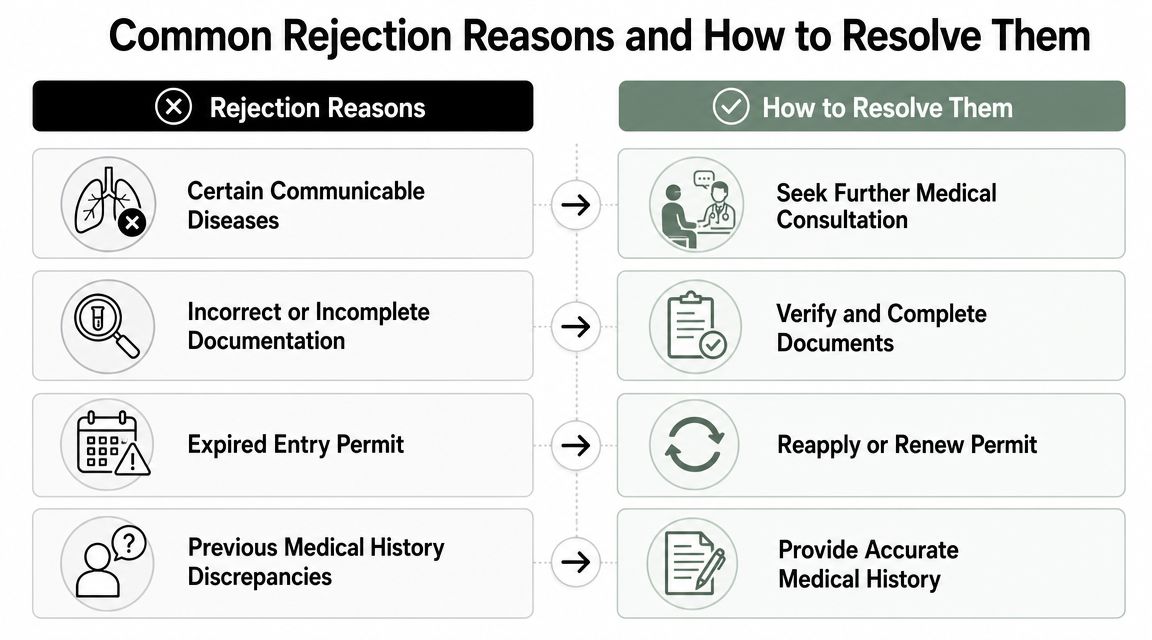
The most common problem categories
In practice, rejections and holds usually come from four areas.
- Communicable disease findings: This is the most serious category because it goes to public health screening rules.
- Document mismatches: Passport number errors, name variations, wrong UID details, or incomplete file data can stop issuance even when the applicant attended the correct test.
- Residence file timing problems: If the immigration record is not active or aligned properly, the medical stage can be blocked or left hanging in the system.
- Declared history or record discrepancies: Prior records, inconsistent disclosures, or missing supporting documents can trigger review.
Document issues are the easiest to fix, but they still cost time. Disease-related findings usually move into an official review path, and that requires patience and accurate follow-up.
What to do next
The correct response depends on the status shown in the file, not what the applicant assumes happened.
Use this response map:
| Problem | Best next action |
|---|---|
| Disease-related finding | Follow the official review process and wait for the authority's instructions |
| Documentation issue | Correct the file data immediately and resubmit through the approved channel |
| Permit or status mismatch | Fix the immigration status first, then reprocess the medical step |
| Inconsistent history | Submit complete and accurate supporting information without omissions |
At the counter, the useful question is simple: What exactly is missing, mismatched, or under review in this file? That gets a better result than arguing about fairness or asking for a shortcut that the system will not allow.
What actually resolves delays
Fast resolution usually comes from disciplined file handling. Match the passport copy to the application before the appointment. Check that the visa or entry status is in the right stage. If there is prior medical history or an old immigration record that could raise questions, disclose it early and prepare the supporting papers.
The common mistakes are predictable. Applicants rely on verbal advice from someone outside the authorised process. HR teams assume a general medical certificate can stand in for the residence test. Founders wait too long to correct a small typo because they are focused on licensing, banking, or office setup.
The trade-off is straightforward. Spending an extra day verifying the file before the appointment is better than losing a week to reprocessing after a hold.
For employers and entrepreneurs, the safest planning model is to classify each case as cleared, pending, or escalated. Once you know which category applies, you can set realistic joining dates, avoid promising impossible timelines, and keep the wider residence process under control.
Pro Tips for Entrepreneurs for a Smooth Process
A founder lands in the UAE on Sunday, plans to open the bank account on Monday, sign the lease on Tuesday, and issue the first employee visa by the end of the week. Then the residence file stalls because the medical fitness certificate was treated as a routine clinic visit instead of a gating step in the visa sequence.
That is the right way to view this certificate. It is part of the critical path for residency. If it is delayed, visa stamping, Emirates ID progress, onboarding dates, and some banking and compliance timelines can slip with it.
The first practical rule is to book and complete the visa medical early, as soon as the immigration file reaches the correct stage. Entrepreneurs often focus on licence issuance, office space, investor meetings, and payroll setup first. I see the same result each time. One unfinished medical step holds up several decisions that were planned around an approved residence status.
The second rule is the one many guides miss. Confirm which certificate is being requested before anyone attends an appointment. The UAE visa medical fitness certificate for residence processing is not the same as a general health certificate, an employer-requested medical, a travel fitness letter, or an occupational test for a regulated role. Using the wrong document wastes time because the immigration system will still require the authorised residence medical route.
For founders managing more than one file, coordination matters. If you are sponsoring dependants or onboarding early employees, align appointments, document packs, transport, and post-result follow-up in one schedule. Each applicant is assessed separately, but the admin work becomes easier when one person is tracking status, missing items, and next actions.
Experienced operators usually do four things well:
- They confirm the certificate type before booking. Residence medicals, employment checks, and travel certificates serve different purposes.
- They build the medical step into the setup timeline. Joining dates and launch plans should reflect the actual visa sequence, not an optimistic guess.
- They use priority service selectively. Paying more makes sense when a delayed visa affects payroll, contracts, travel, or revenue.
- They assign one owner to the file. A founder, PRO, or HR lead should track the case from booking to result to the next immigration step.
The trade-off is simple. An hour spent checking the certificate purpose, applicant status, and booking sequence is cheaper than rescheduling appointments and pushing back a start date.
A founder's job is to keep the business moving. The medical fitness certificate should be handled with the same discipline as licensing, immigration approvals, and bank documentation.
If you want hands-on support with company setup, visa processing, PRO coordination, and the compliance steps that sit between approval and actual operations, Smart Classic Business Hub can help you organise the process properly and keep your UAE plans moving without avoidable delays.