
You can buy a food truck in Dubai and still end up stuck for months if you treat it like a vehicle purchase instead of a regulated business setup. I've seen founders pay deposits on a shiny truck, then discover they still need a trade licence, municipality approvals, food-safety clearance, site access, and a proper operating sequence before they can serve a single customer. That mistake burns cash fast, and it's avoidable.
The right way to buy a food truck in the UAE is simple, but it is resisted because it feels less exciting than picking paintwork and menu boards. Start with jurisdiction, licence activity, and operating permissions, then match the truck to the approvals, not the other way around. If you want a useful outside reference while you plan the basics, the guide on starting a mobile kitchen is a decent primer, but the UAE process still has to be handled on local rules, not generic advice.
What Most First-Time Buyers Get Wrong About a Food Truck in the UAE
A first-time buyer usually falls in love with the truck first. The seller sends glossy photos, the interior looks finished, and the buyer assumes the hard work is over. Then the deposit goes out, and only afterwards do they learn that the truck cannot trade yet because the trade licence, municipality approvals, and location permissions are still unresolved.
That sequence is backwards in the UAE. The vehicle is the visible asset, but the business depends on the permit structure around it. Dubai Municipality introduced a dedicated food truck guide in 2019, which shows how tightly this model is controlled under local rules, not casual vending practice. Anyone who ignores that reality ends up paying twice, once for the vehicle and again for the changes needed to make it compliant.
Who this guide is for
This is for three groups. First, UAE-based entrepreneurs who are launching their first food concept and need a clean plan. Second, foreign investors who are entering with a local partner and want the paperwork sequence right from day one. Third, existing cafés and restaurants adding a mobile unit to extend their reach.
Practical rule: if you cannot explain where the truck will be allowed to operate before you buy it, you are not ready to buy it.
That sounds blunt because it is. A food truck in Dubai or Abu Dhabi is a regulated operating business that has to fit local licensing, municipality standards, and site access rules. If you want to build the plan properly, start with jurisdiction, licence activity, and operating permissions, then match the truck to the approvals. If you are still at the planning stage, the guide on starting a mobile kitchen is a useful reference, but the UAE process still has to be handled on local rules, not generic advice.
New vs Used Food Trucks and How to Choose the Right One
The wrong comparison is “new truck versus cheaper truck”. The right comparison is new versus risky, and that changes the decision completely.
A new truck makes sense if you need a clean compliance path, a specific kitchen layout, and a predictable delivery window. Industry guidance says manufacturers commonly need a 2 to 3 month production and shipping lead time once the specs are locked (source). That delay is annoying, but it's easier to manage than discovering your used truck needs rework after you've paid for it.
A used truck is the better bet only when you can verify the chassis, the kitchen build, and the paperwork trail. Used listings often look attractive because the upfront spend is lower, but the hidden cost shows up in retrofit work, inspection failures, and missing compliance documentation. In the UAE, that matters more than in a looser market because the truck has to satisfy municipal standards and, in many cases, be re-checked after any substantial modification.
The decision comes down to four questions:
- Do you have enough capital? If cash is tight, a used unit looks tempting, but thin reserves make every repair painful.
- Is your timeline urgent? If you need to launch for a season, a ready-built new truck reduces surprises.
- How complex is the menu? Heavy frying, chilled storage, and multi-station prep push you towards a more disciplined build.
- Can you verify the build quality? If you can't inspect the original fit-out properly, walk away.
My opinion is simple. If this is your first UAE food truck, buy new unless the used unit comes with clean documentation, a verified build, and no shortcuts in the kitchen fit-out. A second-hand truck can work, but only for buyers who already understand inspection risk and can handle corrections without blowing the budget.
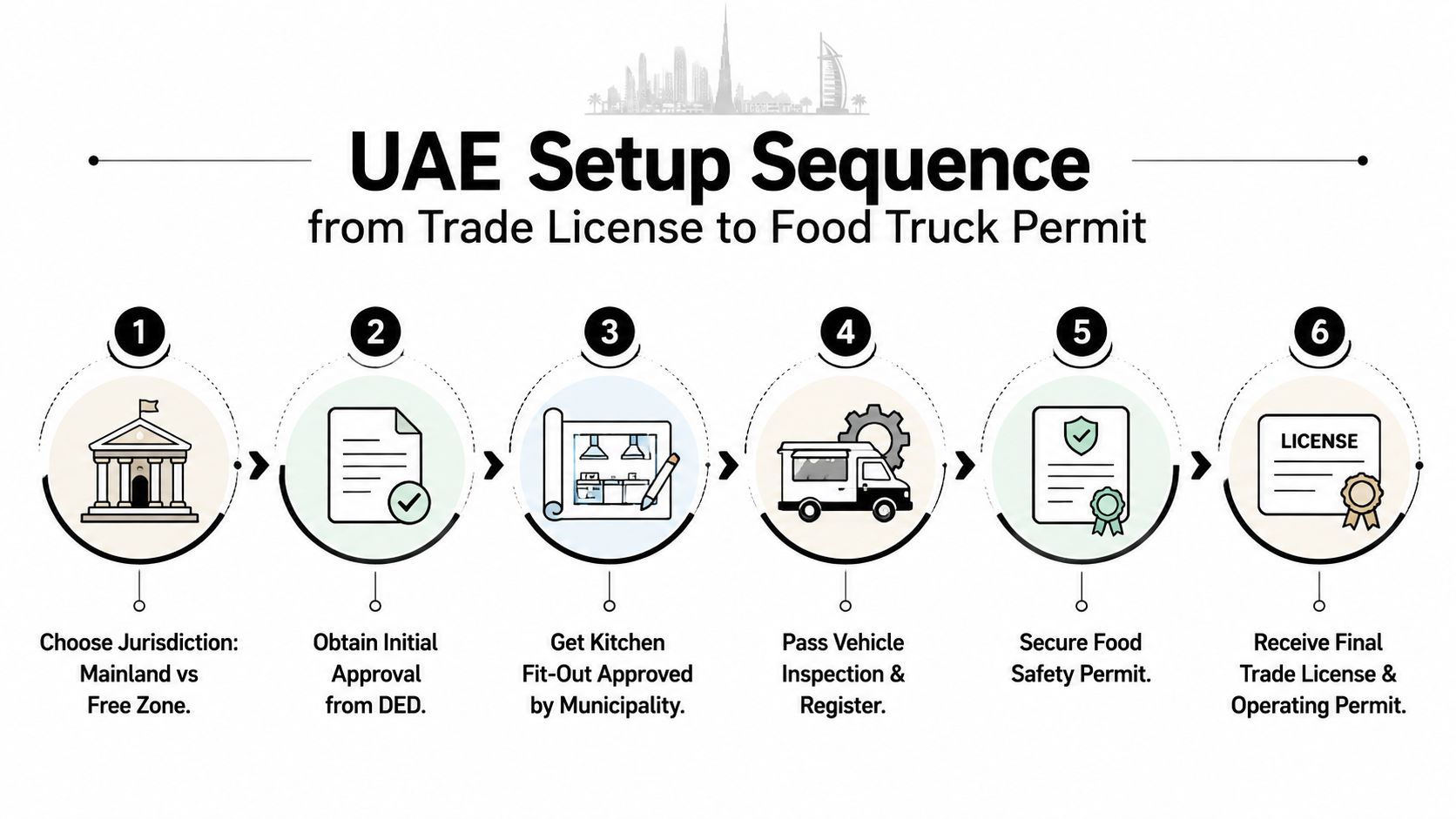
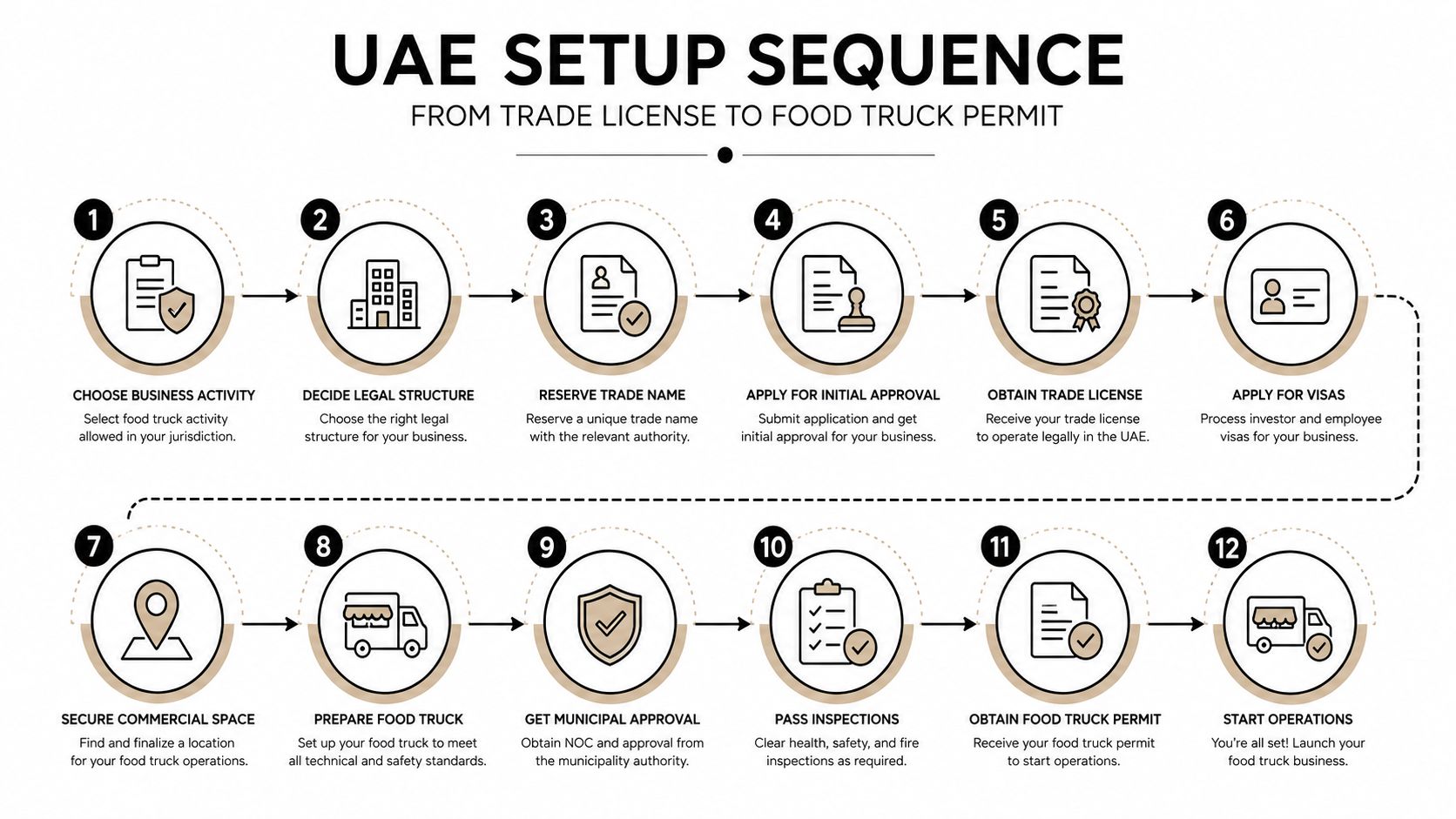
UAE Setup Sequence from Trade License to Food Truck Permit
The order matters more than the truck. In the UAE, the legal path should guide the purchase, not the other way around. Buy first and you risk ending up with a vehicle that needs redesign work, extra approvals, or a painful delay before it can legally trade.
Start with the jurisdiction. Decide whether the business belongs in mainland or a free zone structure, then define the food-truck activity on the licence. That choice affects ownership, operating scope, and which authority handles the approvals. If you want the company-formation side laid out clearly, the process in how to get a business licence in the UAE is the right starting point before you commit to a vehicle.
Then move to the municipal layer. Dubai's food-truck framework, formalised by the 2019 guide, requires the kitchen fit-out to satisfy hygiene, safety, and operational standards from the start. That is why layout, ventilation, waste handling, and appliance placement should be settled before you sign for the truck. If you want the compliance sequence handled properly, you need to build a legitimate food truck business around approvals first, equipment second.
The order that actually works
- Choose the jurisdiction and trade activity. Lock the business structure first.
- Secure initial approval. Confirm the licence activity matches a mobile food concept.
- Submit the kitchen layout for municipality review. Build to the approval, not around guesses.
- Complete the vehicle and equipment inspection path. Mechanical checks and kitchen checks both matter in practice.
- Register food-safety and menu documents. The menu drives the equipment and handling rules.
- Obtain site access for the first operating location. The licence establishes your business entity, while the site permission grants you the right to trade at a specific location.
A founder can hold a valid food truck company and still be blocked from trading at a private event, a mall frontage, or a designated zone until that site is approved. A consultant or PRO can move the paperwork, but the concept still has to fit the municipality's expectations and the actual locations you want to work.
My advice is straightforward. Map the approvals before equipment. That keeps the budget honest, stops redesigns after money has already left the account, and avoids the common mistake of buying a truck that cannot pass the next step in the UAE process.
Budgeting and Financing the Full UAE Launch
The biggest budgeting mistake is treating the truck price as the project cost. It isn't. A food truck in the UAE is a bundle of vehicle, fit-out, approvals, compliance work, and launch expenses, and the cash drains from all of them at once.
Industry guidance puts the all-in startup budget for a food truck around $50,000 to $100,000 (source). That's a useful planning anchor, but it still doesn't protect you from UAE-specific spend like licensing, municipality approvals, insurance, site permissions, and the operating costs that arrive before your first proper sales week.
Estimated UAE Food Truck Startup Cost Breakdown
| Cost Line | Estimated Range (AED) | Notes |
|---|---|---|
| Truck purchase | Varies | New or used, the biggest single asset cost |
| Kitchen fit-out | Varies | Stainless steel, counters, ventilation, plumbing, prep layout |
| Trade licence and business registration | Varies | Depends on jurisdiction and activity |
| Municipality approvals and food-safety compliance | Varies | Includes review, inspection, and documentation work |
| Insurance | Varies | Commercial motor and liability cover |
| Staff visas and PRO support | Varies | Often missed in first drafts |
| Initial site access or event permissions | Varies | Private-property pop-ups, events, or food-truck zones |
| Fuel, power, and utility setup | Varies | Generator, electrical, and operating fuel needs |
| Opening inventory and packaging | Varies | Stock for the first trading cycle |
The exact numbers will depend on your concept, but the structure won't. Buyers usually underestimate the items that don't feel like “the truck”, especially visas, PRO services, power setup, and location permissions. Those costs don't look exciting, but they decide whether you can open on time.
For a general business-spend benchmark, Smart Classic's breakdown on cost of starting a business in Dubai is worth reviewing if you're trying to model the non-vehicle side of the launch.
Financing should follow the same logic as the budget. A lender or investor wants to see that you understand the full operating picture, not just the truck sticker price. Bring a capex plan, a launch timeline, and a realistic view of how you'll handle approvals before revenue starts. If your budget only covers the vehicle, you don't have a launch budget yet.
Pre-Purchase Inspection Checklist for UAE Buyers
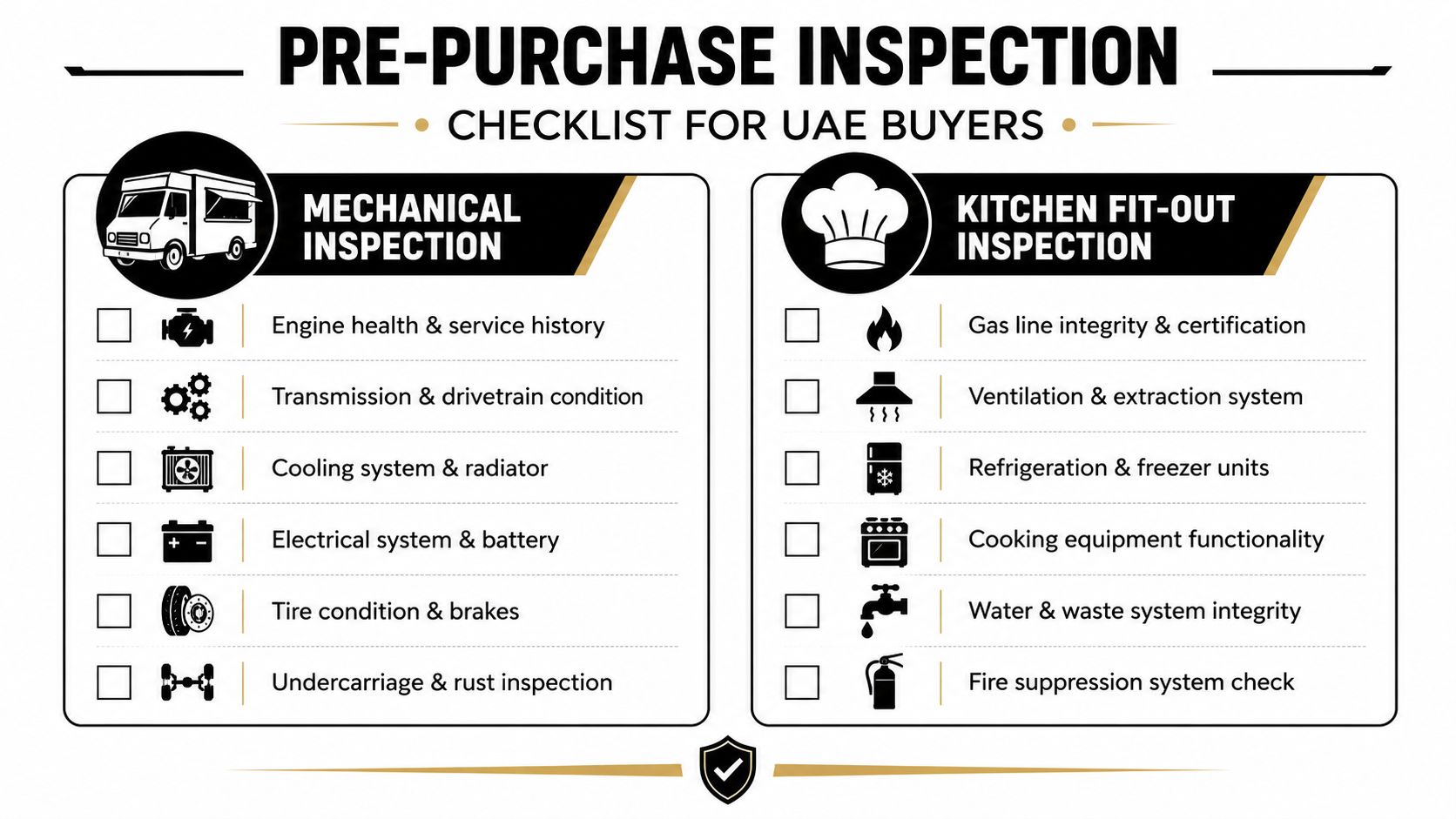
A food truck can look complete and still be a bad purchase. I break the inspection into two tracks, the vehicle underneath and the kitchen above it. If either side is weak, the asking price is already inflated.
Start with the chassis, because a polished counter does nothing for a truck that will not survive UAE service. Bring a commercial mechanic to inspect the engine, drivetrain, frame, brakes, cooling system, and service history. If the truck has only done short event runs, confirm it can handle repeated stop-start use in heat without overheating or rattling itself apart.
Then inspect the kitchen with a specialist who knows mobile fit-outs. A kitchen equipment technician should check ventilation, refrigeration, gas or electric appliance condition, water and waste systems, and the fire suppression setup. Bad retrofits are common, especially in used units where the seller has hidden wear behind fresh paint and tidy surfaces.
Use a separate document check as well. A pre-purchase vehicle check through a service such as Cararam's VIN check is sensible when you are buying used, because the physical inspection will not show whether the history is clean. If you have not already mapped the concept against approvals, do a feasibility study for your food truck concept before you pay a deposit. That check is where many buyers catch a mismatch between the truck they want and the permit path they need.
What to verify before paying
- Chassis and structure: Look for rust, weld issues, and collision damage.
- Power and cooling: Confirm the generator, battery, and refrigeration can support hot-weather service.
- Food-safe surfaces: Check stainless steel, sink areas, and cleaning access.
- Ventilation and extraction: Poor airflow creates heat, odour, and compliance problems.
- Fit-out compliance: Ask whether the unit meets municipality expectations without major modification.
If the seller cannot produce service records and appliance details, treat that as a warning, not a bargaining opportunity.
I would also check whether the truck needs changes just to work in the UAE climate. Air-conditioning for staff, refrigeration that holds up in heat, and safe waste handling are not extras here. They are basic operating requirements if you want the truck to survive service days without constant breakdowns.
Post-Purchase Steps Before the First Service
Once the truck is paid for and delivered, the work starts. The vehicle sitting in a yard doesn't generate revenue, and it definitely doesn't mean you're ready to open.
First, finalise the paperwork. If your activity and structure require it, handle tax registration properly and open a business bank account before you start taking operating money through personal channels. Then activate commercial motor insurance and liability cover, because a mobile food business carries both vehicle and public-facing risk.
Staffing comes next. If you're hiring, process visas through your PRO early and don't wait until the week before launch. The same applies to menu approval and food-safety registration. Your equipment, handling methods, and storage plan need to match what you plan to sell, not what looks attractive on a pitch deck.
The operating location is where most launches get delayed again. Private-property pop-ups, event contracts, and designated food-truck zones all need permission, and that permission has to be secured legally. If a site owner says “just park there”, that's not enough. You need written access and a clear understanding of who is responsible for utilities, waste, and trading rules.
Launch-week checklist
- Signage and branding: Make sure the truck is legible and compliant.
- Supplier setup: Lock in ingredients, packaging, and backup stock.
- POS system: Test card payments and cash handling before customers arrive.
- Soft opening: Run service under real conditions and watch workflow problems.
- Final audit: Check hygiene, storage, and staff roles one last time.
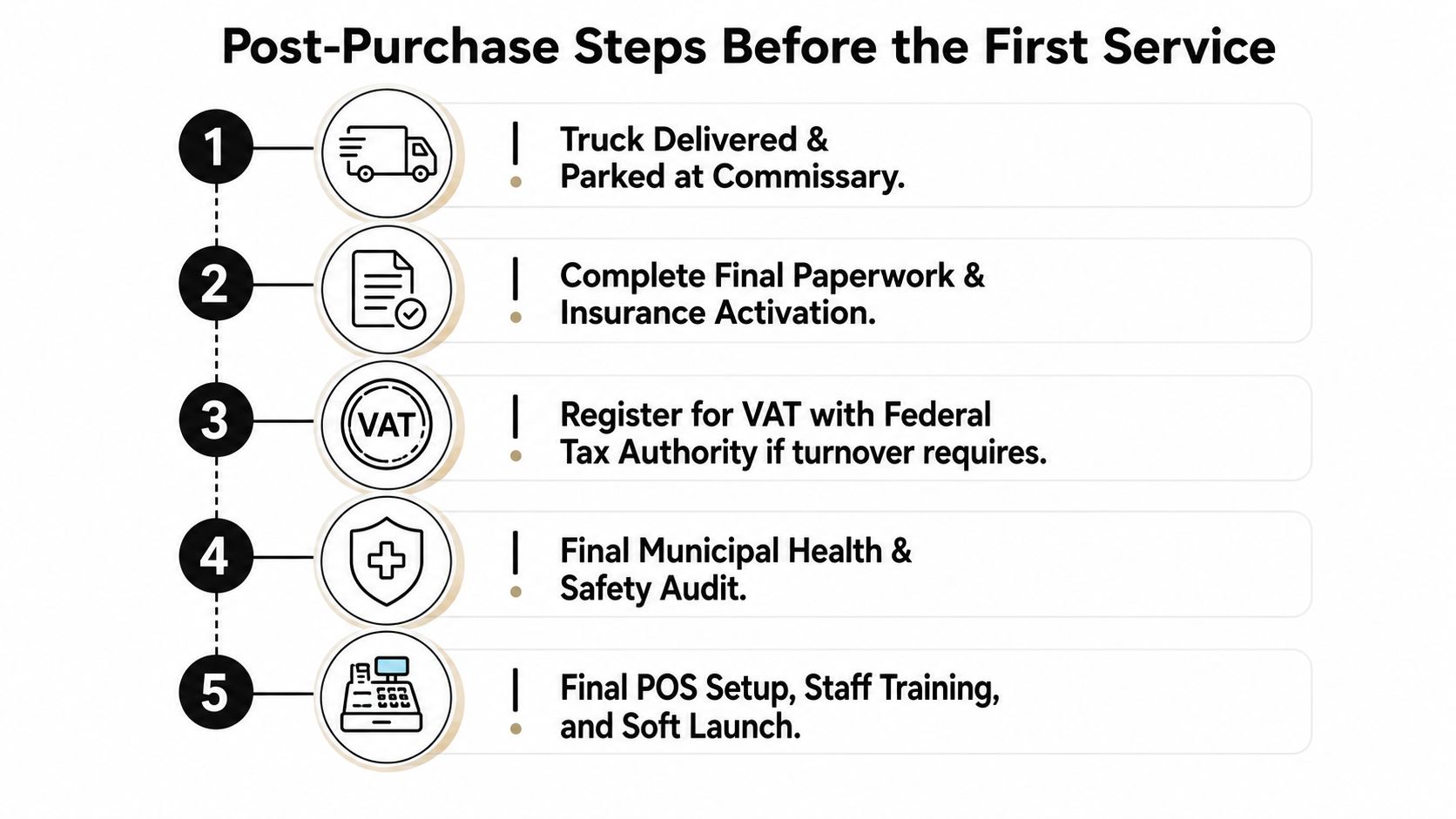
A soft opening isn't optional. It's where you find out if the line is too slow, the fridge is too small, or the prep workflow is clumsy before paying customers start judging you.
Common Mistakes and the Single Most Important Piece of Advice
The same mistakes repeat in the UAE food-truck market. Buyers purchase the truck before confirming the jurisdiction. They ignore location access rules. They under-budget for approvals, staff processing, and compliance work. They also assume the first month of sales will fix a weak launch plan, which usually just burns more cash.
The fix is straightforward. Treat the food truck as a licensed business first and a vehicle second. That means you sequence the decisions in the only order that makes sense, jurisdiction, licence activity, menu, location, then truck specification. If you reverse that order, the truck becomes an expensive correction exercise.
That is the single most important piece of advice I give clients in Dubai. Don't let the seller's urgency set your timeline. Don't pay a deposit until your business setup path is clear and your operating locations are at least broadly understood. If you're using a consultant, make sure they can validate the activity, the jurisdiction, and the budget before money moves.
Smart founders are disciplined here because they know the truck is just one asset inside a regulated operating model. The ones who rush usually spend the next few months fixing preventable problems instead of serving customers.
If you're ready to buy a food truck in the UAE, Smart Classic Business Hub can help you validate the licence activity, jurisdiction, approvals, and launch budget before you commit to a vehicle. Visit Smart Classic Business Hub to get the setup sequence checked properly, then move forward with the truck only after the compliance path makes sense.