
Import code renewal in Dubai is mandatory every 12 months, and you need to do it after your trade licence is renewed but before it expires. In practice, the process is completed online, usually costs AED 200 to AED 500, and the standard processing time is 1 to 2 working days.
If you're reading this because a shipment is due, a supplier is waiting, or your admin team just noticed an expiry date creeping up, you're looking at the right task. Import code renewal isn't difficult when your records are clean, but when it's delayed or filed with outdated details, it turns into the kind of compliance issue that stops operations at the worst possible moment.
Why Your Import Code Renewal Cannot Wait
A valid import code is what allows your business to move imported goods through customs channels and continue transacting on the relevant trade systems. When it lapses, the problem isn't theoretical. Your goods can stop moving, your team starts chasing approvals, and the cost of a small missed renewal quickly spreads into warehousing pressure, delivery delays, and unhappy customers.
Many business owners treat import code renewal as a back-office task because it happens on a cycle and the portal itself looks straightforward. That's the trap. Renewal is tied directly to business continuity, not just compliance paperwork. If your trade licence has already expired or your customs profile no longer matches your current company records, the issue surfaces when you need to clear goods, not when it's convenient to fix.
What the delay really affects
The immediate impact usually lands in four places:
- Customs clearance: Goods can't move smoothly when the code is inactive.
- Internal operations: Finance, procurement, and logistics teams all get pulled into fixing something that should've been routine.
- Supplier confidence: Vendors notice quickly when import-side paperwork causes handover delays.
- Customer delivery commitments: A missed renewal can disrupt promised timelines and create avoidable reputational damage.
Practical rule: Treat import code renewal the same way you treat trade licence renewal. As an expiry-driven operational deadline, not an admin reminder you can push by a week.
Why experienced firms renew early
The businesses that handle this well usually don't do anything clever. They just work in the right sequence, keep their records aligned, and avoid making changes at the last minute. That matters because customs-related systems are unforgiving about inconsistencies. A company that changed manager details, office location, or signatory records but never updated them in the right places often discovers the mismatch during renewal.
In practice, import code renewal is easiest when it's managed as part of a wider annual compliance routine. Businesses that wait until a shipment is already due are giving themselves the smallest margin for error.
Your Renewal Checklist Before You Begin
A failed renewal usually starts with a file problem, not a portal problem. I have seen businesses lose a full working day chasing documents, only to find the issue was a mismatch between the trade licence, customs profile, and authorised signatory records.
Start the review before anyone tries to submit anything. The objective is simple. Make sure your company file is current, readable, and consistent enough to pass without rework.
What you should prepare first
Use this checklist before opening the Dubai Trade portal:
| Document | Notes |
|---|---|
| Trade licence | Must already be renewed and active. This is the required starting point. |
| Signatory passport copy | Keep a clear, current copy ready. Expired or unclear scans often trigger rejection or follow-up. |
| Emirates ID | It should match the current authorised person linked to the customs file. |
| Memorandum of Association | Useful if company authority, shareholding, or legal structure needs to be verified. |
| Undertaking letter | Often missed until the application stalls. Keep the latest signed version ready. |
| Updated company details | Review office address, manager details, contact information, and related records before submission. |
Why these checks matter in practice
Each document solves a different approval risk.
The trade licence confirms the business is active. The passport copy and Emirates ID support identity checks for the authorised signatory. The MOA helps if Dubai Customs needs to confirm who can act for the company. The undertaking letter tends to become a problem only after submission, which is why it should be checked early.
One missing item rarely stays a small issue. It usually creates a stop, a resubmission, and then a delay that reaches procurement, logistics, and customer delivery dates.
The two checks that prevent the most disruption
Check record consistency first.
Your company name, licence details, manager information, and authorised signatory details should match across the trade licence, customs profile, and supporting documents. Even small differences in spelling or outdated job titles can hold up approval.
Check whether recent changes were fully updated.
If you changed office location, management, ownership structure, or signatory authority this year, confirm those updates were recorded properly before renewal. Do not assume the renewal request will correct them for you. In practice, it usually does not.
If your team also manages product classification, review the shipment data at the same time. A practical commodity code guide for FBA sellers can help your team avoid classification confusion, and this HS code Dubai reference for UAE import paperwork is useful when you want customs records and shipment documents to match cleanly.
A practical pre-submission check
Before logging in, assign one person to verify the full file from start to finish. That person should confirm document validity, file clarity, signatory authority, and data consistency. Shared responsibility sounds efficient, but for renewals it often creates gaps because each department assumes someone else checked the details.
That final review is what keeps a routine renewal from turning into an urgent customs problem.
The Online Renewal Process Explained
A clean file can still turn into a delay if the person submitting rushes through the portal and assumes the prefilled data is correct. I see that happen when a business is trying to clear incoming shipments and treats renewal as an admin task instead of a continuity risk.
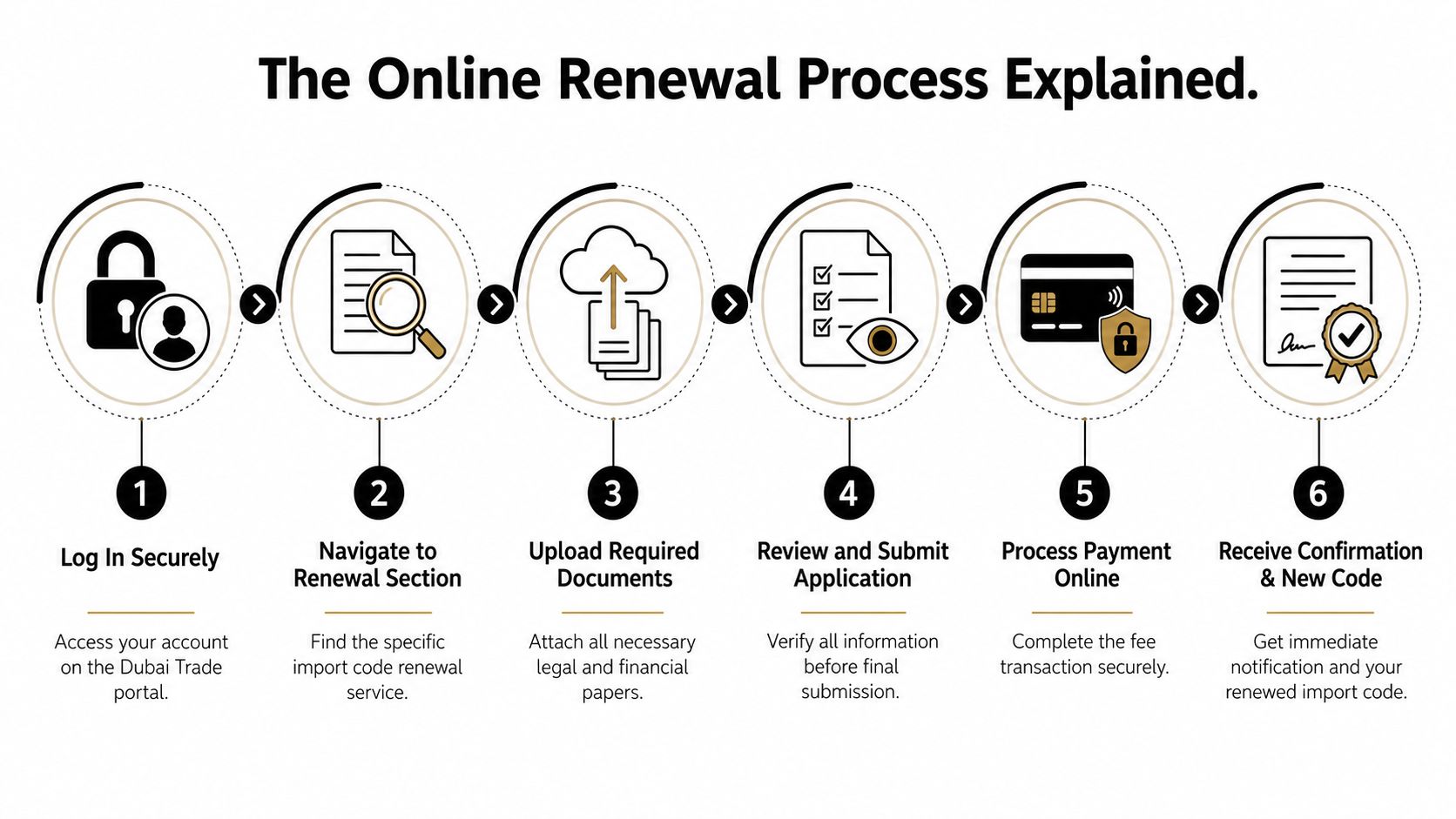
Logging in and finding the right service
Start only after the trade licence is active in the system. Then sign in to the Dubai Trade portal with UAE Pass, open My Services, and select Renew Trader Registration. The portal will guide you through the renewal steps, but the practical job is to confirm that you are renewing an existing importer profile, not starting the wrong service request under time pressure.
UAE Pass usually makes the login and identity check more reliable. That matters because failed authentication, shared credentials, or last-minute account access issues can waste the same day your operations team expected approval to be underway.
What to review before you submit
The portal often pulls company information into the renewal form. Review every field against your current records before you click ahead.
Focus on the entries that trigger avoidable rework:
- Company identity details: trade licence name and licence data must match the customs profile.
- Authorised person records: manager and signatory details must reflect the person currently allowed to act.
- Supporting uploads: submit clear, readable copies with the correct document type.
- Related operating details: confirm any information tied to payments, account records, or associated company data if the portal requests it.
A common problem appears when the account holder assumes an importer code already exists, but the profile status points the user toward issuance instead of renewal. Check that internally before you begin. If your staff chooses the wrong path, you lose time, create duplicate queries, and increase the chance that a shipment schedule slips while the team sorts out a preventable portal issue.
Review the renewal screen the same way you would review a customs declaration. One small mismatch can hold the whole file.
Payment and what happens next
Once the form and attachments are correct, complete payment online and save the confirmation straight away. Keep the receipt with the renewal file, not in one person's inbox. If customs support asks for proof of submission, your team should be able to produce it in minutes.
After submission, monitor the application until the renewed status is confirmed. Do not assume payment means completion. If the business imports restricted goods, remember the renewed import code does not replace any separate approvals needed for clearance. That distinction matters in practice, especially for companies that discover the renewal is active but the shipment still cannot move because another permit was missed.
For companies comparing importer registration requirements across markets, this overview of import export code details is a useful reference point, even though the UAE process follows its own portal rules and document checks.
Common Renewal Pitfalls and Their Fixes
A renewal problem usually shows up at the worst time. The shipment is booked, the supplier is asking for confirmation, and someone on your team discovers the customs profile no longer matches the company records. At that point, the issue is no longer administrative. It becomes an operations problem that can delay cargo, trigger storage costs, and force staff into last-minute corrections.
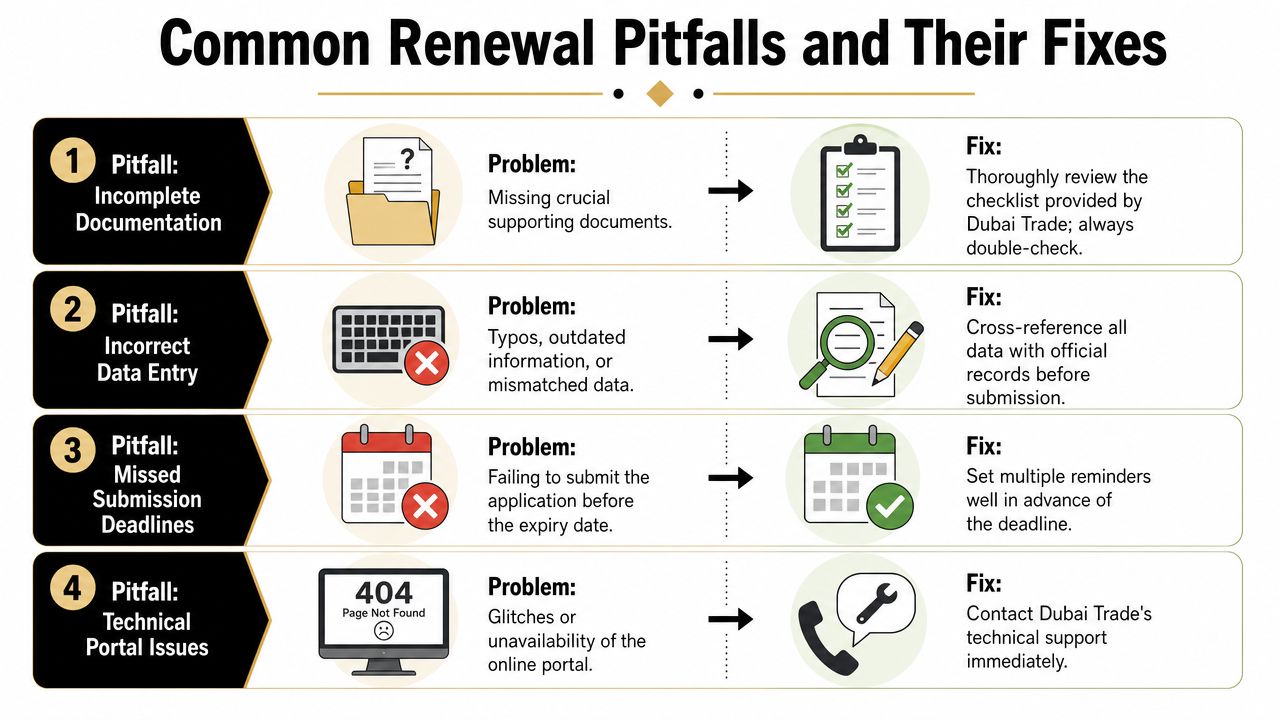
The pattern is consistent. Renewals fail because the business record is out of date, incomplete, or inconsistent across systems. Customs checks are built to catch exactly that. If your licence, authorised signatory, address, or supporting documents do not line up, the file gets held for review or pushed back for correction.
The failures I see most often
These are the four issues that create the majority of avoidable delays:
- Expired trade licence: The import code renewal stalls because the parent company record is no longer valid.
- Mismatched company details: Names, licence numbers, addresses, or signatory details differ between the licence, customs profile, and uploaded documents.
- Missing undertaking letter: The application looks complete until review reaches a required supporting document that was never attached.
- Unreported company changes: A manager change, office move, or other amendment was completed internally but not updated in the relevant government records.
This is why I tell clients to treat renewal as a record audit, not a form submission. The portal only reflects the health of the underlying file.
The practical fix for each one
| Pitfall | Why it causes trouble | Practical fix |
|---|---|---|
| Expired trade licence | Customs cannot validate an active business record against an expired licence | Complete the trade licence renewal process in Dubai before you return to the import code file |
| Record mismatch | Reviewers see conflicting business data and hold the application | Check every key field across the trade licence, customs profile, Emirates ID details, and uploaded attachments |
| Missing undertaking letter | The application is incomplete even if the main documents are correct | Prepare the letter in advance, confirm the format, and upload it with the first submission |
| New manager or location not updated | Authority, address, or legal identity cannot be confirmed cleanly | Update the amendment first, wait for the record to reflect correctly, then submit the renewal |
One missed update can create a chain reaction. A signatory mismatch leads to a rejected submission. The rejected submission costs a day. That lost day becomes a clearance delay if cargo is already on the water.
Rejected renewals usually trace back to weak document control, not a difficult portal.
When the portal itself seems wrong
Portal issues do happen, but they are often symptoms of a profile problem. If the system routes your staff toward issuance instead of renewal, or if the importer code does not appear under the expected account, stop and verify the underlying profile before anyone submits a new request.
I have seen companies create duplicate applications because the team assumed the portal was faulty. The issue was a dormant code, an outdated authorised user, or a business record that had changed after licence renewal. The fix is to reconcile the profile first, then restart the renewal with clean data.
A simple rule helps here. If the screen behaviour does not match the company's actual status, pause the process and confirm the record before you click anything that creates a new file.
Decoding Renewal Fees and Timelines
For planning purposes, the main numbers are simple. Import code renewal in Dubai typically costs AED 200 to AED 500, depending on company type, and the application is generally processed within 1 to 2 working days when the file is in order. Payment is handled online only.
That timeline is fast enough for organised businesses and too tight for businesses that leave everything until expiry week. If your licence renewal, signatory updates, or supporting documents are still unresolved, the nominal processing time stops being useful because the actual delay sits in preparation.
How to budget your time properly
Think of the fee as the easy part and the lead time as the primary planning issue:
- Direct government charge: Budget for the stated renewal range.
- Internal admin time: Someone needs to verify records, documents, and portal access.
- Operational risk: A delayed filing can cost far more than the renewal fee once shipments are involved.
If your trade licence itself is also coming due, it helps to coordinate both renewals together. This overview of trade licence renewal support in Dubai is useful if you're aligning the timelines and want to avoid one expiry undermining the other.
When to Partner with a PRO Services Expert
Some companies should handle import code renewal in-house. If your records are current, the authorised signatory hasn't changed, and someone on your team is already comfortable with Dubai Trade and UAE Pass, a self-managed renewal can work well.
Where businesses get caught is in the grey area. The file looks simple, but the company moved office, changed manager, updated licence details, or hasn't checked whether customs records still match what appears on the trade documents. That's where a PRO services expert earns their value.

DIY works best in a narrow set of cases
A do-it-yourself renewal is usually reasonable when:
- Your company data hasn't changed: Same manager, same office, same signatory structure.
- Your admin files are organised: The required documents are current and easy to retrieve.
- Your team understands the portal: They know where to log in, what to review, and how to resolve small issues.
Professional help makes sense when risk is higher
A specialist is often the better option when:
- You are a foreign investor or first-time operator in the UAE
- The company went through amendments recently
- Your internal team is too busy to chase corrections
- A shipment timeline leaves little room for trial and error
If you want a clearer sense of what that support function usually includes, this explanation of the Public Relations Officer role in UAE gives useful context. For businesses that need hands-on administrative support, this page on business setup and PRO services in Dubai outlines the type of support companies often use when compliance tasks start affecting operations.
A good consultant doesn't just submit the form. They reduce the chance that you find out about a records problem when your goods are already waiting at the port.
If you want import code renewal handled properly, Smart Classic Business Hub can help you coordinate the process with your trade licence status, company records, and supporting documents so you avoid preventable delays and keep business moving without disruption.