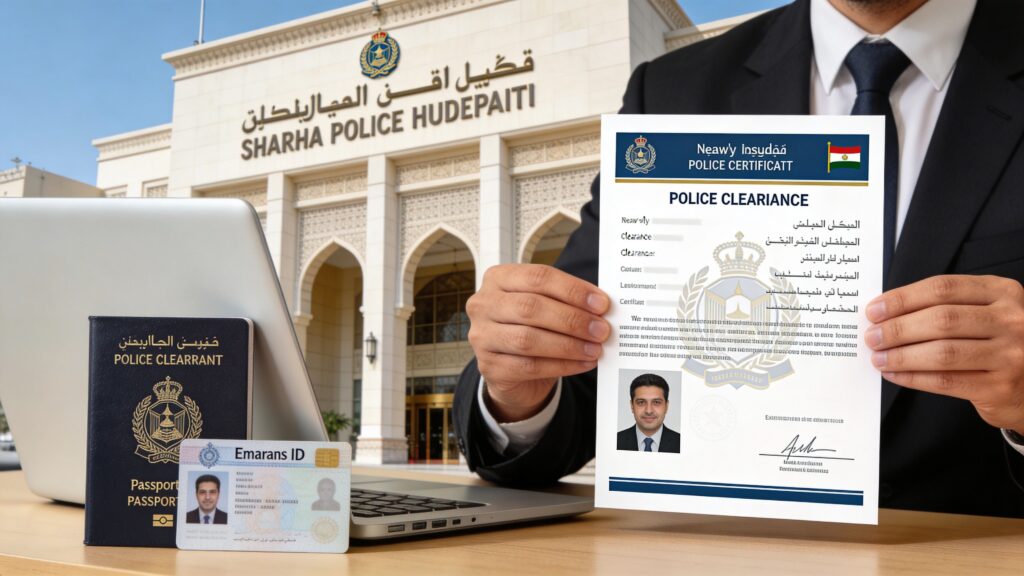
Think of a Police Clearance Certificate (PCC) in Dubai as an official stamp of good character from the government. It’s also called a Good Conduct Certificate, and it’s issued by Dubai Police to confirm you have a clean criminal record from your time living in the emirate. This isn't just a piece of paper; it's a critical document that verifies your history and builds trust.
What a Dubai Police Clearance Certificate Really Is
Before we get into the nitty-gritty of applying, let's talk about why this certificate matters so much. Essentially, it’s an official character reference, certifying your lawful conduct. It's a key that can unlock some of life's biggest opportunities, both here in the UAE and abroad.
You'll find this document popping up as a requirement for many major milestones. Whether you're starting a new job, applying for a visa to move to another country, or getting a professional licence, a PCC is often non-negotiable. It’s the proof that employers, immigration authorities, and licensing bodies need to see you as a trustworthy individual.
Why This Certificate is So Important
The demand for a PCC is all about safety and trust. For companies, especially those in sensitive fields like finance or education, it’s a standard part of their background checks. Likewise, if you’re planning to immigrate to countries like Canada, Australia, or the UK, they'll almost certainly ask for a PCC from every country you’ve lived in for a significant period.
Here are a few real-world scenarios where you'll definitely need one:
- Employment: Many companies require a PCC before you can join, particularly government bodies and large multinational firms.
- Immigration: It’s a core document for visa applications, residency permits, and citizenship processes in countless countries.
- Professional Licensing: If you're in a field like healthcare, law, or engineering, you'll often need a PCC to get or renew your professional licence.
- Business Setup: Entrepreneurs looking to set up certain types of businesses might be asked to provide a PCC to the regulatory authorities.
In Dubai, the PCC is a vital document confirming a clean criminal record. It is frequently used for job changes, with some studies showing 65% of multinational firms mandating it, as well as for professional licensing and family sponsorships. Explore additional details about the uses of a PCC from Arnifi.
At the end of the day, getting your police clearance certificate is about proving your credibility. Understanding its value helps you prepare for the process and appreciate why it’s a standard request in so many official transactions. It’s a testament to your good standing and an essential tool for whatever you have planned next.
Gathering Your Essential Documents
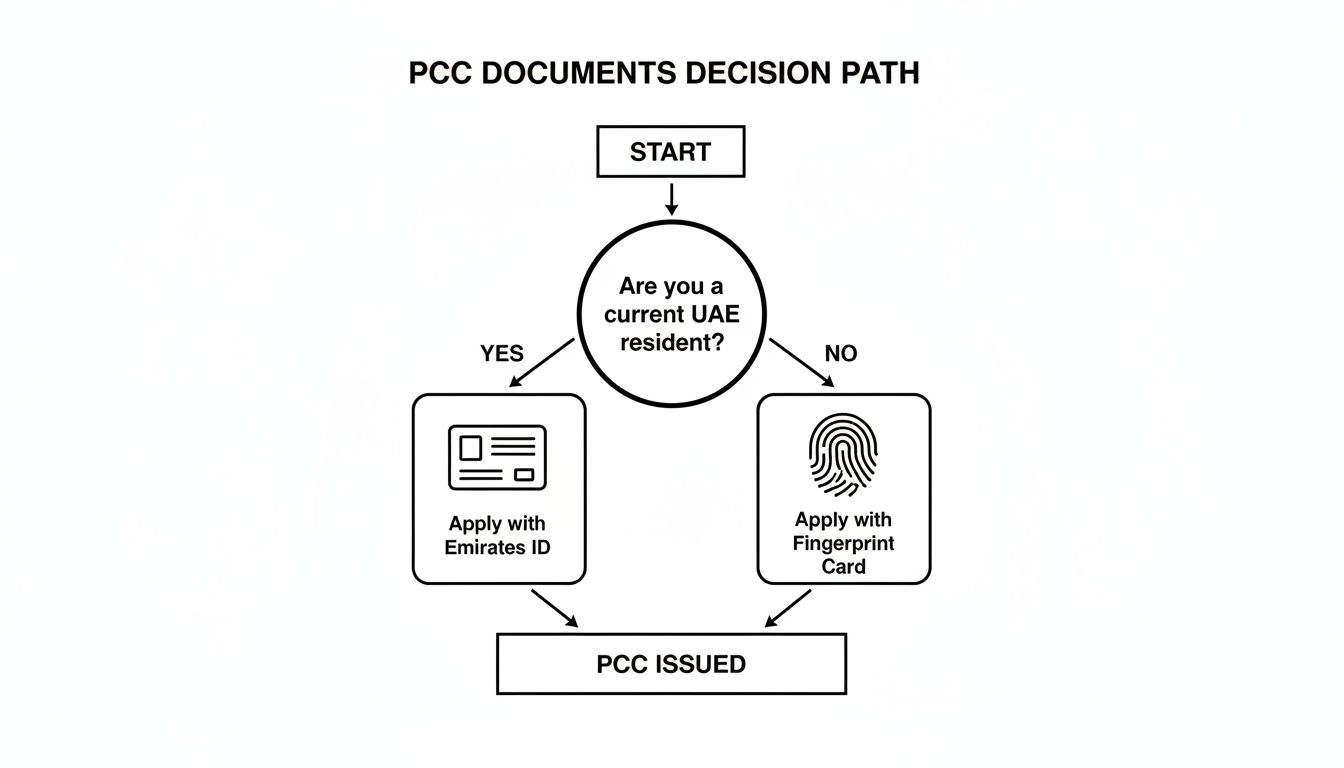
Getting your documents in order is honestly the most important part of applying for a Dubai police clearance certificate. Nail this stage, and you'll sidestep frustrating delays or even a flat-out rejection. The paperwork you need changes slightly depending on whether you’re a current resident or applying from outside the UAE, so let’s break down exactly what you need.
Think of it as your pre-flight check. A single missing document or an incorrect detail can ground your application before it even gets off the runway.
For Current UAE Residents
If you're living in the UAE right now, the process is refreshingly simple. Because you're already in the official system, the list of required documents is short and sweet.
Here's what you'll need to have ready:
- A valid Emirates ID: This is your primary identifier in the UAE. Make absolutely sure it hasn’t expired.
- A clear copy of your passport: Just the main page with your photo and personal details will do.
- A recent passport-sized photograph: This needs to be a high-quality digital image with a plain background, just like the standard passport photos.
Having these three things saved digitally will make the online application a breeze.
For Former Residents Applying from Abroad
For those who used to live here, the process has a few extra steps since you're no longer in the UAE's direct identification system. The main difference is the need for a verified fingerprint card.
Here’s your checklist if you're applying from outside the UAE:
- A completed fingerprint card: You’ll need to get this from the police or another official authority in the country where you currently live.
- Attestation of the fingerprint card: This is a non-negotiable step. The card must be stamped and verified by the UAE Embassy or Consulate in the country you got it from.
- A copy of your passport: Again, just the main details page.
- Two recent passport-sized photographs: These must meet the same quality standards as for residents.
- A copy of your last UAE residence visa: This is crucial as it helps Dubai Police quickly find your old records in their system.
Expert Tip: The fingerprint card attestation is where most applications get stuck. My advice? Contact the nearest UAE embassy in your country before you even get your fingerprints taken. Ask them about their specific requirements because the procedure can vary from one embassy to another. A quick phone call can save you weeks of hassle.
Getting your documents right from the start is fundamental. For anyone managing complex affairs from abroad, this kind of attention to detail is key—it’s just as vital when you’re figuring out how to open a non-resident bank account in Dubai, where every piece of paper is scrutinised.
By organising all your paperwork meticulously before you begin, you're setting yourself up for a smooth, quick approval and turning a potential headache into a straightforward task.
Navigating the Application Process
Alright, you've got your documents in order. Now comes the part where you actually apply for your police clearance certificate in Dubai. The good news is that Dubai has made this whole process incredibly straightforward, offering a few different ways to get it done, both online and in person.
Let's walk through the most common routes. Honestly, the best and most efficient way is to go digital.
The Digital Route: Dubai Police and MOI
The go-to method for most people is using the official Dubai Police platforms. Whether you use their website or the mobile app, both are designed to be pretty intuitive. They guide you through each step, making it hard to go wrong. This is all part of a bigger push by the government to make services like this as painless as possible.
When you land on the Dubai Police website, you'll find the Good Conduct Certificate service easily. You'll just need to create an account (or log in if you already have one), select the service, punch in your details, upload the documents you've prepared, and pay the fee online.
Another great option is the Ministry of Interior (MoI) portal. It acts as a central hub for all sorts of federal services, including police clearance. The big advantage here? Its integration with UAE PASS. If you're set up with UAE PASS, the application is even quicker because it automatically fills in a lot of your personal information for you.
In-Person and Alternative Channels
If you're someone who prefers a more hands-on approach or maybe just wants a bit of help, heading to a Smart Police Station (SPS) is a fantastic choice. These are essentially self-service kiosks, open 24/7 all over Dubai. You can complete the whole application yourself, but with the peace of mind that support is nearby if you get stuck. It’s a brilliant, modern take on the traditional service centre.
No matter which method you pick, here’s a crucial piece of advice I give everyone:
Always save your application reference number. This little number is your golden ticket for tracking your certificate's progress. You can pop it into the Dubai Police or MoI portal to check if your application is 'In Process,' 'Approved,' or if they need something else from you.
The move to digital has been a game-changer. The Ministry of Interior and Dubai Police process a staggering number of eServices, and PCCs are a huge part of that. Thanks to this digitisation, what once took weeks now typically takes just 24 to 72 hours.
What if you're applying from overseas and the idea of getting documents attested and submitted feels a bit overwhelming? You can authorise someone in the UAE to handle it all for you. This is a common solution for people managing official tasks from abroad. To see how that works, you can learn more about setting up a UAE Power of Attorney.
Understanding the Fees, Timelines, and Certificate Validity
When you’re applying for a police clearance certificate in Dubai, the last thing you want are surprises. Getting a handle on the costs, how long it’ll take, and how long the certificate is good for is key to a smooth process. Let’s walk through the specifics so you know exactly what to expect.
The fees are thankfully quite straightforward and mostly depend on where you are when you apply. If you're currently in the UAE, the costs are very reasonable.
A Clear Breakdown of Costs
The financial side of things is pretty transparent. The fee structure is designed to be accessible, though it shifts a bit depending on your status.
- For UAE Nationals, the fee is around AED 100.
- If you're a current resident, you'll typically pay AED 200.
- For those applying from overseas, the cost is a bit higher, usually around AED 300.
It's also smart to keep a few potential extra costs in mind. For instance, if you need the certificate issued in English, there might be a small additional charge. Likewise, opting to have a physical copy delivered by courier will add to the final bill. These are optional, but can be really useful depending on what you need the certificate for.
The main takeaway here is to budget for the base fee plus any little extras you might need. While most online applications fly through, some complex cases might need a manual check, which can slow things down. You can get more practical insights from specialised service providers who handle these applications day in and day out.
How Long Does It Take? And How Long Is It Valid?
Once your application is in, you usually won't be waiting long.
Online applications through the Dubai Police portal are incredibly quick. In many cases, you could have your certificate in hand within 24 hours. Still, it’s always a good idea to allow for up to three business days, just to be safe.
Now, if you're applying from abroad, the process naturally takes a bit longer. This is because it involves verifying your fingerprint card. You'll need to factor in the time for getting that card attested at a UAE embassy and the international shipping time. All told, this could stretch the process out to several weeks.
Finally, and this is a big one: the certificate's validity. A Dubai police clearance certificate is generally valid for three months from the day it’s issued. This is a critical detail to lock in. If you're applying for a new job or an immigration visa with a tight deadline, timing is everything. Apply too soon, and your certificate might expire before you can even submit it, forcing you to start all over again. Always double-check the requirements of whoever is asking for the certificate and plan your application accordingly.
Using Your Certificate Internationally
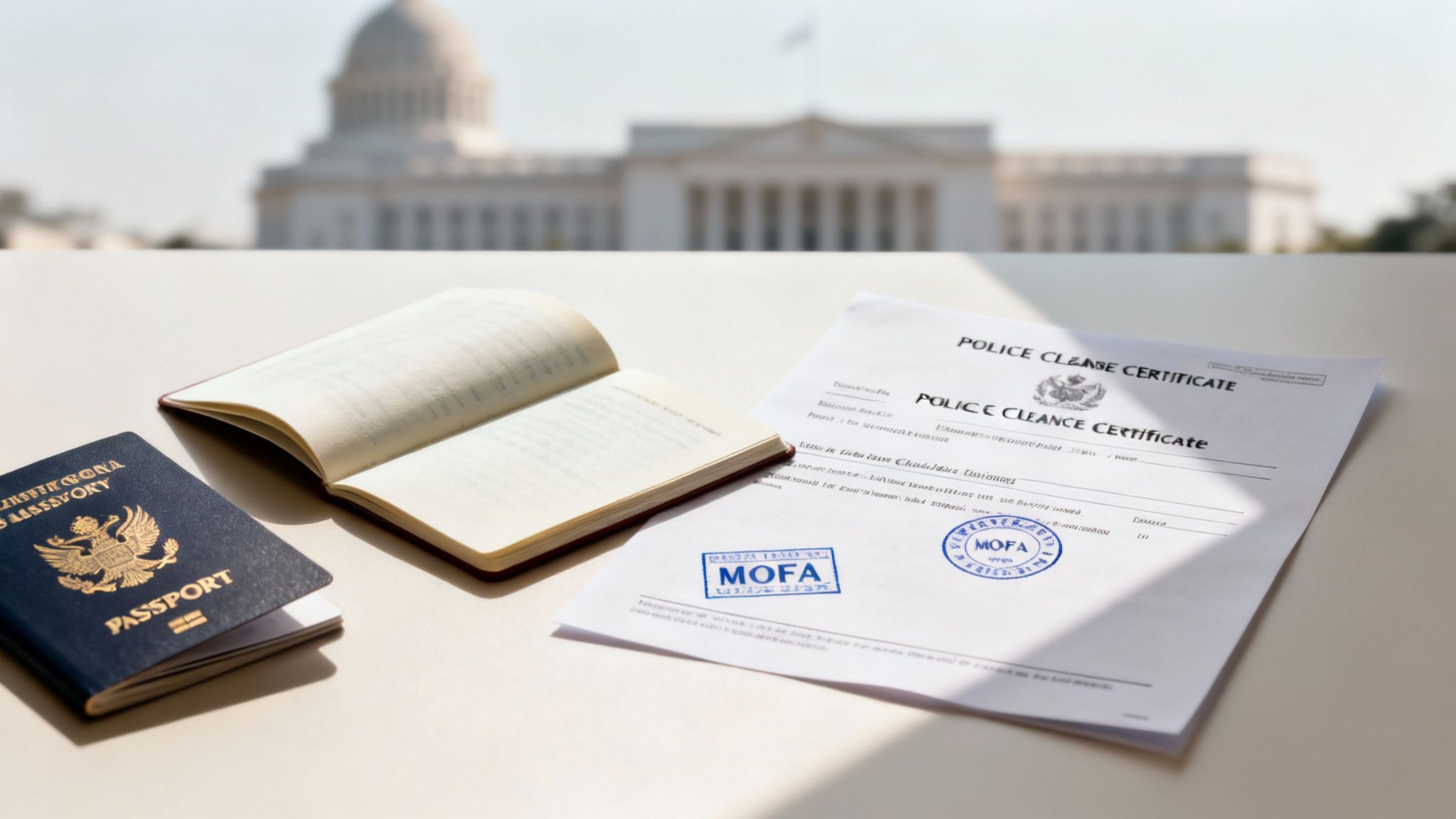
Holding your freshly issued police clearance certificate Dubai feels like the final step, but if you're planning to use it in another country, you’ve got one more crucial stage to navigate. An electronic or standard certificate from Dubai Police is perfectly valid within the UAE. However, for international authorities, it's just a piece of paper until it has been officially authenticated.
This is where you'll hear the terms attestation and legalisation thrown around. Think of this process as giving your certificate an official international passport. It’s a series of stamps and verifications that prove to a foreign government that your document is genuine. Without it, your certificate will almost certainly be rejected for immigration, employment, or academic purposes abroad.
The Standard Attestation Journey
Making your document internationally recognised follows a clear path, though the exact steps can sometimes vary. It’s essentially a chain of verification where one government department confirms the authenticity of the stamp from the previous one.
The usual process involves two key players:
- Ministry of Foreign Affairs (MoFA) in the UAE: This is your first stop. MoFA will review the certificate issued by Dubai Police and add its official stamp, confirming its validity within the UAE government system.
- Embassy or Consulate of the Destination Country: After MoFA attestation, you must take the document to the embassy of the country where you intend to use it. They will add their own stamp, which finalises the legalisation and makes it officially recognised in their jurisdiction.
Crucial Tip: Always check the specific requirements of the destination country before you start this process. Some countries have unique procedures or demand extra steps, and getting this wrong can lead to serious delays. A quick visit to the destination country’s embassy website is a non-negotiable part of your planning.
For instance, if you're moving to Canada for work, Canadian immigration authorities won't accept a standard Dubai PCC at face value. It must first be attested by the UAE's MoFA and then legalised by the Canadian Embassy in Abu Dhabi before it's considered valid.
Planning for Success
This entire attestation process adds extra time and cost, so it's vital to factor this into your schedule. For anyone navigating complex visa processes, like securing a freelance visa in Dubai, understanding these official procedures is absolutely essential for a smooth experience.
Each step requires meticulous attention to detail, from gathering the initial documents to ensuring every required stamp is in place for international use. Failing to complete this final legalisation step can, unfortunately, render all your previous efforts useless for achieving your international goals.
Answering Your Top PCC Questions
When you're trying to get a police clearance certificate in Dubai, a few common questions and tricky scenarios always seem to come up. Getting these details right can be the difference between a quick, successful application and a month of frustrating delays.
Let's clear up some of the most frequent points of confusion. I've seen these trip people up time and again, so getting ahead of them is key, especially when your next job or visa application is on the line.
What if I Have a Pending Case or Get Rejected?
This is probably the biggest worry for most applicants: how will an existing legal issue affect my PCC?
The short answer is, you generally cannot get a police clearance certificate if you have any active or pending cases in Dubai. This isn't just for serious matters; it includes things like unresolved financial disputes or other outstanding legal loose ends. The system is designed to automatically flag these, so it’s critical to make sure your record is totally clear before you apply. If not, a rejection is almost guaranteed.
So, what happens if your application does get rejected? First off, don't panic. The rejection notice will usually tell you why. The most common reasons I see are:
- Incorrect or blurry document uploads. A simple mistake, but a common one.
- Your record was flagged because of a pending issue.
- Small errors in the personal information you entered.
If it's just a documentation error, you can fix it and try again. For anything more complicated, your best bet is to visit a Dubai Police service centre in person. They can give you direct clarification and help you figure out the next steps.
How Do I Manage My Application and Certificate?
Keeping track of your application is thankfully quite simple. When you apply online through the Dubai Police website or their app, you'll be given a reference number. Make sure you save this number right away.
You can plug this reference number into the portal to see your application's status in real-time. It will tell you if it's 'In Process,' 'Approved,' or if it needs more information from your end.
Here's a pro-tip I always give my clients: Think about the language of the certificate from the start. During the application, you can choose either Arabic or English. If you need the certificate for immigration or a job abroad, request the English version immediately. Making this one small choice upfront can save you a world of hassle and the extra cost of getting official translations later on.
By knowing the answers to these common questions, you can steer clear of the little mistakes that often derail applications and make sure yours goes through without a hitch.
Navigating official procedures can feel overwhelming, but you don't have to figure it all out alone. Smart Classic Business Hub provides expert PRO services to manage your police clearance certificate application and other government paperwork, ensuring every detail is handled perfectly. Let us streamline the process for you.