The Dubai freelance visa is your key to legally working as an independent professional in the emirate. Think of it less as a single visa and more as a complete package: you get an official permit to operate as a sole practitioner, which then allows you to secure a residency visa. It’s your business licence and personal residency, all rolled into one.
This setup is specifically designed for skilled professionals in popular fields like tech, media, education, and consulting, offering a direct route to earning a tax-free income and tapping into a global business network without needing a traditional employer.
Starting Your Dubai Freelance Journey
Embarking on a freelance career in Dubai is exciting, but getting the foundation right is everything. This permit has truly been a game-changer for independent professionals, allowing them to legally set up shop in the UAE without a local sponsor.
To qualify, you’ll generally need to meet a few key criteria. This often includes holding at least a bachelor’s degree and proving your financial stability. You can usually do this by showing a minimum annual income of AED 360,000 from the past two years or by demonstrating you have sufficient savings to support yourself.
Choosing Your Path Free Zone vs Mainland
Your first big decision is choosing where to get your freelance permit from. This is a critical fork in the road, and you have two main options: a Free Zone or the Mainland.
- Free Zone Permit: This is by far the most popular route for freelancers. Free zones are special economic areas—think of places like Dubai Media City or Dubai Knowledge Park—that offer 100% foreign ownership and are built to support specific industries.
- Mainland Permit: This option, managed by the Department of Economy and Tourism (DET), gives you the freedom to work with any company across the entire UAE without restrictions. It provides wider market access but can sometimes feel a bit more complex to navigate.
Each path has its own set of pros and cons that will directly impact how you operate. For example, a free zone permit might limit you from working directly with mainland-based clients without jumping through a few extra hoops. In contrast, a mainland permit gives you complete freedom. Making this choice is as fundamental as the first steps you take when learning how to start a business in the UAE.
Choosing the right jurisdiction is the most critical step in your freelance journey. A free zone offers a community-centric, often more affordable start, while the mainland provides unrestricted access to the entire UAE market. Your long-term business goals should dictate this choice.
To make this decision easier, it helps to see a direct comparison of what each option offers.
Choosing Your Path Free Zone vs Mainland
| Feature | Free Zone Permit | Mainland Permit (DED) |
|---|---|---|
| Market Access | Primarily within the free zone and international clients | Unrestricted access to the entire UAE market |
| Ownership | 100% foreign ownership guaranteed | 100% foreign ownership is now widely available |
| Office Space | Often offers flexible co-working and flexi-desk options | May require a physical office or virtual office registration |
| Setup Cost | Generally more cost-effective and bundled packages | Can be slightly higher due to different fee structures |
| Ideal For | Creatives, consultants, tech experts serving global clients | Professionals targeting local government and private sectors |
Ultimately, the best choice depends entirely on your business model. If your clients are mostly international or based within other free zones, the simplicity and cost-effectiveness of a free zone permit are hard to beat. But if your goal is to work directly with large mainland corporations or government entities, the mainland permit is the way to go.
How to Navigate the Application Process
Getting your freelance visa in Dubai isn’t about ticking off a rigid, numbered list. It’s better to think of it as a logical flow of milestones. The whole journey really starts with good preparation—making sure every single piece of paperwork is perfectly in order before you even think about submitting anything.
This initial stage is the most critical one. You’ll need to pull together a core set of documents: a high-resolution copy of your passport, a professional CV that clearly outlines your experience, and, crucially, your educational certificates.
If your degrees were obtained outside the UAE, document attestation is non-negotiable. This is the formal process of getting your qualifications verified, first by the UAE Embassy in your home country and then by the Ministry of Foreign Affairs (MoFA) here in Dubai. Trying to skip this step will bring your application to a dead halt.
Kicking Off Your Application
Once your documents are attested and organised, you’re ready to submit your application. This goes to your chosen authority, whether that’s a specific free zone or the mainland’s Department of Economy and Tourism (DET). Thankfully, most authorities now have online portals that make the submission process pretty straightforward. You’ll just need to upload your documents, fill out the necessary forms, and pay the initial fees for your freelance permit.
This flowchart gives you a high-level view of the key decision points and stages you’ll encounter.
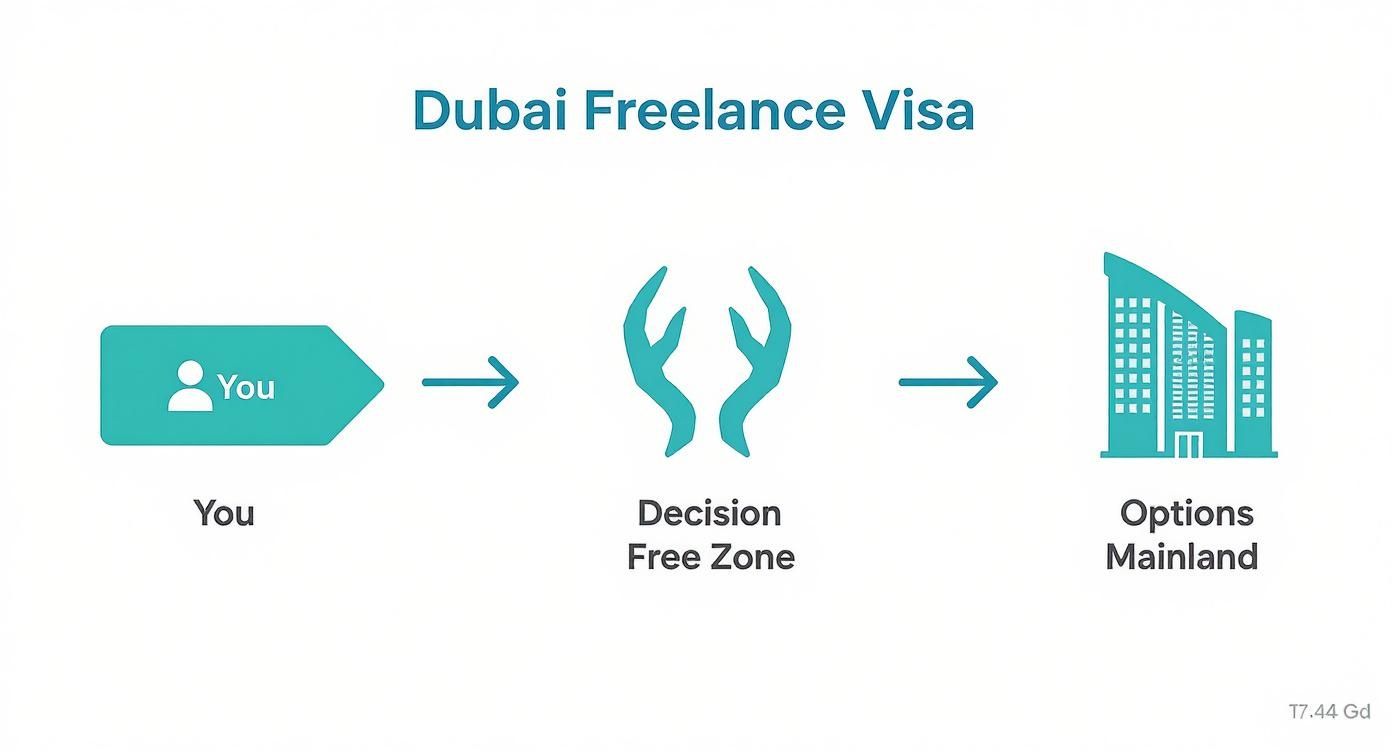
As you can see, your journey kicks off with that fundamental choice between a free zone or a mainland permit. That one decision dictates the specific steps that follow for your residency.
After your initial application gets the green light, you’ll receive your freelance permit and something called an establishment card. This card is basically your business’s registration file with the immigration system, and it’s the key that unlocks the next phase: your personal residency visa.
Medicals and Biometrics
With the establishment card issued, the system generates your entry permit, which is your official go-ahead for the in-country visa formalities. First up is the mandatory medical fitness test. This involves a quick blood test and a chest X-ray to screen for specific communicable diseases. It’s a standard procedure for all residents.
Pro Tip: Try to schedule your medical test early on a weekday morning to beat the long queues. Make sure you’re well-hydrated. If you have the option, the VIP service is worth it for a much faster turnaround—you can often get your results in just a few hours.
Once you’ve passed the medical test, the last major step is your Emirates ID biometrics appointment. This is where you’ll provide your fingerprints and have your photo taken for your official residency card.
With that done, the final piece of the puzzle is the visa stamping. Your passport is sent to immigration, where the residency visa is physically placed inside, officially making you a Dubai resident.
From start to finish—from the day you submit your application to getting that stamp in your passport—the whole process typically takes between three to five weeks. This can vary depending on the authority you chose and how well-prepared you are.
At Smart Classic Business Hub, we’re with our clients through each of these stages, making sure every document is correct and every appointment is managed efficiently to keep things moving smoothly.
Breaking Down the Costs of Your Freelance Visa
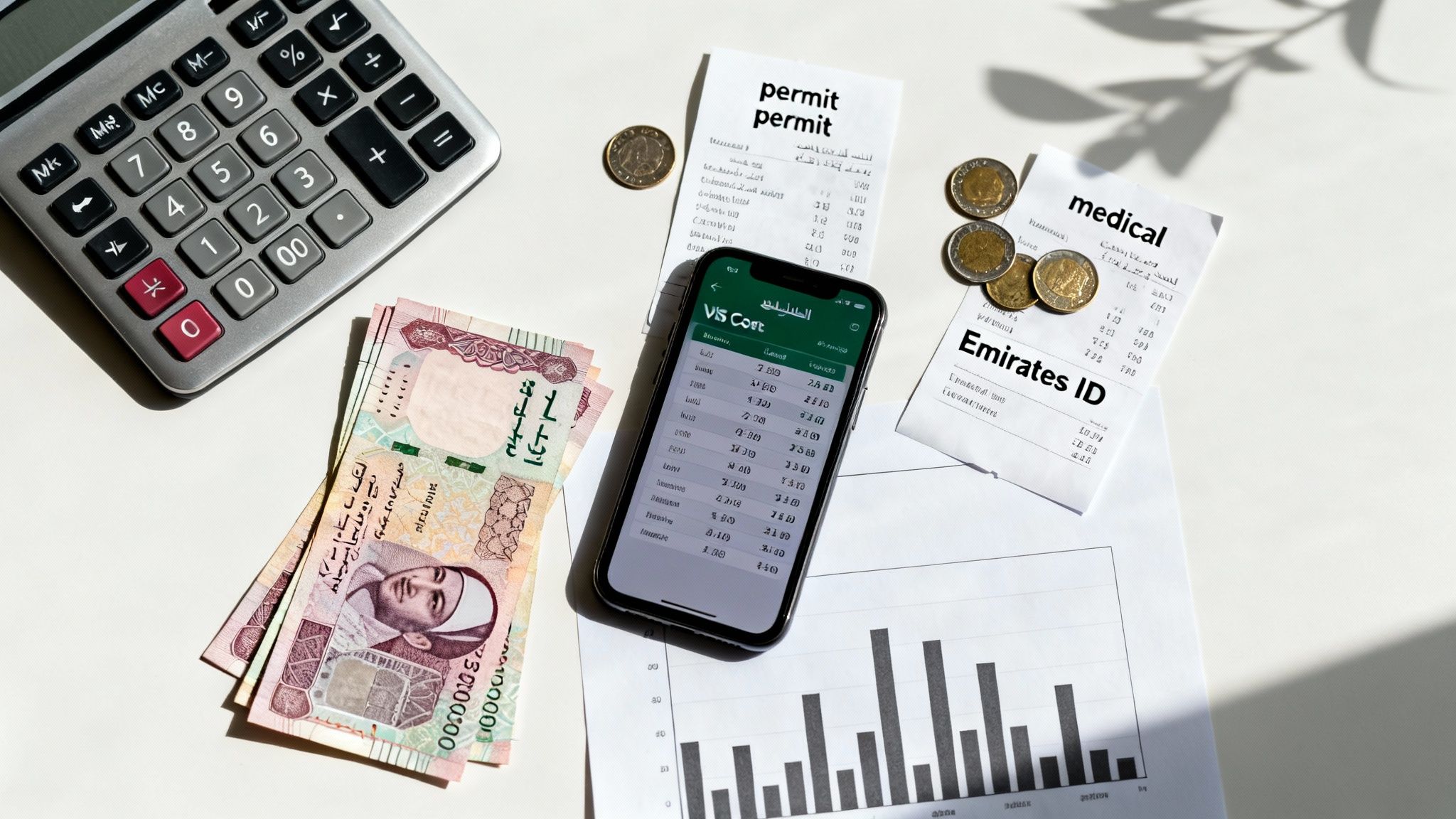
Alright, let’s talk numbers. Understanding the financial side of things is a huge part of planning your freelance journey in Dubai. The total investment for a freelance visa Dubai package isn’t just one flat fee. Instead, it’s a mix of several different costs that cover your permit, residency, and official ID. Getting a clear picture of these expenses upfront will save you from any nasty surprises later on.
The final cost can vary quite a bit depending on which free zone you choose and the specific package they offer. As a general rule, you should budget somewhere between AED 9,000 and AED 20,000. To give you a real-world example, packages from authorities like Dubai Media City might start around AED 15,300, bundling the permit and visa. Other popular economic zones offer packages that can range from AED 17,900 to over AED 22,900.
Your One-Time Setup Investment
Your biggest expense will be the initial outlay. This covers all the one-time fees to get you officially registered and ready to live and work in Dubai. Think of it as your launch cost.
Here’s what you’re typically looking at:
- Freelance Permit Fee: This is the big one. It’s the cost of the licence that allows you to operate legally as a freelancer.
- Establishment Card Fee: This crucial card links your freelance setup to the immigration and labour departments.
- Visa Stamping and Entry Permit: These are the government fees for actually processing and issuing your residency visa.
- Medical Fitness Test: Every new resident has to go through a mandatory health screening.
- Emirates ID Application: This is the fee for your official, government-issued identification card, which you’ll use for everything.
To make this easier to visualise, here’s a breakdown of what you can expect to pay for each component.
Estimated Cost Breakdown for a Dubai Freelance Visa
The table below summarises the typical one-time fees you’ll encounter when securing your freelance permit and visa in Dubai. Keep in mind these are approximate figures and can change based on the specific free zone and government updates.
| Expense Item | Approximate Cost Range (AED) |
|---|---|
| Freelance Permit | 7,500 – 15,000 |
| Establishment Card | 2,000 – 3,000 |
| Residency Visa & Stamping | 2,500 – 4,500 |
| Medical Test & Emirates ID | 1,200 – 1,800 |
| Total Estimated One-Time Cost | 13,200 – 24,300 |
This initial investment is often compared to the cost of starting a business in Dubai, as it achieves a similar goal: establishing your legal working presence in the UAE.
Planning for Ongoing Expenses
Once you’re set up, the costs don’t just stop. It’s really important to factor in the recurring expenses needed to maintain your freelance status. Your permit and residency visa will need renewing, usually every one or two years, depending on the package you chose.
The most critical ongoing cost is mandatory health insurance. You absolutely cannot get or renew a residency visa in Dubai without a valid, DHA-compliant health plan. This is a non-negotiable rule for every single resident.
If you don’t secure proper health coverage, you could face fines of around AED 500 per month. More importantly, it will completely block your visa renewal, putting your entire freelance career here at risk. Budgeting for a decent insurance plan and your annual renewal fees is just part of being a successful, long-term freelancer in Dubai.
What’s the Freelance Lifestyle in Dubai Really Like?
Deciding to freelance in Dubai is a massive move, and it’s about much more than just getting a visa. It’s a complete lifestyle shift. On one side, you get incredible perks like tax-free earnings and a prime spot at the centre of global business. The networking scene is phenomenal, putting you in rooms with top professionals from all over the world.
But it’s not all sunshine and skyscrapers. You have to be realistic about the challenges. Dubai’s high cost of living, the significant upfront investment for the visa, and the total lack of traditional job benefits like paid holidays or sick leave are all part of the deal. Understanding this from the get-go is key to deciding if this path genuinely fits your long-term goals.

Opportunities and Professional Growth
Dubai is a city built on innovation and expertise, which makes it a fantastic playground for skilled freelancers. The co-working culture here is buzzing, offering more than just a desk—it’s about community. Places like WeWork, Nest, and Nook aren’t just offices; they’re collaboration hubs where your next big client could be the person you’re grabbing coffee with.
There’s a constant, high demand for specialised talent, especially in growing sectors. The freelance market in the UAE has exploded, expanding by an estimated 10% each year. Freelance registrations across the wider MENA region shot up by around 78% in the last year alone. Top pros in fields like tech, marketing, and consultancy are earning daily rates as high as AED 3,600 (about USD 1,000), which shows just how much specialised skills are valued here. You can get more insights on the top freelance skills over at JobxDubai.
The Dubai freelance visa isn’t just a residency permit; it’s your ticket into a market that genuinely rewards expertise. Your success will hinge on how well you can network and consistently deliver top-tier work in a very competitive environment.
The Financial and Personal Side of Things
While the earning potential is huge, so is the cost of living. Rent, groceries, and socialising in Dubai can add up quickly, so you need a solid financial plan. Unlike a salaried employee, you won’t have the safety net of benefits sponsored by an employer.
Here are a few realities you need to brace for:
- No Paid Time Off: Every holiday or sick day is a day without income. You absolutely must factor this into your rates and savings.
- Upfront Investment: The visa fees are just the beginning. You’ll also need cash for accommodation deposits, furnishing your place, and a financial cushion for the first few months.
- Income Instability: Freelance income can be a rollercoaster. Building a steady pipeline of clients is the only way to achieve long-term stability.
This lifestyle demands an incredible amount of self-discipline. You’re the boss, which also means you’re the accountant, the salesperson, and the project manager. The freedom is amazing, but it comes with the heavy weight of being solely responsible for your professional success and personal well-being. Finding the right balance is the secret to not just surviving, but thriving, as a freelancer in Dubai.
So, you’re looking into the freelance visa. It’s a fantastic route for many, but it’s smart to know it’s not the only game in town for independent professionals looking to make their mark in Dubai. The right visa really depends on your long-term plans, your professional standing, and what you want your life in the UAE to look like.
Let’s be honest, the residency landscape here is always shifting, and that’s a good thing—it means more flexibility and options are constantly opening up. Depending on your situation, one of these other visas might just be a better fit.
Exploring these alternatives can unlock longer-term stays, better sponsorship perks, and benefits that are specifically designed for different kinds of professionals. It’s all about finding the path that aligns with your ambitions.
The Green Visa for Self-Employment
One of the most significant alternatives to pop up recently is the Green Visa, especially its self-employment stream. This is a real game-changer. It’s a five-year, self-sponsored residency, meaning you don’t need a UAE national or an employer to back you. You’re completely independent.
What does it take to qualify? Generally, you’ll need to tick these boxes:
- Get a permit from the Ministry of Human Resources and Emiratisation (MOHRE).
- Hold a bachelor’s degree or a specialised diploma.
- Show proof of self-employment income of at least AED 360,000 over the last two years.
The big win here is the longer validity. A five-year visa provides a lot more stability and cuts down on the hassle of frequent renewals. If you’re an established professional with a solid track record and you see yourself in Dubai for the long haul, this is definitely an option worth looking into.
The Prestigious Golden Visa
For those who are truly at the top of their game, the Golden Visa is the ultimate residency prize. We’re talking about a 10-year, self-sponsored visa granted to exceptional talents, leading professionals, investors, and entrepreneurs who meet some pretty high standards.
Yes, the bar is set high, but the rewards are massive. You get the freedom to sponsor family members and even support staff without the usual restrictions. For a freelancer who is a recognised leader or innovator in their field—be it tech, the arts, or science—the Golden Visa is more than just a residency; it’s a powerful statement that solidifies your long-term future in the UAE.
Remote Work Visa for Global Employees
What if you’re not technically a freelancer but work for a company based outside the UAE? The Remote Work Visa was created for exactly this scenario. It’s a one-year visa that lets you live the Dubai lifestyle while staying on the payroll of your foreign employer.
This visa is perfect for professionals who want to experience life in Dubai without the complexity of setting up a freelance business. You’ll need to prove you’re employed with a contract valid for at least a year and have a minimum monthly salary, which is currently around $3,500.
It’s a straightforward way to get your foot in the door and enjoy everything the emirate has to offer. This visa really speaks to the global shift towards remote work, making Dubai an accessible base for a much wider pool of talent.
As you think about your business structure, it’s also helpful to get your head around the practical differences between setting up shop on the mainland versus in a free zone. We break it all down in our detailed guide on the mainland vs freezone Dubai decision.
Your Top Dubai Freelance Visa Questions Answered
When you’re thinking about moving to Dubai as a freelancer, a lot of practical questions pop up. Getting these sorted is key to making sure everything goes smoothly. Let’s dive into some of the most common queries we handle every day.
Can I Bring My Family Over on a Freelance Visa?
Yes, absolutely. This is one of the biggest perks of getting a freelance residency visa. You’re able to sponsor your immediate family, which typically includes your spouse and children.
To get the green light, you’ll need to show you have a steady monthly income that meets the minimum requirement. You’ll also need a registered tenancy contract (known as an Ejari) to prove you have a place for your family to live. The process itself requires attested documents like marriage and birth certificates, and each family member will go through their own medical fitness test and Emirates ID application. It’s a standard procedure, but getting your paperwork right from the start is crucial.
Is a Corporate Bank Account Really Necessary?
While it’s not a strict legal requirement for all freelancers, opening a corporate bank account is something we highly recommend. Think of it as drawing a clear line between your business income and your personal spending. This separation makes bookkeeping a breeze and simplifies things if you have tax obligations in your home country.
A dedicated business account just looks more professional. Many larger companies and corporate clients in the UAE will only pay into a corporate account, not a personal one. Setting one up early on removes this potential roadblock and makes managing your finances much easier.
To get started, the main documents any UAE bank will want to see are your freelance permit and establishment card.
What Happens if I Can’t Find Enough Client Work?
It’s a fair question for any independent professional jumping into a new market. This is exactly why the visa application process requires you to prove you have a certain level of income or enough savings. The authorities want to be sure you can support yourself without immediate client work.
If you hit a slow patch, you’ll need to lean on your savings. Your visa will come up for renewal, usually every one or two years. At that point, you might be asked to show evidence of ongoing freelance work or income. The bottom line? Make sure you have a solid business plan, a few potential clients lined up, or a healthy savings buffer before you make the move.
Can I Take on Projects with Mainland Companies if I Have a Free Zone Permit?
This is a really important detail to get right. Generally, a free zone permit gives you the authority to work with clients inside your specific free zone and with clients anywhere else in the world.
However, if you want to work directly with a company based on the Dubai mainland, you might need extra permits from the Department of Economy and Tourism (DET). Some free zones have special agreements that simplify this, but it’s never a given. It’s always best to check the specific rules of your chosen free zone before you sign on the dotted line.
Navigating these details can feel overwhelming, but you don’t have to figure it all out on your own. The team at Smart Classic Business Hub is here to offer clear, practical advice every step of the way, ensuring your freelance career in Dubai gets off to a flying start. Find out how we can help you today.