
You've got the trade licence. The company bank account is open. VAT is sorted. On paper, your business looks ready to sell into the UAE market.
Then the friction starts.
A procurement portal asks for an ICV certificate, bank confirmation letter, ownership details, audited financials, authorised signatory evidence, category mapping, and sometimes technical or HSE records that were never mentioned during business setup. That's the point where many founders realise vendor registration in the UAE isn't an extension of company formation. It's a separate compliance exercise with its own rules, reviewers, and rejection triggers.
The practical mistake is assuming your licence is the finish line. It isn't. It's the admission ticket.
Beyond the Trade Licence Your Real First Step
Most first-time applicants approach vendor registration as if it were an admin task. Upload the licence, add company details, and wait for approval. That mindset causes delays.
The UAE's procurement system treats business setup and vendor prequalification as different stages. A trade licence proves you exist legally. It does not, by itself, make you eligible to bid for government or state-linked work. As noted in the DCT Abu Dhabi supplier registration guideline, companies must separately complete ICV certification and portal-specific prequalification on systems such as ADGPG.
What your trade licence actually does
Your licence establishes the legal shell of the company. It confirms the entity type, jurisdiction, and approved business activities. That matters because procurement teams compare your stated activities against what you want to supply.
If your licence says consultancy but you apply under a technical supply category, expect questions. If your licence activity is broad but your portal category is highly specialised, expect scrutiny. If your setup still needs work, this overview of a UAE business licence process helps frame the legal starting point, but the procurement layer comes after that.
The real first step is target mapping
Before you upload anything, identify three things:
- Which buyer you want to sell to. Federal authority, Abu Dhabi government entity, ADNOC group company, or another state-owned enterprise.
- Which portal that buyer uses. There isn't one national path for every opportunity.
- Which prequalification standard applies. Some portals focus on ownership and compliance records. Others demand sector-specific evidence, project history, HSE support, or ICV positioning.
Practical rule: Don't start with document collection. Start with the buyer's registration logic.
That changes the order of work. Instead of asking, “What documents do I have?”, ask, “What does this portal approve, reject, and flag for review?”
Why ICV changes the conversation
ICV is where many businesses lose momentum because they discover it too late. It isn't a branding exercise and it isn't the same as a trade licence. In tender environments that consider local economic contribution, your ICV position affects how your business is viewed in practice.
For SMEs, this distinction matters even more. A founder may complete incorporation, lease office space, and hire staff, yet still be unable to access target tenders until the separate prequalification path is complete. That's why strong vendor registration work starts with procurement readiness, not just company formation.
A licence gets you into the market. Prequalification gets you in front of buyers.
Laying Your Foundation for Vendor Registration
The fastest way to waste time is to open a procurement portal too early. If your base documents aren't aligned, the portal exposes the gaps.
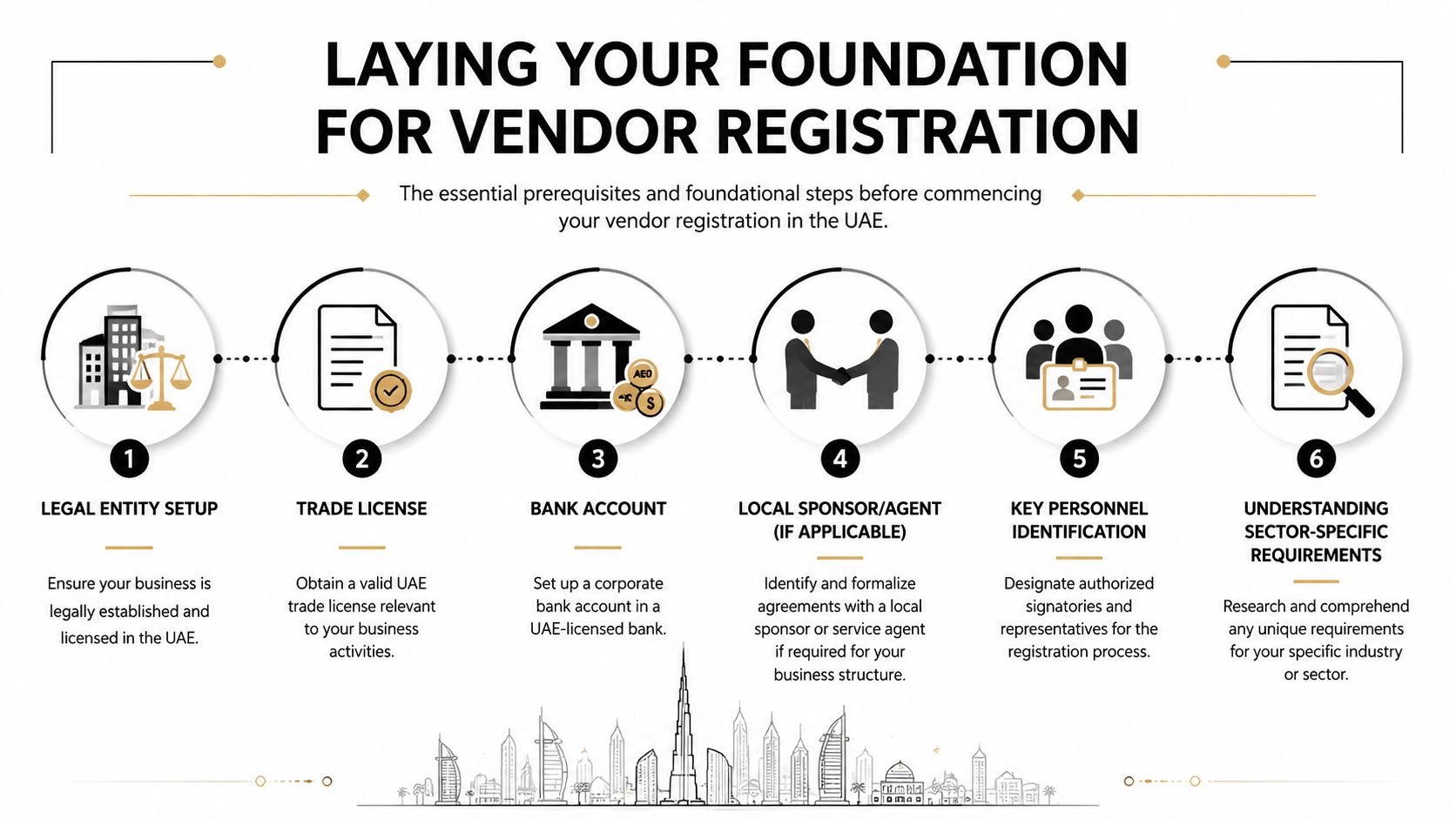
Match the licence to the service you want to sell
A valid trade licence is mandatory, but validity alone isn't enough. The activity on the licence should closely reflect the goods or services you're offering into the procurement system. Reviewers use the licence as a gatekeeping document, not a formality.
This becomes especially important when choosing between jurisdictions. If your structure still isn't final, comparing mainland and free zone setup options in Dubai can help clarify what works operationally before you move into registration.
Get your tax and banking records procurement-ready
Many applicants have a TRN and bank account, but not in the exact form portals expect. Procurement teams usually want a current VAT certificate, matching legal names, and a formal bank letter rather than a simple statement or screenshot.
Use this checklist before you register anywhere:
- Trade licence alignment: Confirm the legal name, activity wording, and expiry date are correct.
- TRN and VAT evidence: Keep the tax record current and make sure the certificate matches the company name used on the portal profile.
- Official bank letter: Ask your bank for the IBAN confirmation in the format procurement teams typically request.
- Authorised signatory controls: Decide who will receive portal access, approvals, and clarification requests.
- Ownership records: Prepare shareholder and UBO data in the same format across all forms.
Build consistency before speed
Most procurement delays come from mismatch, not absence. The company name on the bank letter differs from the trade licence. The signatory letter uses an old title. The ownership table doesn't match the incorporation record. None of these issues feels major until a reviewer rejects the file.
If your licence, VAT record, bank letter, and ownership data don't read like they belong to the same company, the reviewer assumes the file isn't ready.
That's why the foundation stage should be treated as a data-cleaning exercise. Bring every core document into one controlled set before you enter a single portal.
Know what sits outside the basic checklist
Some sectors ask for more than corporate records. Energy, telecoms, infrastructure, and regulated supply categories often require technical support documents, product data, HSE evidence, or internal policy documents.
A useful working method is simple:
- Finalise legal and banking identity.
- Confirm tax and ownership records.
- Review sector-specific extras.
- Only then create portal profiles.
This order feels slower at the start, but it avoids the common cycle of draft submission, rejection, revision, and re-upload.
Navigating Major UAE E-Procurement Portals
The UAE doesn't run on one universal supplier database. Each major portal has its own eligibility logic, document preferences, and review style. If you treat them as interchangeable, you'll prepare the wrong file.
ADGPG for Abu Dhabi government suppliers
For Abu Dhabi Government Procurement Gate (ADGPG) registration, the mandatory pre-requisites include a valid trade licence, VAT tax certificate, official bank IBAN letter, and an ICV certificate if applicable, and the workflow typically takes 10 to 14 business days from submission to activation according to the ADGPG online supplier registration guideline.
ADGPG is structured and compliance-led. It rewards tidy data, correct legal-form selection, and complete uploads. It is less forgiving of profile mistakes than many applicants expect.
TDRA style centralised government registration
For supplier registration with TDRA, companies must show 51% or higher ownership by UAE nationals, be registered with the Ministry of Economy, municipalities, and chambers of commerce, and approved suppliers become visible across Abu Dhabi government procurement bodies through a centralised one-time registration, as outlined on the TDRA supplier registration service page.
This matters for locally owned businesses because one approval can create visibility beyond a single entity. It also means ownership structure becomes a strategic issue, not just a legal one.
ADNOC for energy-sector opportunities
ADNOC is a different league. To register as a vendor, a company must hold a valid Mainland Abu Dhabi DED licence as an LLC or foreign branch, obtain SPC approval, and ensure the licence activities precisely match the goods or services being offered. The process also requires audited financial statements from the last two years, an ISO certification, a Ministry of Labor employee list, TRN, company size details, ownership information, and management contact data, as described in the ADNOC vendor registration process summary.
A separate operational point is that ADNOC registration starts with a SAP Ariba account, and the review stage typically takes 1 week after submission. The same process summary explains that successful prequalification makes the supplier visible on the official list.
Another practical hurdle appears earlier than many expect. According to the Pro Partner Group ADNOC registration guide, approximately 30% of initial applications fail because of incorrect category selection or missing HSE documentation, and prequalification requires three verified project examples plus technical product data.
ADNOC isn't difficult because the form is long. It's difficult because the form is only the front end of a deeper qualification review.
UAE procurement portal requirements at a glance
| Portal | Governing Body | Key Requirement | Typical Timeline |
|---|---|---|---|
| ADGPG | Abu Dhabi Government Procurement | Trade licence, VAT certificate, bank IBAN letter, ICV certificate if applicable | 10 to 14 business days |
| TDRA supplier registration | TDRA and Abu Dhabi government entities | 51% or higher UAE national ownership and centralised supplier registration conditions | Qualitative only |
| ADNOC Commercial Directory | ADNOC | Mainland Abu Dhabi DED licence, SPC approval, ISO certification, audited financials, SAP Ariba access | 1 week review stage |
What works when portals become repetitive
If you're handling multiple registrations, the pain point is rarely one form. It's the repetition across prequalification questionnaires, document naming, and compliance narratives. Teams that manage this well usually standardise a master dossier, then adapt it by portal instead of rebuilding every submission from scratch.
For businesses doing frequent prequalification work, tools built for streamlining PQQ submissions can help organise repetitive answers and document sets without turning each portal into a separate internal project.
The important lesson is simple. Pick the portal first. Build the file for that portal's logic. Don't assume one approved profile grants access to every buyer you care about.
Assembling Your Document Dossier
A strong vendor application feels boring to the reviewer. That's a good sign. Nothing looks inconsistent, nothing is missing, and no one has to guess what a document means.
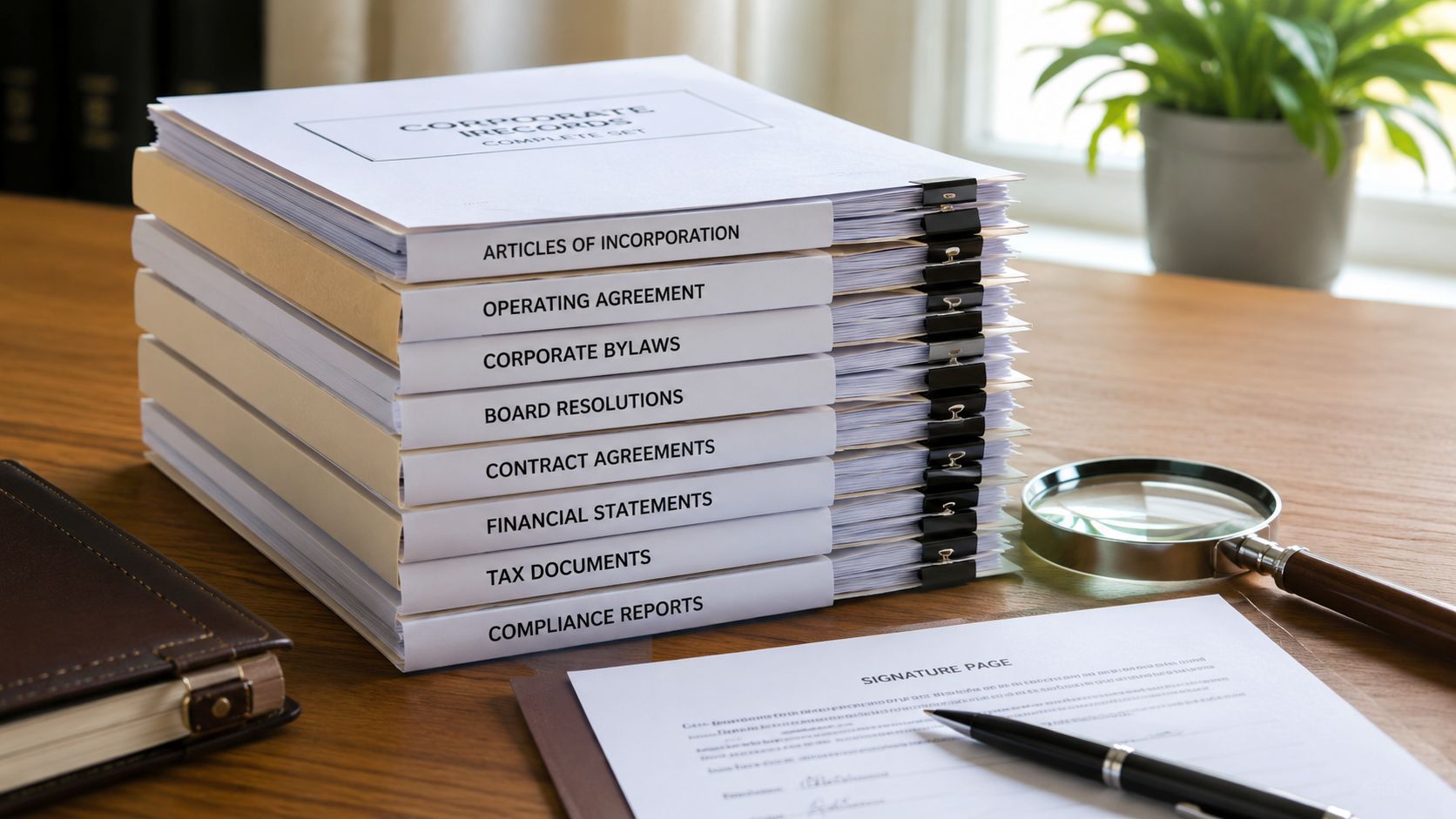
Separate core documents from supporting records
Start by splitting your file into two groups.
Core documents identify the company. These usually include the trade licence, VAT certificate, bank letter, incorporation records, shareholder information, UBO details, and authorised signatory evidence.
Supporting records explain capability. These can include ISO certificates, product data sheets, management contacts, project references, HSE records, employee lists, and technical brochures depending on the portal.
This separation helps because reviewers often reject a file for one missing core item, while capability documents usually trigger clarification rather than immediate failure.
Treat ownership documents as live records
Many companies prepare UBO declarations once and forget them. That's risky. Procurement platforms often ask for current ownership, shareholder names, and control information in a way that must match your legal file exactly.
Check these points before upload:
- UBO details: Names and control information should match current corporate records.
- Shareholder data: Don't rely on old share certificates if changes have been made.
- Power of Attorney or signatory proof: Ensure the named individual has authority to act for the company on the portal.
- Contact data: Use monitored email addresses. Clarification requests often go to the person listed in the profile.
Handle foreign documents properly
Foreign-owned companies often run into trouble with parent-company papers. The issue usually isn't whether the document exists. It's whether it has been notarised, attested, translated, or formatted in a way the reviewer accepts.
A perfectly valid foreign document can still fail if it reaches the portal in the wrong legal form.
When Arabic translation is required, use certified translation and keep naming consistent between the English and Arabic sets. Don't upload mixed versions with different dates or entity names.
Audited statements need a strategy, not guesswork
Financial records are where applicants often improvise, and that's where avoidable problems begin. If a portal asks for audited financial statements, don't substitute management accounts and hope the reviewer won't notice. If your company is new, prepare a clean alternative package and explain the position clearly rather than leaving the section incomplete.
A useful dossier usually contains one master index listing every file name, issue date, expiry date if relevant, and version status. That small control step prevents duplicate uploads, outdated certificates, and missing attachments when the portal saves partially completed drafts.
Order matters. Naming matters. Version control matters. In vendor registration, document discipline often decides whether a company looks procurement-ready.
Common Rejections and How to Fix Them
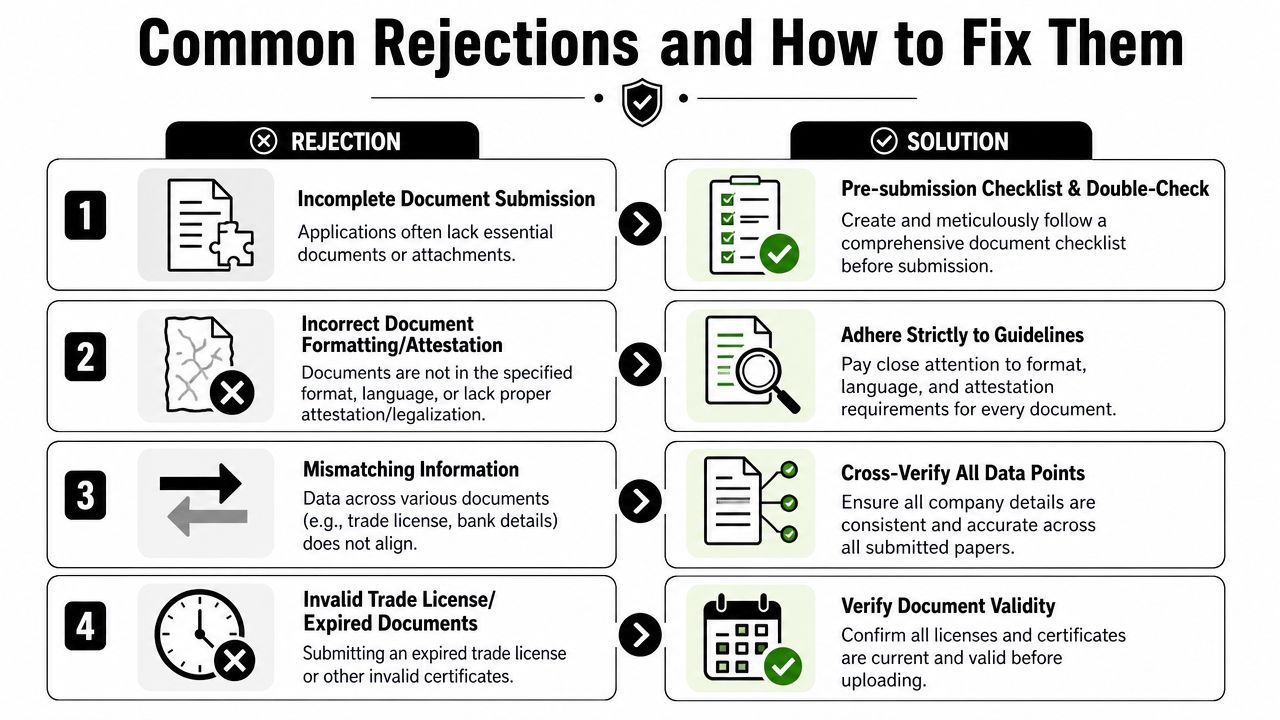
Most rejected applications aren't inherently ineligible. They're merely poorly assembled.
Rejection one, the portal category is wrong
This is a classic ADNOC problem. According to the earlier-cited ADNOC guide from Pro Partner Group, approximately 30% of initial applications fail because of incorrect category selection or missing HSE documentation. A strong company can still be rejected if it places itself in the wrong service or supply bucket.
The fix is practical. Don't choose categories based on aspiration. Choose them based on your licence wording, technical evidence, and documents you can defend today.
Rejection two, the bank document isn't the right one
Many applicants upload a bank statement, account screenshot, or unofficial letter when the portal expects a formal confirmation. ADGPG reviewers are especially strict about the bank account confirmation requirement, and failure to upload the correct bank account confirmation letter can lead to immediate rejection under the registration workflow described in the ADGPG guideline already cited above.
Use the exact banking format the portal expects. If the portal language says IBAN letter or bank account confirmation letter, ask your bank for that document specifically.
Rejection three, startup financial history doesn't meet the portal script
Often, new businesses hit a dead end. Some procurement environments ask for several years of audited financial statements, but startups can't provide records they don't yet have.
For new UAE startups aged 0 to 2 years, recent procurement guidance referenced in the UN vendor information page notes that bank confirmation letters and ICV certificates are used as primary alternatives to help bypass the three-year rule in certain contexts. That doesn't mean every portal will accept a substitute automatically. It means you should prepare an alternative compliance package rather than abandoning the application.
A practical response looks like this:
- State company age clearly: Don't leave the reviewer guessing why older audits are absent.
- Provide bank confirmation evidence: Use an official bank letter, not an internal statement.
- Add ICV support where relevant: If your target buyer values ICV, include it as part of the explanation.
- Upload tax registration evidence: It helps support legitimacy for newer entities.
Rejection four, file quality creates avoidable friction
This sounds minor, but it matters. Portals often impose upload limits, and oversized PDFs lead applicants to split files badly, compress them too aggressively, or upload unreadable scans. Reviewers won't reconstruct your dossier for you.
If you're trying to reduce file size without destroying readability, this File Studio PDF guide is a practical reference for preparing cleaner uploads.
The best application doesn't force the reviewer to search, rotate, rename, or interpret documents.
Rejection five, data doesn't match across the file
The company name on the trade licence differs slightly from the bank letter. The ownership table uses a shortened legal name. The signatory record shows an old passport or title. These small inconsistencies create trust issues fast.
Fix this with a pre-submission reconciliation sheet. Check legal name, licence number, VAT data, banking details, signatory names, and ownership records line by line. It's tedious, but it saves rework.
A rejected file usually tells you something useful. Either the portal fit is wrong, the document set is weak, or the company submitted before it was genuinely ready. The smart move is to diagnose which of those three happened, then rebuild the application deliberately.
Streamline Your Registration with Expert Help
At some point, every business has to decide whether vendor registration is an internal admin task or a managed compliance project. For simple commercial buyers, in-house handling may be enough. For government entities and major SOEs, the cost of getting it wrong rises quickly.

Where expert support changes the outcome
Good advisory support doesn't just upload forms. It helps a business prepare in the order procurement teams expect. That includes checking licence activity alignment, cleaning ownership records, coordinating bank and tax documents, and identifying whether an ICV path or sector-specific qualification should be handled before portal submission.
That matters because delays usually happen outside the portal. They happen in document collection, legal mismatch, missing signatory authority, unclear category selection, and weak response handling after the first reviewer query.
Why founders often underestimate the drain
A founder or operations manager can certainly do this alone. The question is whether they should. Every hour spent chasing attestations, reconciling company records, following up with banks, or replying to portal clarification requests is time taken away from sales, hiring, delivery, and cash flow management.
Specialist support also helps when registration touches broader company administration. Businesses already using structured PRO and business setup support in Dubai tend to handle procurement onboarding more cleanly because the underlying records are already maintained in a usable format.
What practical support should include
If you involve an adviser, expect them to do more than check boxes. Useful support usually includes:
- Eligibility screening: Whether your current entity is suitable for the target portal.
- Document gap analysis: What's missing, outdated, or inconsistent.
- Portal profile preparation: Category mapping, ownership entry, and signatory setup.
- Reviewer follow-up: Managing clarifications and re-submissions without guesswork.
- Readiness for repeat registrations: Building a reusable dossier so future applications get easier.
The primary value isn't convenience. It's reducing avoidable rejection and shortening the path to procurement visibility.
If you want experienced support with vendor registration, company structuring, PRO coordination, tax-linked compliance documents, and the wider setup work that sits behind procurement readiness, Smart Classic Business Hub can help you move from basic incorporation to a registration file that's fit for UAE government and corporate portals.