
Getting your brand trademarked in Dubai isn't just a box-ticking exercise; it's one of the most fundamental moves you can make for your business in the UAE. It takes your name, logo, or slogan from a simple idea and turns it into a real, legally protected asset. This gives you the exclusive right to use it and, more importantly, the power to stop anyone else from copying it. Think of it less as paperwork and more as building a fortress around your brand's future.
Why Trademark Registration in Dubai Is a Critical Business Move

In a market as energetic and crowded as Dubai's, your brand is your most valuable currency. But if it's not officially registered, that currency is completely unprotected and ripe for the picking. An unregistered brand is a massive risk that can see all your hard work unravel virtually overnight.
Just imagine a competitor popping up with a similar product and a name that's just a little too close to yours. Without a registered trademark, your hands are tied. You'll have a tough time legally challenging them, which can lead to confused customers, a diluted brand, and a direct hit to your revenue as they peel away your market share.
Turning Your Brand into a Financial Asset
A registered trademark is so much more than a defensive shield—it’s a powerful tool for growth and a recognised business asset. It actually appears on your balance sheet, adding measurable value to your company. This becomes incredibly important when you're looking for investment, as venture capitalists and lenders see a protected brand as a sign of a serious, well-run business.
This legal protection gives you some key advantages:
- Exclusive Nationwide Rights: Once registered, you have the sole right to use your mark across all seven emirates for the goods and services you've specified.
- A Powerful Deterrent: The ® symbol is a clear public warning to competitors that your brand is legally protected and you won't hesitate to enforce your rights.
- The Foundation for Franchising: If you ever plan to license or franchise your business, having a registered trademark is non-negotiable.
The UAE's dedication to intellectual property is clear from the recent numbers. The Ministry of Economy saw a 39% jump in new applications, with 18,175 new trademarks registered in just nine months. This surge, bringing the total active trademarks to over 356,000, shows just how much confidence investors have in the UAE's strong legal system.
Securing your trademark early is one of the smartest investments you can make. It’s the difference between owning your brand identity and merely borrowing it until someone else decides to claim it.
Safeguarding Your Business in a Thriving Economy
The many benefits of setting up a business in Dubai, from its strategic location to its business-friendly policies, pull in entrepreneurs from all over the world. But this flood of competition makes brand protection even more vital.
Registering your trademark ensures that as your business grows, your reputation and the goodwill you’ve built remain yours and yours alone. It gives you the legal muscle to shut down counterfeiters and copycats, protecting the trust you've earned from your customers and securing your success for the long haul.
Laying the Groundwork Before You File Your Application
Before you even think about filling out an application, it’s vital to do your homework. Trust me, strong, deliberate preparation is what separates a smooth, successful trademark registration from one that gets bogged down in rejections and legal headaches. This initial stage is all about building a solid foundation for your brand’s protection.
Your first task is choosing a mark that isn’t just catchy, but legally strong. The strength of your trademark boils down to one thing: its distinctiveness. A weak mark is often descriptive, while a strong one is totally unique and memorable.
Think of it like this: a café called "Dubai Coffee House" is descriptive. It tells you exactly what it is, which makes it almost impossible to trademark because you can't monopolise common terms. A name like "The Espresso Lab" is much better; it's suggestive, hinting at coffee without directly stating it. The strongest marks of all are fanciful, like "Starbucks," which has zero inherent connection to coffee.
How to Choose a Registrable Mark
To give your brand the best possible chance of approval, you need to aim for something that stands out from the crowd. Here’s a quick rundown of trademark strength, from weakest to strongest:
- Generic: These are common words for a product, like using "Phone" for a mobile device. They are not registrable, period.
- Descriptive: These marks describe a characteristic of the product, like "Cold and Creamy" for ice cream. They're very difficult to register unless they’ve been in the market so long they've acquired a "secondary meaning."
- Suggestive: These hint at a quality without being literal (e.g., "Netflix" for streaming movies). These are solid candidates for registration.
- Fanciful or Arbitrary: This is the gold standard. We're talking made-up words ("Rolex") or real words used in a completely unrelated context ("Apple" for computers). These are the strongest and most easily protected marks.
The goal here is to create a brand that is inherently distinctive. Not only does this make the registration process in Dubai much easier, but it also helps you build a more powerful brand in a fiercely competitive market.
Conducting a Comprehensive Trademark Search
Once you've got a strong name or logo in mind, the next step is absolutely critical: a thorough search. You have to check if someone else has already registered a similar mark for similar goods or services. Filing an application without this check is like navigating a minefield blindfolded.
The UAE Ministry of Economy provides an online database for this exact purpose, and it should be your first port of call. You'll want to search for exact matches, phonetic similarities, and any creative variations in spelling.
For example, if your brilliant idea is "Dubaite," don't stop there. You need to search for "Dubai-ite," "Doo-Bite," and anything else that sounds remotely similar. Overlooking a close match is one of the most common—and costly—mistakes I see applicants make.
Understanding and Selecting Trademark Classes
The final piece of your pre-filing puzzle is classifying your goods and services correctly. The UAE, like most of the world, uses the Nice Classification system. This is an international standard that groups products and services into 45 different classes.
You don't register a trademark in a vacuum; you register it for specific categories of goods or services. Getting this wrong can leave major parts of your business unprotected.
Choosing the right classes is crucial. Imagine you run a business that sells sportswear (that's Class 25) but you also offer online fitness coaching (that's Class 41). If you only register your trademark under Class 25, another company could swoop in and use a similar name for their fitness app. That would create massive confusion and dilute your brand.
It’s essential to think about both what you offer now and where you realistically see the business going in the future. Be strategic, though. You can't add new classes to an application once it's filed; you'd have to start all over again with a new application. It’s far better to be thorough from the outset. This foresight ensures your trademark registration provides the comprehensive protection your brand deserves, no matter where your business is based. If you're weighing your options, understanding the differences between a mainland vs freezone company in Dubai can also provide valuable context for your overall business strategy.
Navigating the Official Filing and Examination Process
With all your prep work done, it's time to get down to the business of actually filing your Dubai trademark application. This is where you move from strategy to action, submitting everything through the UAE's Ministry of Economy (MoE) portal and guiding your mark through the official examination. It’s a very structured journey, and knowing what to expect at each stage makes all the difference.
The entire system is online, which is great for accessibility whether you’re in the UAE or applying from abroad. Your first move is to set up an account on the Ministry’s official intellectual property portal. This is your command centre for uploading documents, paying fees, and keeping tabs on your application's progress from start to finish.
While the portal is designed to be straightforward, attention to detail is everything. I’ve seen small errors in the information or document uploads cause significant delays or even outright rejection. Always double-check every single field before you hit that submit button.
Assembling Your Required Documents
The exact paperwork you need depends on who you are. The list is different for individuals, local UAE companies, and foreign businesses. Getting your documents organised from the start will save you a world of headaches and endless emails with the Ministry.
Before we dive into the specific documents, let's remember the foundational steps that get you to this point.
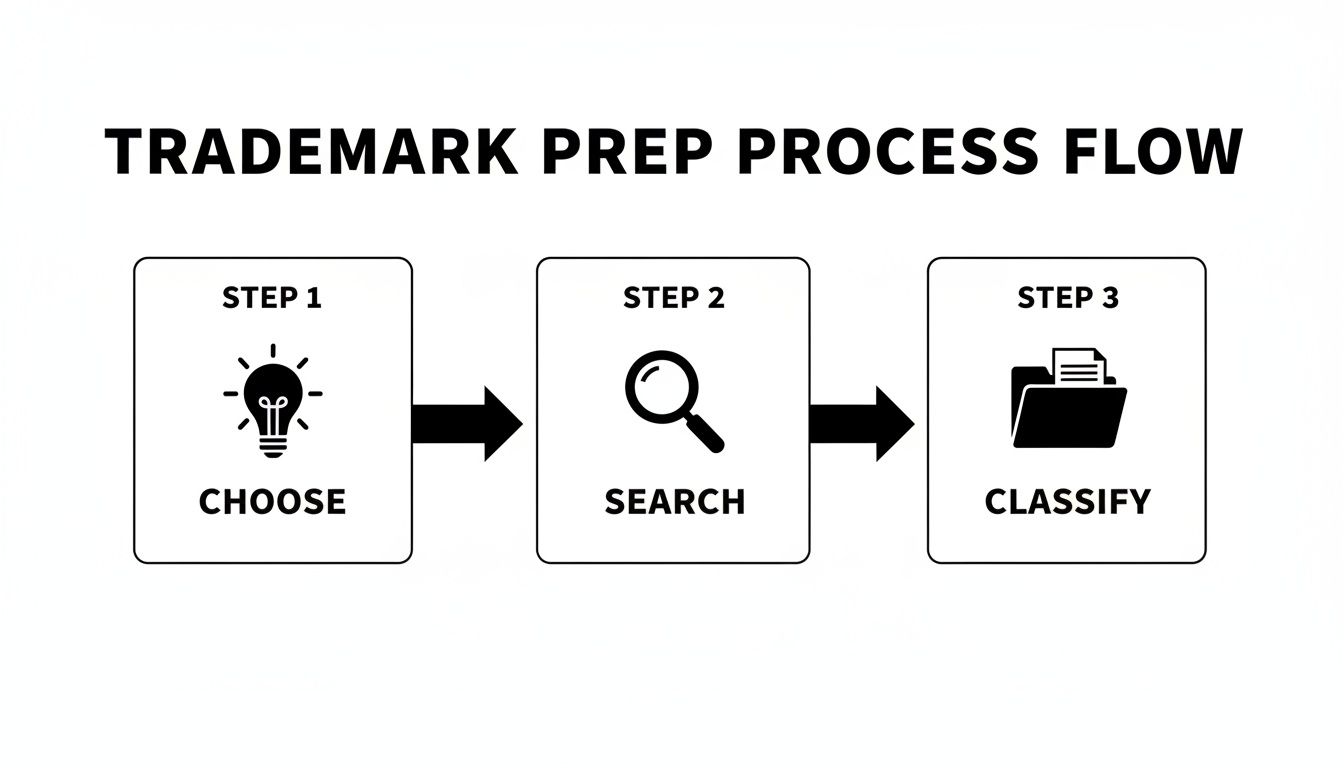
This simple flowchart is a great reminder of the groundwork: choosing a strong mark, doing a thorough search, and classifying your goods correctly. A solid application is built on this foundation.
Now, here’s a breakdown of what you’ll typically need to have ready:
-
For Individuals:
- A high-resolution digital file of your trademark.
- A clear copy of your passport.
- Your Emirates ID (if you're a UAE resident).
-
For UAE-Based Companies:
- A high-resolution copy of the trademark.
- A copy of the company’s valid trade licence.
- Passport copy of the person authorised to sign for the company.
-
For Foreign Companies:
- A high-resolution copy of the trademark.
- A legalised and attested Power of Attorney (POA). This is non-negotiable. It appoints a UAE-based agent to handle your filing. The POA must be notarised in your home country and then legalised by the UAE Embassy there.
- A copy of your company’s certificate of incorporation, which must also be legalised.
That Power of Attorney for foreign applicants is a huge sticking point. It’s one of the most common reasons for delays I see with international clients. The legalisation process can take weeks, so you need to get that ball rolling long before you plan to file.
What Happens After You Hit Submit?
Once your application is in and the fees are paid, it joins the Ministry’s examination queue. This is where an official examiner puts your application under the microscope to ensure it complies with UAE Trademark Law. They’re essentially checking for two things: procedural correctness and substantive registrability.
First, they’ll make sure all your documents are correct and you've picked the right classes. Then, the real work begins as they conduct their own search to see if your mark clashes with any existing trademarks or if it falls into a prohibited category (like being too descriptive, generic, or against public morals).
This phase can take anywhere from a few weeks to a couple of months, depending on how busy the Ministry is. However, the UAE is making a real push to speed things up. The trademark landscape here saw a massive 129% jump in registrations in the first half of one year, proving its growing appeal. To handle this, the Ministry of Economy has updated its fee structure and introduced new services, like a AED 2,250 fee for a one-day examination review. This is a game-changer for businesses needing a fast decision. You can read more about these updates over at The National News.
From Provisional Approval to Public Scrutiny
If the examiner gives your application the green light, you’ll get provisional approval. But you're not at the finish line just yet. The next crucial step is the publication stage. Your trademark details are published in two local Arabic newspapers and the Official Trademark Gazette.
The publication period creates a 30-day window for any third party to oppose your trademark if they believe it infringes on their rights. This is a standard part of the process designed to keep things fair and avoid future conflicts.
If no one objects within that 30-day window, you're on the home stretch. The Ministry will request the final registration fee. Once paid, they issue the official Certificate of Registration for your trademark. This certificate is your proof of ownership, valid for 10 years from your filing date, and it gives you the exclusive right to use that mark across the UAE for your specified classes. Your brand is now legally protected.
Navigating Objections and Opposition Challenges
Getting a notification from the Ministry of Economy questioning your trademark application can be disheartening. It’s even more stressful to receive a formal opposition from a competitor. But take it from me, this is rarely the end of the line. More often than not, these are just hurdles you can clear with a smart, well-argued response.
Think of an official objection not as a final "no," but as a request for clarification. The examiner is essentially saying that, on paper, your application doesn't quite tick all the legal boxes for registration. Your job now is to convince them that it does.
Responding to Ministry Objections
In my experience, most objections from examiners boil down to two main issues. The first is that your mark is considered too descriptive—meaning it just describes what you sell instead of acting as a unique brand identifier. The second common problem is a perceived similarity to an existing trademark, which could confuse customers.
When that objection notice lands, you’ll have a 30-day window to respond. The key is not to panic. Use this time to build a solid, evidence-based case.
Here’s how I advise clients to tackle these common roadblocks:
- If the objection is for being "too descriptive": You need to prove your mark has gained what’s called “secondary meaning.” This means showing that UAE consumers already link that specific name or logo directly to your business. We gather evidence like marketing campaigns, sales figures, glowing customer reviews, and any media features that demonstrate this connection.
- If the objection is for "similarity" to another mark: Your task is to highlight what makes your mark distinct enough to avoid any mix-ups. This involves a careful analysis of the look, sound, and overall impression of both trademarks. Pointing out differences in your target customers, where you sell your products, or the specific nature of your services can prove that both brands can exist in the market without misleading anyone.
A strong response isn’t just a letter; it’s a legal argument. It has to be clear, persuasive, and backed by solid proof. This is precisely where having professional guidance on your Dubai trademark registration can make all the difference.
Facing an Opposition from a Third Party
An opposition is a different beast altogether. This isn't from an examiner; it’s a formal challenge lodged by another company during the 30-day publication period. They believe your trademark will damage their business, usually because they feel it’s too close to their own established brand.
Once an opposition is filed, the clock starts ticking again—you have 30 days to submit a counter-statement. This document is your official defence, where you lay out every reason why their claim is baseless and your trademark deserves to be registered.
The core of winning an opposition is proving your trademark is not likely to cause consumer confusion. Focus on the differences in branding, market positioning, and the overall commercial impression the two marks create.
Sometimes, the best move isn't a head-on fight. Negotiation can be surprisingly effective. You might be able to work out a co-existence agreement with the other party. This is a legally binding contract where you both set ground rules for using your respective trademarks without getting in each other's way. For instance, you could agree to only use your mark with specific colours or restrict your services to a particular industry niche.
To Amend, Appeal or File Anew
Your next steps depend entirely on the specific objection. Occasionally, a simple tweak is all that's required. If the issue is minor, you might be able to amend your application, for example, by disclaiming any exclusive right to a generic word within your logo.
One crucial thing to remember: you can never broaden the scope of your application after filing. You can't add new products or services to other classes. If you realise you missed something, you’ll have to start from scratch with a new application for those additional items. This is exactly why getting your classes right from day one is so important.
If your response to an objection is rejected, you still have another card to play: an appeal to the Ministry's Trademark Committee. This is a more formal legal process and isn't a decision to be taken lightly. The ultimate goal is to navigate these challenges successfully, get your Dubai trademark registration back on track, and secure the brand protection your business needs to thrive.
Managing and Enforcing Your Trademark After Registration
Getting that trademark registration certificate is a fantastic milestone, but it's a mistake to see it as the finish line. In reality, it’s the start of your real brand protection journey. The hard work of safeguarding your brand begins now. A registered trademark is a powerful asset, but only if you actively look after it.
Your registration gives you legal ownership, but it doesn't come with a built-in alarm system for the marketplace. That job falls squarely on your shoulders. To keep your brand’s shield strong in Dubai's bustling economy, you need to be proactive about monitoring and consistent in your use.
Keeping Your Trademark Active and Valid
Your UAE trademark registration is good for 10 years, calculated from the day you first filed. To keep it, you must actively use the mark in connection with the goods and services you listed. If you don't use it for a long stretch, you could leave the door open for a third party to have it cancelled.
The renewal process itself is pretty straightforward. You can kick it off online anytime within the final year of your 10-year term. The law even gives you a six-month grace period after expiry for late renewals, but this will cost you extra in penalty fees. It’s absolutely critical to diarise these dates to avoid an accidental lapse in protection.
Proactive brand protection isn't just a legal box-ticking exercise; it's a core business strategy. A well-enforced trademark warns off infringers, protects your brand's value, and maintains the trust you've built with your customers.
The market here is getting more crowded by the day. The UAE saw a staggering 64% surge in trademark registrations in just the first quarter of a recent year. This is a clear indicator of the region's economic boom and a growing awareness of IP rights. But with this boom comes a higher risk of infringement, making vigilant enforcement more critical than ever.
Your Enforcement Toolkit Against Infringement
It’s a gut-wrenching feeling to discover someone is using your trademark without permission. Thankfully, the UAE has several official channels you can use to enforce your rights and shut down the infringement quickly.
Your first move is usually to send a formal Cease and Desist letter. This is a legal notice that puts the infringer on record, informs them of your rights, and demands they stop their unauthorised use immediately. Often, this is enough to resolve the issue without needing to take things further.
If that doesn't work, you have stronger options:
- File a Complaint with the Ministry of Economy: The MoE has a department dedicated to IP disputes and can take administrative action against infringers.
- Engage with the Department of Economic Development (DED): For local-level issues, the DED in the relevant emirate can conduct raids and seize counterfeit goods.
- Involve Customs Authorities: If you're battling the import of fake products, register your trademark with Customs. This helps them spot and seize counterfeit items at the border.
When to Escalate to Legal Action
For more serious or persistent cases, you might have to take the fight to the UAE courts. This means filing a lawsuit and is a step you should only take with guidance from experienced legal counsel. The courts have the power to issue injunctions to stop the infringing activity and can award damages for the financial harm your business has suffered.
Navigating these legal waters often requires appointing a local legal representative. If your company is based outside the UAE, this will require a formally attested Power of Attorney. Understanding the ins and outs of a UAE Power of Attorney is essential for any foreign business looking to effectively enforce its rights in the country. Taking these steps ensures your brand remains the powerful, protected, and valuable asset you worked so hard to build.
Got Questions About Dubai Trademarks? We've Got Answers.
When you're deep in the trenches of building a business, the legal side of things, especially intellectual property, can feel like a whole different language. It's totally normal to have questions. Over the years, we've seen the same queries pop up time and again from entrepreneurs just like you.
So, let's cut through the noise. Here are some straightforward answers to the most common questions we get about registering a trademark in Dubai.
Can I Register a Trademark in the UAE as a Non-Resident?
Yes, you absolutely can. The UAE is a global business hub and actively encourages foreign individuals and international companies to protect their brands here.
There's just one key rule to follow: you must appoint a licensed, UAE-based trademark agent to file the application for you. This isn't optional; it's a mandatory requirement for any applicant who isn't a resident.
You'll also need to get some of your documents officially recognised.
- Power of Attorney (POA): This is the big one. It needs to be notarised in your home country and then legalised by the UAE Embassy located there.
- Final Attestation: When the POA arrives in the UAE, it goes for one last stamp of approval from the Ministry of Foreign Affairs before it's ready for the Ministry of Economy.
Sorting out this legalisation process early on can save you a world of headaches and delays down the road.
How Long Is a UAE Trademark Registration Valid For?
Once registered, your trademark is protected in the UAE for 10 years. An important detail here is that the clock starts from the date you filed the application, not the date it was finally approved. This gives your brand a solid decade of legal protection.
And it doesn't have to stop there. As long as you're still using the trademark, you can renew it for another 10 years, and you can keep doing this indefinitely. The renewal window opens up in the final year of your current registration term.
Forgot to renew on time? The UAE Trademark Office offers a six-month grace period after the expiry date. Just be warned, you'll have to pay extra penalty fees for a late renewal, so it's always cheaper and easier to get it done on schedule.
What Is the Difference Between the ™ and ® Symbols?
This is a classic question, and the answer is crucial for staying on the right side of the law. These two little symbols mean very different things.
The ™ (Trademark) symbol is basically an informal heads-up. Anyone can use it to signal that they claim a name, logo, or slogan as their brand, even if it's not registered. It tells the world, "This is mine," but it offers very weak protection and isn't something you can easily enforce in court.
The ® (Registered) symbol, on the other hand, is the real deal.
You are only legally allowed to use the ® symbol after your trademark has been officially approved and registered by the Ministry of Economy. Using it beforehand is illegal and can result in penalties.
Displaying the ® symbol is a powerful statement. It lets competitors know your brand is fully protected under UAE law, giving you the power to sue for infringement and seek damages.
What Happens If Someone Opposes My Trademark Application?
If another party believes your trademark is too close to theirs and files an opposition, you'll get an official notice from the Ministry of Economy. This happens during the 30-day period after your mark is published for public review.
You then have 30 days from receiving that notice to submit a counter-statement. This is your chance to formally defend your application and lay out the reasons why your trademark is unique and won't cause confusion in the market.
From there, the Ministry weighs the arguments from both sides and makes a final call. Facing an opposition is a serious legal hurdle, and a strong defence is everything. This is one of those times when getting expert legal help can make all the difference in whether your application succeeds.
Navigating the complexities of trademark registration is what we do best at Smart Classic Business Hub. If you're ready to secure your brand's future in the UAE, let our experts guide you through every step of the Dubai trademark registration process.